A Complete SEO-Driven Strategy for Authors and Digital Store Owners
Introduction: Why Your Ebook Store Needs a Blog
If you run an ecommerce store that sells ebooks, you already know the challenge: digital products are invisible until someone discovers them. Unlike physical goods that shoppers can stumble upon in a retail display, ebooks depend entirely on online visibility. That is exactly where content marketing through blogging becomes your most powerful growth engine.
A blog attached to your ecommerce store does three critical things simultaneously. First, it brings organic search traffic from people who are actively looking for the topics your ebooks cover. Second, it builds trust and authority so that visitors feel confident spending money on your digital products. Third, it gives you a platform to showcase the depth of your expertise, turning casual readers into paying customers. In this article, you will learn a step-by-step approach to creating blog content that ranks well in search engines and consistently drives ebook sales.
1. Match Every Blog Post to a Buyer’s Journey Stage
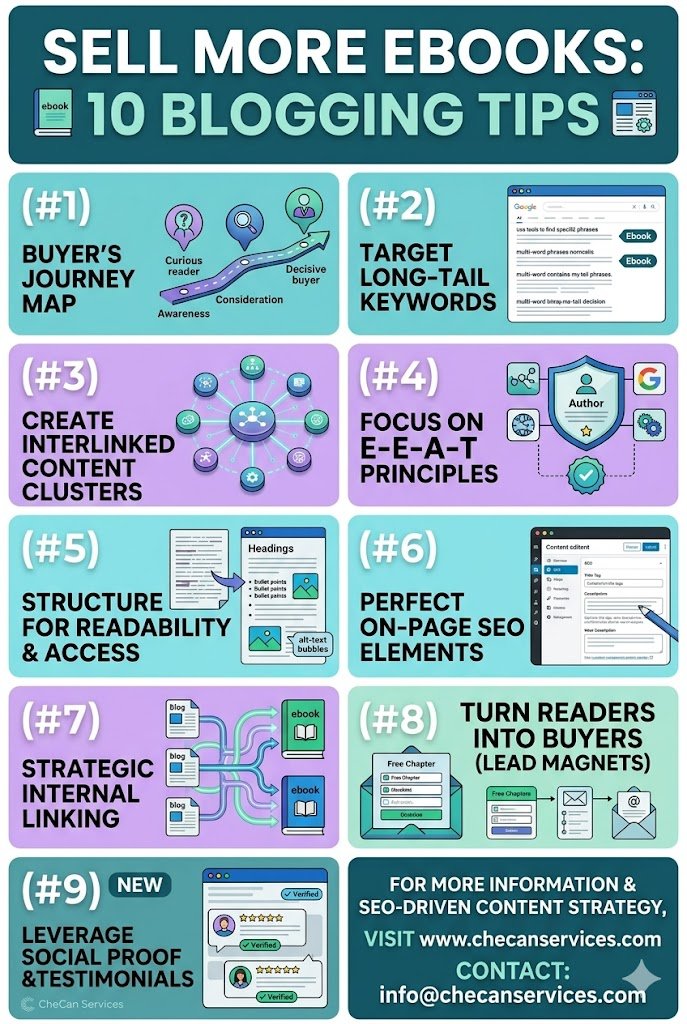
Effective content marketing is not about publishing random articles. Every post you write should map to a specific stage of the buyer’s journey: awareness, consideration, or decision.
Awareness-stage posts attract readers who do not yet know your store exists. These are broad, educational articles targeting high-volume keywords. For instance, if you sell personal finance ebooks, a post titled “10 Budgeting Mistakes That Keep You Living Paycheck to Paycheck” introduces your expertise without pushing a sale.
Consideration-stage posts help readers evaluate solutions. A comparison post such as “Audiobook vs. Ebook: Which Format Helps You Learn Faster?” positions your store as a knowledgeable resource while gently guiding readers toward ebook purchases.
Decision-stage posts close the deal. These include detailed ebook previews, author interviews, curated reading lists, and “best of” roundups that link directly to product pages on your store.
By planning content across all three stages, you create a funnel that captures people at every point of readiness and nurtures them toward a purchase.
2. Conduct Keyword Research That Connects Topics to Products
Search engine optimization begins with understanding what your ideal customers are typing into Google. Use tools like Google Keyword Planner, Ubersuggest, Ahrefs, or SEMrush to find keywords that relate directly to the subjects of your ebooks.
Start by listing the core topics each ebook covers. Then branch outward into related long-tail keywords. Long-tail phrases, typically three to five words, have lower competition and higher purchase intent. Someone searching “best beginner gardening ebook” is much closer to buying than someone who simply searches “gardening.”
Once you have a keyword list, group the terms into content clusters. A content cluster is a set of interlinked articles that all revolve around one central topic, with a comprehensive pillar page at the center. Search engines reward this structure because it signals topical authority. For example, if you sell a cookbook ebook, your pillar page might be “The Ultimate Guide to Meal Prep,” supported by cluster posts on weekly grocery lists, batch cooking techniques, and kitchen equipment essentials.
3. Write High-Quality Posts That Earn Trust and Links
Google’s algorithms increasingly prioritize content that demonstrates experience, expertise, authoritativeness, and trustworthiness, often referred to as E-E-A-T. For ebook sellers, this means your blog posts should do more than skim the surface.
Offer genuine insights drawn from the same knowledge base that fills your ebooks. Share actionable tips, original data, case studies, or personal stories. When readers see that your free content is already valuable, they naturally conclude that your paid ebooks must be even better. This perception is the cornerstone of content-driven ebook sales.
Structure each post for readability. Use descriptive headings and subheadings broken into logical sections. Write short paragraphs of two to four sentences. Include relevant images, infographics, or charts where they add value. A well-structured post keeps visitors on your page longer, which reduces bounce rate and sends positive engagement signals to search engines.
4. Optimize Every Post for On-Page SEO
On-page SEO ensures that search engines can understand and rank your content. Here are the essential elements to address in every blog post you publish:
- Title Tag: Include your primary keyword within the first 60 characters. Make it compelling enough to earn clicks in search results.
- Meta Description: Write a concise 150–160 character summary that includes your keyword and a clear value proposition.
- Header Tags: Use H2 and H3 tags to organize sections. Include secondary keywords naturally in at least two subheadings.
- Internal Links: Link to related blog posts and, most importantly, to the ebook product pages on your store. Use descriptive anchor text that tells readers and search engines what the linked page is about.
- Image Alt Text: Describe every image with keyword-rich alt attributes. This improves accessibility and gives you an additional ranking signal.
- URL Slug: Keep URLs short, lowercase, and keyword-focused. Avoid dates and unnecessary words.
Consistency with these elements across every post compounds over time, building domain authority that lifts the rankings of your entire site.
5. Turn Blog Readers into Ebook Buyers with Strategic CTAs
Traffic alone does not pay the bills. You need a deliberate strategy to convert blog visitors into ebook customers. The bridge between reading a blog post and clicking “Add to Cart” is the call to action.
Place contextual CTAs within the body of each article. If you mention a concept that your ebook explores in depth, add a sentence such as “For a complete 90-day action plan, grab our Step-by-Step Budgeting Ebook.” These in-content prompts feel natural because they extend the value the reader is already receiving.
In addition to in-content CTAs, use end-of-post banners, sidebar widgets, and exit-intent popups to promote your ebooks. Offer a free chapter or a companion worksheet as a lead magnet in exchange for an email address. Once you have that email, you can follow up with a nurture sequence that highlights the full ebook and provides a direct purchase link. This combination of organic content, strategic CTAs, and email marketing creates a reliable, repeatable sales machine.
6. Promote and Repurpose Your Blog Content
Publishing a post is only half the work. To maximize reach, share every article across your social media channels, email newsletter, and relevant online communities. Tailor the message for each platform. A short, punchy quote from the article works well on Twitter or LinkedIn, while a visually appealing carousel summary can drive engagement on Instagram or Pinterest.
Repurposing extends the lifespan of your content. Turn a popular blog post into a YouTube video, a podcast episode, a series of social media graphics, or even a short email course. Each repurposed piece links back to the original post and, by extension, to your ebook product pages. This creates multiple entry points for potential buyers to discover your store.
Guest posting on other blogs within your niche is another powerful promotion tactic. It earns high-quality backlinks that boost your domain authority and introduces your brand to an entirely new audience. Always negotiate a link back to a relevant blog post or product page on your own store.
7. Measure, Analyze, and Iterate
Data-driven marketers outperform those who rely on intuition. Use Google Analytics, Google Search Console, and your ecommerce platform’s built-in analytics to track the performance of every blog post.
Key metrics to monitor include organic traffic per post, average time on page, bounce rate, click-through rate from blog posts to product pages, email opt-in conversion rate, and direct ebook sales attributed to blog referrals. Review these numbers monthly. Identify which topics, formats, and keyword strategies drive the most revenue, then double down on what works.
Update older posts regularly. Refresh outdated statistics, add new internal links to recently published ebooks, and improve sections that underperform. Search engines favor frequently updated content, and a refreshed post can jump several positions in the rankings without requiring a brand-new article.
Conclusion: Start Building Your Content Engine Today
Content marketing through blogging is not a quick fix; it is a compounding investment. Every optimized post you publish adds another doorway through which potential customers can find your ecommerce store. Over weeks and months, these posts accumulate traffic, build authority, and generate sales while you sleep.
The formula is straightforward: research the keywords your ideal readers search for, create genuinely useful content that aligns with each stage of the buyer’s journey, optimize every post for search engines, and guide readers toward your ebooks with clear, compelling calls to action. Promote each piece across multiple channels, measure the results, and refine your approach continuously.
If you commit to publishing two to four well-optimized blog posts per month, you will begin to see measurable growth in organic traffic within three to six months. More importantly, you will build a sustainable, low-cost acquisition channel that reduces your dependence on paid advertising and puts the spotlight squarely on your ebooks, right where it belongs.