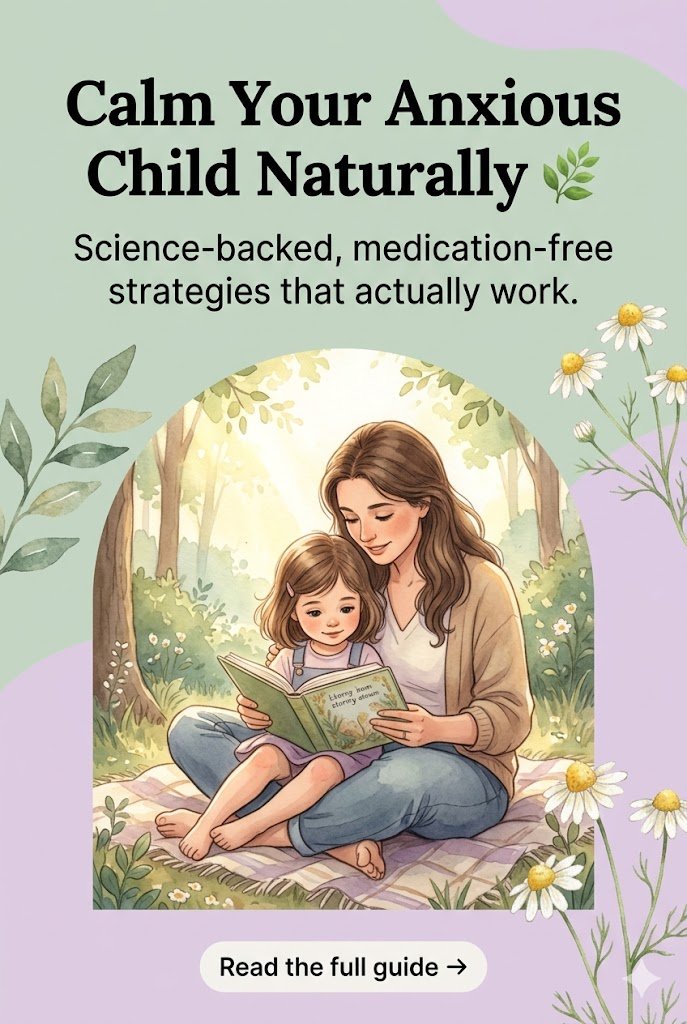
We’ve moved away from the “quick fix” and leaned into science-backed strategies that honor your child’s sensitive soul. From the healing power of nature to the simple magic of a shared book, these medication-free tools are designed to work with your child’s nervous system, not against it.
Parenting an anxious child can feel overwhelming. You watch your little one spiral into worry over things that seem small, and you desperately want to help — but you don’t know where to start, and you’re not sure medication is the right first step. The good news? It doesn’t have to be.
More and more parents are turning to natural, holistic approaches to help their children manage anxiety — and the results are genuinely encouraging. From mindful breathing to sleep routines to what’s on their dinner plate, everyday choices can make a profound difference in how your child feels, thinks, and copes.
Here’s a practical guide to getting started.
Understanding What’s Really Going On With Your Child’s Anxiety
Before you can help, you need to understand. Childhood anxiety isn’t just “being shy” or “a phase.” It’s a real emotional and physiological response — your child’s nervous system is on high alert, reading danger where there often isn’t any.
Anxiety in children can show up as clinginess, stomachaches, sleep problems, meltdowns, school refusal, or constant “what if” thinking. Recognizing these signs early is the first step toward helping your child feel safe again.
The key insight many parents miss: anxiety is not a flaw. It’s a signal. And when you respond to that signal with calm, connection, and consistency, you teach your child’s brain that the world is manageable.
Build a Soothing Daily Routine That Signals Safety
Children thrive on predictability. A consistent daily routine isn’t boring — it’s deeply reassuring to an anxious child. When kids know what to expect, their nervous systems can relax.
Start with morning and bedtime anchors. A calm wake-up routine — perhaps some gentle stretching, a warm breakfast together, and a few minutes of connection before school — sets a grounded tone for the day. An evening wind-down routine signals to the brain that it’s safe to rest.
Simple rituals like reading together, a gratitude check-in at dinner, or a five-minute cuddle before bed create what experts call “co-regulation” — your calm nervous system literally helps calm theirs.
How Nutrition and Sleep Directly Affect Your Child’s Anxiety Levels
This is one of the most underappreciated pieces of the puzzle. What your child eats — and how well they sleep — has a direct impact on their emotional regulation.
A diet high in processed foods and sugar can spike and crash blood sugar, which mimics and worsens anxiety symptoms. On the other hand, foods rich in magnesium (like leafy greens, nuts, and seeds), omega-3 fatty acids (found in salmon and walnuts), and complex carbohydrates help stabilize mood and support brain health.
Sleep is equally critical. An overtired child is an emotionally dysregulated child. Prioritizing 9–11 hours of quality sleep for school-age kids isn’t a luxury — it’s a foundation for mental wellness.
Mindful Practices and Movement: Powerful Tools for Worried Minds
You don’t need to teach your child to meditate for an hour. Even simple mindfulness practices — like belly breathing, body scans, or a “five things I can see” grounding exercise — can interrupt the anxiety spiral in real time.
Try this with your child: breathe in for four counts, hold for four, out for four. Do it together. Within minutes, the body’s stress response begins to settle.
Movement is equally powerful. Physical activity burns off excess adrenaline and cortisol — the stress hormones that fuel anxiety. Whether it’s dancing in the kitchen, a bike ride after school, or a game of tag in the backyard, regular movement is one of the most effective natural anxiety relievers available.
Natural Remedies and the Power of Connection
Certain natural remedies — like chamomile tea, lavender aromatherapy, and magnesium supplements (always check with your pediatrician first) — can gently support a calmer state. These aren’t magic fixes, but as part of a holistic approach, they can meaningfully contribute to your child’s wellbeing.
But above all else? Connection is the most powerful remedy of all. Children who feel securely attached to their caregivers are measurably more resilient in the face of anxiety. Your presence, your calm, your warmth — these are not small things. They are everything.
If you’re ready to go deeper into these strategies with a structured, science-grounded approach, Calm Kids: Natural Ways to Ease Childhood Anxiety is the complete guide you need. Across 10 thoughtful chapters, it walks you through every tool — from routines and nutrition to mindfulness and natural remedies — to help your child feel safe, strong, and truly supported.
Anxiety doesn’t have to define your child’s childhood. With the right tools, it can become the very thing that teaches them strength.