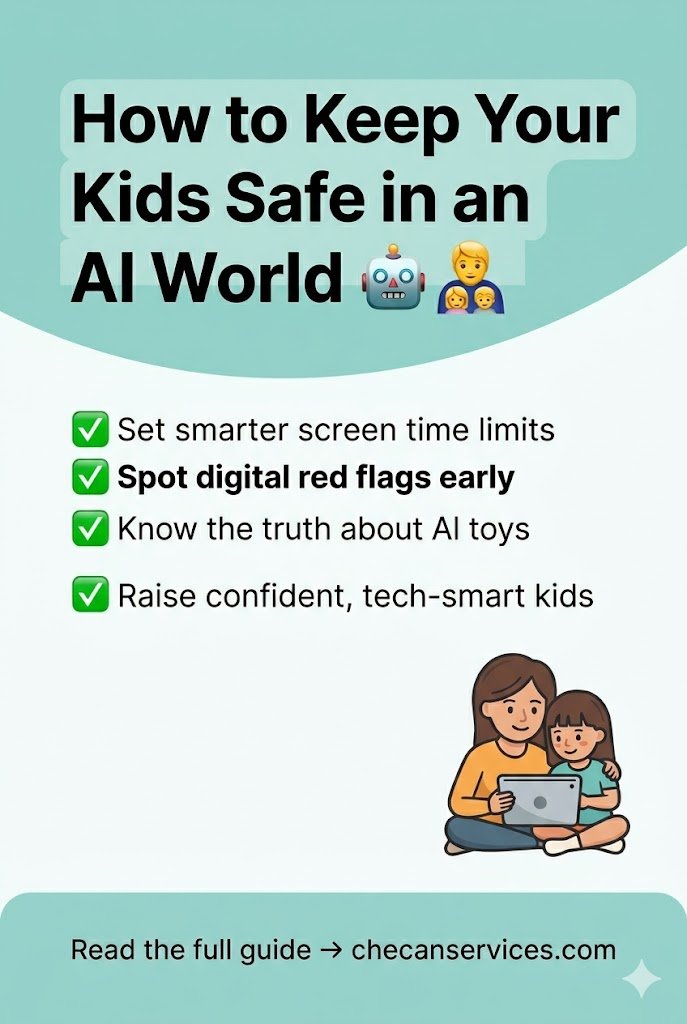
Parenting has never been simple. But raise your hand if you ever thought you’d be explaining to a seven-year-old why they shouldn’t share secrets with a chatbot. Welcome to the era of digital parenting — where the challenges are new, the stakes are real, and most of us are figuring it out as we go.
The good news? You don’t have to be a tech expert to raise a safe, smart, and confident child in an AI-powered world. You just need the right framework — and a little bit of courage to have some honest conversations at the dinner table.
Why AI Safety for Kids Matters More Than Ever
Artificial intelligence is no longer something out of a sci-fi movie. It’s in your child’s school, their toys, their apps, and their streaming platforms. Voice assistants answer their questions. Recommendation algorithms shape what content they see. AI-powered games adapt to their behavior in real time.
That level of integration is remarkable — but it also means children are interacting with systems they don’t fully understand, often without any guardrails. And because AI evolves faster than most parenting books get published, many parents are left feeling permanently behind the curve.
This is exactly why resources like Digital Parenting: AI Safety Essentials are so timely. Written in a warm, accessible tone, the guide meets parents exactly where they are — whether you’re a tech-savvy professional or someone who still Googles how to restart their router.
Setting Screen Time Boundaries That Actually Work
Let’s start with the battle every parent knows well: screen time. The challenge today isn’t just about hours logged — it’s about what kind of screen time your child is engaged in.
Passive scrolling through AI-curated content is very different from using an educational AI tool for a school project. When setting limits, focus less on a rigid clock and more on the quality and context of digital engagement.
Some practical starting points:
- Designate device-free zones (the dinner table, bedrooms after 9 PM)
- Co-view or co-use AI-powered apps with younger children so you can guide their experience
- Ask your child to show you what they’re doing online — curiosity, not surveillance
The goal isn’t to ban screens. It’s to teach your child how to use them intentionally.
How to Spot Digital Red Flags Early
One of the most critical skills a parent can develop is the ability to recognize when something in their child’s digital life has shifted. Changes in mood after device use, secrecy about online activity, or an unusual attachment to a particular app or AI “companion” can all be signs worth paying attention to.
AI companions and chatbots deserve particular attention. Many are designed to feel emotionally engaging — that’s literally their purpose. Teaching your child that an AI is a tool, not a friend, is one of the most important digital literacy lessons you can give them.
Have regular, judgment-free check-ins. Ask open questions: “What’s something interesting you saw online today?” The more your child feels comfortable talking to you about their digital world, the more likely they are to come to you when something feels wrong.
Navigating AI Toys and Smart Devices at Home
AI-powered toys are increasingly common — from interactive stuffed animals that respond to voice to educational robots that adapt to your child’s learning pace. They can be genuinely wonderful. They can also collect data, connect to the internet, and behave in ways that aren’t always transparent.
Before bringing any smart device into your home, ask:
- Does it collect audio or video data?
- Who owns that data, and how is it stored?
- Can you review or delete your child’s interaction history?
Reading the privacy policy isn’t glamorous, but it matters. And explaining to your child in age-appropriate terms that some toys “listen and remember” helps them develop healthy skepticism — a skill they’ll use for life.
Building Digital Resilience as a Family
The ultimate goal of digital parenting isn’t control — it’s resilience. You want your child to be able to encounter something confusing, uncomfortable, or potentially harmful online and know what to do with it.
That means building trust at home, so they bring you their digital dilemmas instead of hiding them. It means working with their school to align on what digital citizenship looks like. And it means modeling healthy tech habits yourself — yes, that includes putting your own phone down.
The digital world isn’t going anywhere. But neither is your influence as a parent. Use it wisely, use it consistently, and remember that the most powerful tool you have isn’t a parental control app — it’s your relationship with your child.
For a comprehensive, practical guide to navigating all of this, check out Digital Parenting: AI Safety Essentials. It’s the kind of book you’ll want to keep on your nightstand and recommend to every parent in your circle.