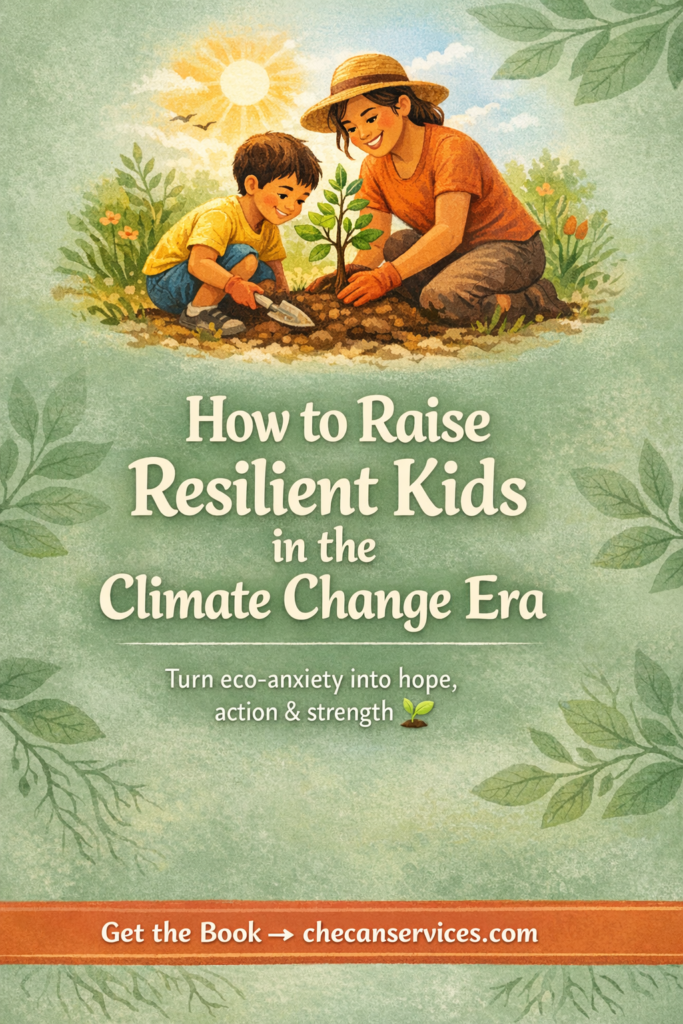
Climate change isn’t just an adult problem anymore. Our children are growing up in a world where wildfires, floods, and environmental uncertainty are part of the daily news cycle — and many of them are feeling it deeply. If you’ve noticed your child expressing worry about the planet, you’re not alone. The good news? There are real, practical things you can do to help them not just cope, but thrive.
That’s exactly what the book Strong Roots: Raising Resilient Kids in the Climate Change Era is all about. It’s a heart-centered, science-backed guide for parents and educators who want to raise emotionally strong, hopeful, and environmentally aware children — without overwhelming them or themselves.
What Is Eco-Anxiety and Why Does It Matter?
Eco-anxiety is a real psychological experience. It refers to the chronic fear of environmental doom — and children are especially vulnerable to it. Unlike adults who may have developed coping mechanisms, kids don’t always have the tools to process big, scary realities like climate change on their own.
When left unaddressed, eco-anxiety can lead to helplessness, depression, and disengagement. But when parents and educators meet it with honesty and support, it can actually become a powerful motivator. The key is helping children channel their worry into purposeful action.
Starting with Honest, Age-Appropriate Conversations
One of the most important things you can do as a parent is talk to your kids about climate change — openly and honestly, without minimizing or catastrophizing. Children are remarkably perceptive. They often already know something is wrong. What they need from you is validation, context, and hope.
Try asking open-ended questions like, “What have you heard about climate change?” or “How does it make you feel when you see news about nature?” Listen without rushing to fix. Create a space where your child feels safe expressing fear, sadness, or anger about what’s happening to the planet.
Building Emotional Resilience Through Nature Connection
One of the most underrated tools for raising resilient kids is simply spending time in nature. Research consistently shows that regular nature exposure reduces stress, improves mood, and strengthens a child’s sense of connection to the living world. When children feel connected to nature, they also feel more motivated to protect it.
This doesn’t have to mean hiking national parks every weekend. It can be as simple as tending a small garden, watching birds at a feeder, or taking a walk in your neighborhood and pointing out the trees, insects, and sky. These small, repeated experiences create a deep sense of belonging and groundedness.
Turning Fear Into Action
Helplessness is what makes eco-anxiety feel so crushing. The antidote is action — and children are incredibly capable of it. When kids participate in meaningful environmental activities, they internalize a powerful message: I matter. My actions count.
This might look like joining a local clean-up, starting a composting bin at home, or getting involved in a school sustainability project. It doesn’t need to be grand. Even choosing a reusable water bottle with intention can become a daily act of care that builds a child’s sense of agency over time.
Strong Roots offers dozens of ideas like these — organized by age and family lifestyle — so you can find what genuinely fits your child and household.
The Role of Creative Expression
Another wonderful way to help children process climate-related emotions is through creative outlets. Drawing, writing, storytelling, and music allow kids to externalize feelings that might otherwise stay locked inside. When a child draws a healthy forest or writes a story about a world that healed, they’re not just making art — they’re practicing hope.
Encourage your child to express how they feel about nature in whatever medium they love. Display their work. Talk about it. Creative expression builds emotional vocabulary and gives children a sense of ownership over their inner world.
Community Matters More Than You Think
Raising eco-conscious kids isn’t something you have to do alone. In fact, community is one of the most powerful protective factors against despair — for children and adults alike. When families connect with others who share their values, children see that they are part of something larger than themselves.
Look for local environmental groups, school eco-clubs, or community gardens where your child can meet like-minded peers. This sense of collective purpose is deeply reassuring for young people trying to make sense of a complex world.
Raising Future Changemakers
At its heart, raising resilient children in the climate change era is about raising hope. Not blind optimism — but informed, grounded, action-oriented hope. Children who grow up knowing they can make a difference become adults who actually do.
The tools are simpler than you might think: honest conversations, nature time, meaningful action, creative expression, and community. With the right support, your child doesn’t just survive this moment in history — they help shape a better one.