Every parent wants their child to learn faster, think deeper, and handle challenges with confidence. But what if the secret to raising a sharper kid wasn’t about flashcards or tutoring sessions — it was about understanding how the brain actually grows?
That’s the core idea behind neuroplasticity: the brain’s remarkable ability to rewire itself in response to experience. And the good news? You don’t need a neuroscience degree to put it to work. Small, intentional changes in your child’s daily life can have a profound impact on how their brain develops.
Here’s what the science says — and what you can actually do about it.
What Is Neuroplasticity and Why Does It Matter for Kids?
Neuroplasticity refers to the brain’s capacity to form new connections, strengthen existing ones, and even reorganize itself based on what it experiences. In children, this process happens at a breathtaking pace. Every new skill learned, every challenge faced, and every meaningful interaction shapes the architecture of a growing brain.
This means the habits, environments, and relationships you create for your child aren’t just background noise — they’re literally building the brain your child will carry into adulthood. That’s a powerful thought, and it comes with real opportunity.
Movement Is Brain Food
One of the most underrated neuroplasticity hacks is simple: get kids moving. Physical activity increases blood flow to the brain, stimulates the release of brain-derived neurotrophic factor (BDNF) — sometimes called “Miracle-Gro for the brain” — and strengthens the connections between brain regions responsible for memory and focus.
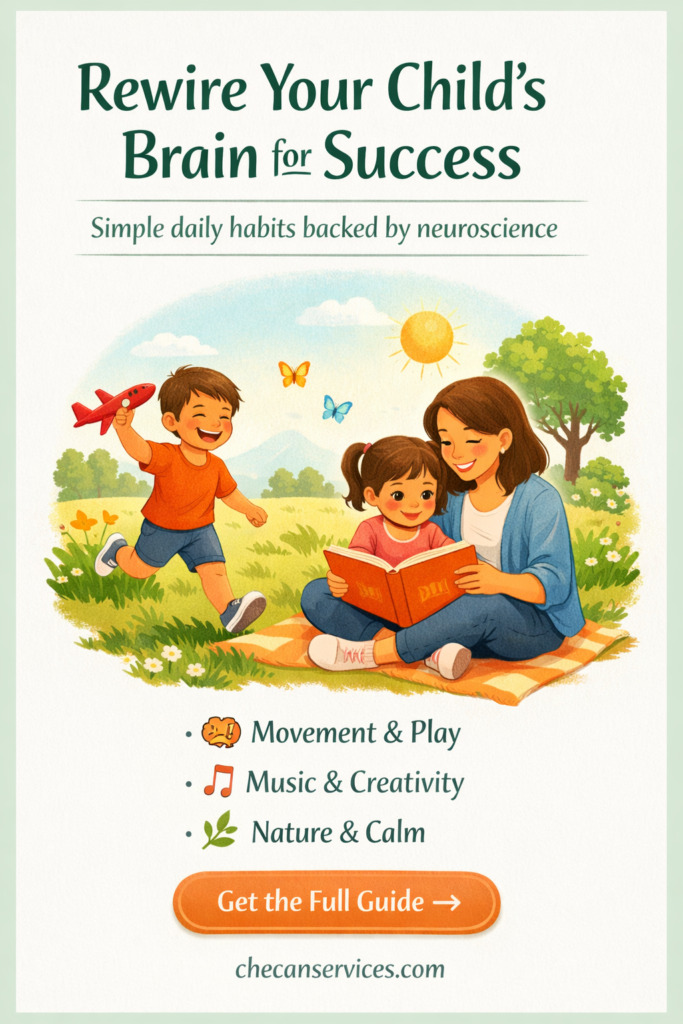
This doesn’t mean structured exercise only. Free play, dancing, climbing, and even jumping on a trampoline all count. The key is making movement a regular, joyful part of your child’s day rather than something that only happens during gym class.
Music and Creativity Wire the Brain for Learning
Music is one of the most comprehensive brain workouts a child can get. Learning to play an instrument, sing, or even just listen attentively to music activates multiple brain regions simultaneously — those involved in language, math, motor skills, and emotional processing.
Creative activities like drawing, storytelling, and imaginative play work similarly. They encourage divergent thinking, build problem-solving capacity, and help children develop the cognitive flexibility that supports lifelong learning. Don’t rush children out of imaginative play — it’s doing far more cognitive work than it looks like.
Nature, Routine, and the Power of Calm
A stressed brain is not a learning brain. Chronic stress floods a child’s system with cortisol, which can literally damage developing neural pathways. Creating calm, predictable routines and providing regular time in nature are two of the most effective ways to regulate a child’s stress response.
Nature, in particular, has been shown to restore attention, improve mood, and reduce anxiety in children. Even short daily doses — a walk in a park, time in a garden, or a few minutes of outdoor play — can meaningfully support a child’s ability to focus and absorb new information.
Mindset and Relationships Reshape the Brain Too
How a child talks to themselves matters enormously. A growth mindset — the belief that abilities can be developed through effort — doesn’t just improve motivation. It changes how the brain responds to difficulty. Children who believe they can improve are more likely to persist, and that persistence builds stronger neural pathways over time.
Relationships are equally powerful. Safe, warm, responsive connections with parents, caregivers, and teachers create the neurological conditions in which learning flourishes. When a child feels seen, supported, and emotionally secure, their brain is primed to take in the world.
Small Changes, Big Results
The beauty of neuroplasticity-based parenting is that it doesn’t require a complete overhaul of your family life. Adding more movement to your morning, turning off screens before bed, spending twenty minutes outside after school, reading together at night — these are the kinds of small, consistent changes that accumulate into significant brain development over time.
If you’re ready to go deeper on these strategies and discover a full toolkit of practical, science-backed approaches to raising sharper, more resilient children, Brain Boosters: Neuroplasticity Hacks for Smarter Children is the guide you’ve been looking for.
Each chapter breaks down the research into clear, doable actions — so you’re never left wondering what to actually do with the information.
Your Child’s Brain Is Always Growing
Neuroplasticity doesn’t stop at childhood, but it is most powerful during these early years. Every day is an opportunity to help your child’s brain build the connections that will support their focus, creativity, emotional health, and academic success for life.
Start small. Stay consistent. And remember: the most powerful brain-building tools you have are already in your hands. Explore the full guide at Brain Boosters: Neuroplasticity Hacks for Smarter Children and start putting them to work today.