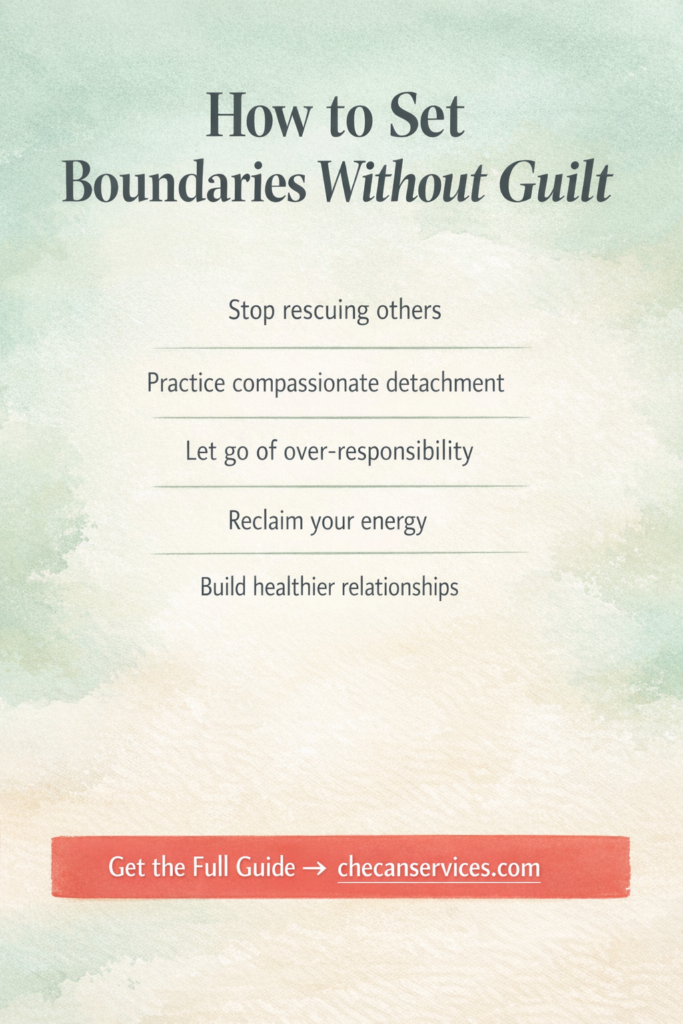
We’ve all been there. A friend calls in a crisis they created themselves, and before you even think about it, you’re rearranging your day to fix things. Your adult child forgets to pay a bill, and you quietly cover it. A colleague drops the ball at work, and you scramble to pick it up.
It feels like the right thing to do, doesn’t it? But here’s the uncomfortable truth — constantly rescuing others doesn’t just exhaust you. It actually prevents the people you care about from learning, growing, and becoming more resilient.
If you’ve ever felt drained by the weight of everyone else’s problems, it might be time to rethink your approach. Embracing Boundaries: Letting Others Face Their Consequences Without Guilt or Anxiety is a practical guide that explores exactly how to do this — compassionately and effectively.
Why We Feel Responsible for Other People’s Problems
Over-responsibility often starts with good intentions. Maybe you grew up in a home where you had to keep the peace. Maybe you learned early on that your value came from being helpful. Over time, these patterns become automatic. You step in before anyone even asks because the discomfort of watching someone struggle feels unbearable.
But psychologists point out that this pattern has a name — it’s called codependency, and it quietly chips away at your mental health. When you habitually absorb other people’s consequences, you carry stress that was never yours to begin with. Meanwhile, the other person never develops the skills they need to handle life on their own.
What Compassionate Detachment Actually Looks Like
Letting go doesn’t mean you stop caring. That’s the biggest misconception people have about boundaries. Compassionate detachment means you care deeply about someone while also recognizing that their choices and consequences belong to them.
Think of a parent whose adult child keeps quitting jobs impulsively. The instinct is to offer money, make phone calls, or smooth things over with employers. But what if, instead, that parent said something like, “I love you, and I believe you can figure this out”? That single shift — from rescuing to empowering — can be life-changing for both people.
The same principle applies at work. A manager who constantly fixes their team’s mistakes isn’t building a stronger team. They’re building a team that never has to take ownership. Stepping back, offering guidance without taking over, and allowing natural consequences to unfold creates accountability and genuine professional growth.
How to Start Setting Boundaries Without the Guilt
Here’s where most people get stuck. You understand the concept, but the moment you try to step back, guilt floods in. You worry you’re being selfish, cold, or uncaring. That emotional response is completely normal — and it’s also something you can learn to manage.
Start small. Identify one situation where you regularly over-function for someone else. Maybe it’s always being the one to organize plans, solve a sibling’s financial problems, or cover for a coworker. Choose one area and practice pausing before you jump in.
Ask yourself a simple question — “Is this mine to solve?” If the answer is no, give yourself permission to sit with the discomfort of not acting. It will feel strange at first. That’s okay. Discomfort is part of the process, not a sign that you’re doing something wrong.
The Freedom on the Other Side
People who learn to set healthy boundaries consistently report the same things — less anxiety, more energy, and surprisingly, better relationships. When you stop over-functioning, you create space for more honest and balanced connections. The people around you may resist at first, but over time, many of them rise to the occasion.
You also rediscover parts of yourself that got buried under everyone else’s needs. Hobbies you abandoned, goals you put on hold, a sense of calm you forgot was possible — these things start coming back when you stop carrying weight that isn’t yours.
You Deserve Peace Too
Boundaries aren’t walls. They’re bridges to healthier, more respectful relationships. Learning to let others face their own consequences isn’t about punishment or withdrawal. It’s about trusting the people you love to handle their lives — and trusting yourself to be okay even when you’re not in control.
If you’re ready to break the cycle of over-responsibility, pick up Embracing Boundaries: Letting Others Face Their Consequences Without Guilt or Anxiety. It’s filled with psychological insights, real-life examples, and actionable strategies to help you reclaim your peace — without guilt or anxiety.