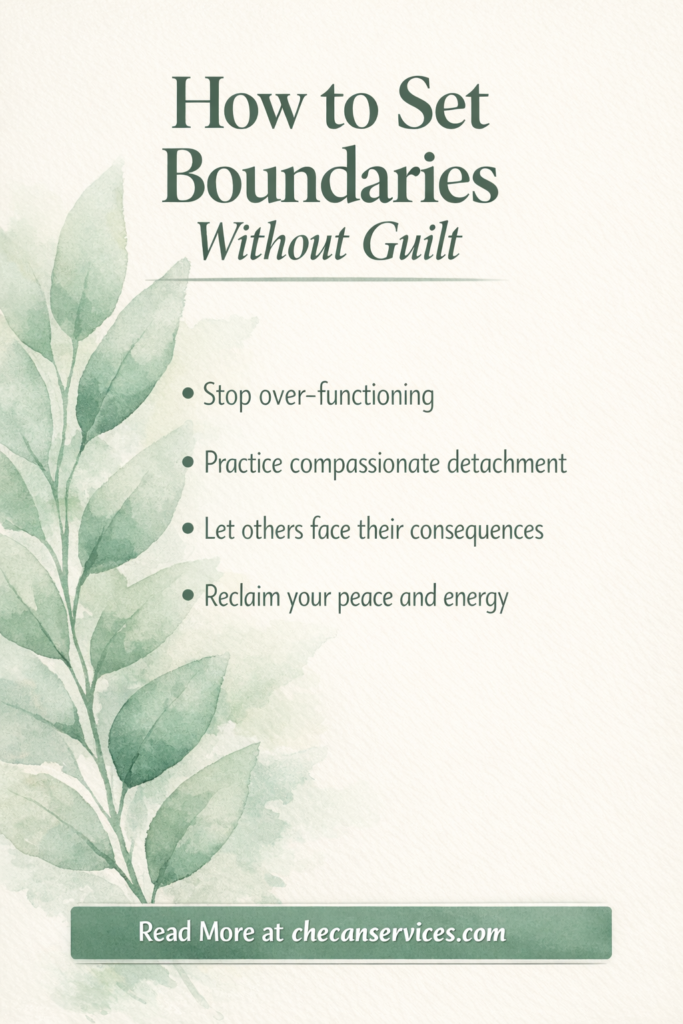
Do you ever feel like you’re carrying the weight of everyone else’s problems on your shoulders? You remind your adult child about their bills. You cover for a coworker who keeps missing deadlines. You stay up worrying about decisions that aren’t even yours to make. And somehow, even though you’re exhausted, you feel guilty at the thought of stopping.
If this sounds familiar, you’re not alone. Millions of people struggle with over-responsibility — the deeply ingrained habit of stepping in, rescuing, and fixing things for the people around them. It feels like love. It feels like duty. But here’s the truth most of us don’t want to hear: constantly saving others from their own consequences doesn’t help them grow. It holds them back. And it slowly drains you in the process.
Why We Struggle to Let Go
The urge to rescue usually comes from a good place. Maybe you were raised to believe that being a good person means always being available. Maybe you learned early on that your worth was tied to how useful you were to others. Over time, these beliefs become automatic. You don’t even realize you’re doing it until the burnout hits.
Psychologists call this pattern “over-functioning.” When you over-function, you take on emotional labor and responsibility that rightfully belongs to someone else. The short-term reward is a sense of control and purpose. But the long-term cost is resentment, anxiety, and relationships that feel one-sided.
The hardest part? When you finally try to step back, guilt floods in. You worry that you’re being selfish or that the other person will fall apart without you. But that worry itself is a signal worth paying attention to. It usually means you’ve been over-involved for so long that healthy distance feels abnormal.
What Compassionate Detachment Really Looks Like
Setting boundaries doesn’t mean becoming cold or uncaring. It means learning what’s yours to carry and what isn’t. This is the core idea behind compassionate detachment — a concept explored in depth in Embracing Boundaries: Letting Others Face Their Consequences Without Guilt or Anxiety.
Compassionate detachment means you can love someone and still allow them to experience the natural outcomes of their choices. You can care deeply and still say, “This is yours to figure out.” It’s not abandonment. It’s respect — for their capability and for your own limits.
Think of a parent with an adult child who keeps asking for money. Every time you bail them out, you send an unspoken message: “I don’t believe you can handle this on your own.” When you step back, you give them the space to develop resourcefulness and resilience. It’s uncomfortable at first, but it’s one of the most loving things you can do.
Practical Steps to Start Setting Boundaries Today
Knowing you need boundaries is one thing. Actually setting them is another. Here are a few strategies that can help you get started.
First, get clear on what you’re responsible for and what you’re not. A simple test is to ask yourself, “If I disappeared tomorrow, whose job would this actually be?” If the answer is someone else’s, you’ve found a boundary to set.
Second, practice saying no without over-explaining. You don’t need a five-minute justification. A calm, honest “I’m not able to help with that right now” is a complete sentence.
Third, expect pushback and prepare for it. People who are used to you rescuing them won’t love the change. They might get angry or try to guilt you into going back to old patterns. This doesn’t mean you’re doing something wrong. It means the boundary is working.
Finally, build a support system for yourself. Changing lifelong patterns is hard, and having people who understand your journey makes a real difference.
The Freedom on the Other Side
When you stop carrying everyone else’s weight, something remarkable happens. Your stress drops. Your relationships become more honest. And the people around you start stepping up in ways you never expected.
If you’re ready to break the cycle of over-responsibility and learn how to let go without guilt, Embracing Boundaries is a practical, compassionate guide that walks you through every step — from understanding why you over-function to handling the emotional hurdles that come with change. It’s packed with real-life examples, psychological insights, and actionable strategies you can use right away.
You deserve to live without the constant weight of other people’s problems. Setting boundaries isn’t selfish. It’s the foundation of every healthy relationship you’ll ever have.