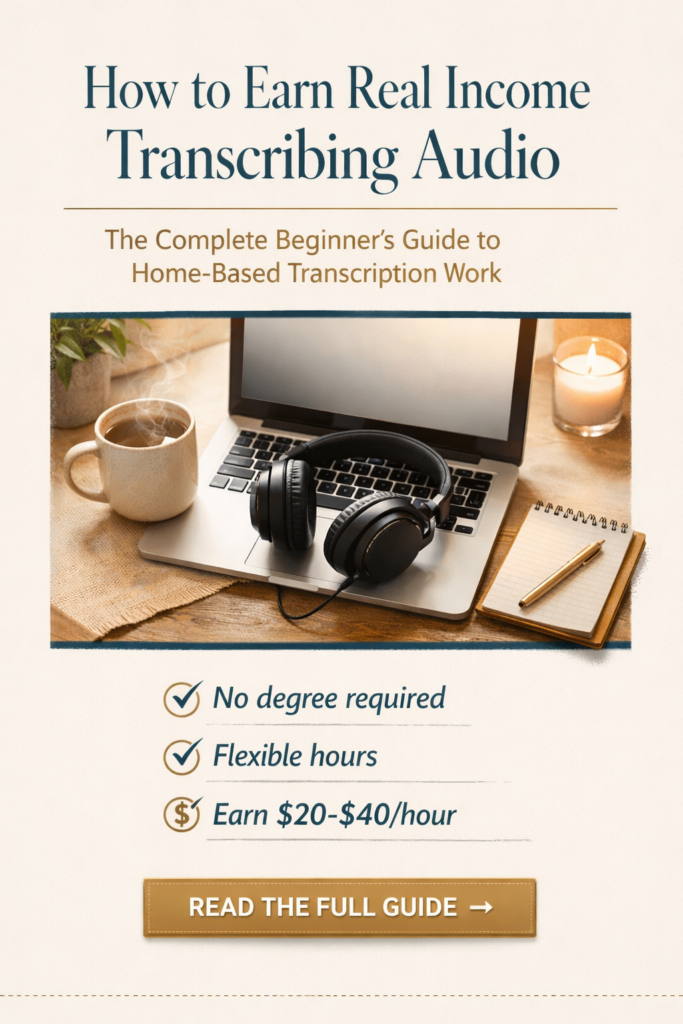
Ever thought about turning your listening skills into actual paychecks? Transcription might just be the flexible, home-based income stream you’ve been searching for. It’s one of those rare gigs where you can work in pajamas, set your own hours, and build a legitimate career without needing a fancy degree or years of experience. Let’s break down exactly how to get started and actually make money at it.
What Transcription Really Involves
At its core, transcription is the process of listening to audio files and typing out what you hear into clean, readable text. The audio can come from all kinds of sources — podcasts, interviews, legal proceedings, medical dictations, business meetings, YouTube videos, academic research, and more. Your job is to capture the spoken word accurately and format it in a way the client needs.
There are three main types of transcription you’ll encounter: verbatim (where you type every “um,” “uh,” and pause), clean verbatim (where you remove the filler words but keep everything else), and edited transcription (where you polish the text for readability). Knowing which style a client wants is half the battle.
Building the Skills You Actually Need
Strong transcription work rests on a few non-negotiable skills. First, typing speed matters — you’ll want to hit at least 60 words per minute, though 75+ is ideal if you want to earn more per hour. Free tools like TypingClub or 10FastFingers can help you build up your pace.
Second, your listening skills need to be sharp. You’ll encounter heavy accents, poor audio quality, crosstalk, and technical jargon. Training your ear by listening to podcasts at varied speeds or transcribing short clips for practice will pay off quickly. Grammar and punctuation are the third pillar — even perfect typing means nothing if your finished transcript is riddled with comma splices.
If you want a structured roadmap for building these skills systematically, the Audio Goldmine guide walks you through each skill progression in clear, beginner-friendly steps.
Choosing the Right Tools
You don’t need fancy equipment to start, but a few tools will dramatically speed up your workflow. A decent pair of over-ear headphones is essential — cheap earbuds will cause ear fatigue and miss subtle audio details. A foot pedal (like the Infinity USB) lets you pause and rewind hands-free, which can double your output once you get used to it.
For software, Express Scribe is a widely-used free option that integrates with foot pedals and lets you control playback speed. oTranscribe is a free browser-based alternative that requires no installation. As you grow, you might graduate to paid tools with AI-assisted features that handle timestamps and speaker identification automatically.
Finding Your First Clients
This is where most beginners get stuck. The good news? There are plenty of entry points. Platforms like Rev, GoTranscript, TranscribeMe, and Scribie regularly hire beginners. The pay isn’t amazing at first — often $0.30 to $0.60 per audio minute — but they give you consistent work while you build your reputation.
Once you have a few months of experience, you can start approaching direct clients on Upwork, LinkedIn, or even reaching out to podcasters and YouTubers directly. Direct clients typically pay $1 to $3 per audio minute, which is a massive jump from the beginner platforms.
Handling Difficult Audio Files
Eventually you’ll encounter audio that makes you want to throw your laptop. Multiple speakers talking over each other, background noise, thick accents, or low-quality recordings are all part of the job. Pros handle these by slowing playback speed, using noise-reduction software, and making educated guesses marked with [inaudible] timestamps when truly necessary.
Never fake content. If you can’t understand something, flag it honestly. Clients respect accuracy over speed every single time.
Growing Beyond the Keyboard
Once you’re comfortable with general transcription, specialized niches pay significantly more. Medical transcription, legal transcription, and academic research transcription can earn $25-$50 per hour for skilled workers. Captioning and subtitling services are another high-demand area, especially as streaming platforms and social media content continue to explode.
You can also build a small transcription business by subcontracting work to other transcribers, creating your own client base, and positioning yourself as a project manager rather than just an individual contractor. The Audio Goldmine ebook covers these scaling strategies in detail, including how to price your services and build long-term client relationships.
The Realistic Income Picture
Let’s be honest — transcription isn’t a get-rich-quick scheme. Beginners typically earn $5-$15 per hour during their first few months. After six to twelve months of consistent work, $20-$30 per hour is very achievable. Specialized transcribers regularly clear $40+ per hour. The ceiling rises with your speed, accuracy, and niche expertise.
Ready to turn your listening and typing skills into steady income? Grab your copy of Audio Goldmine and start building your transcription career today.