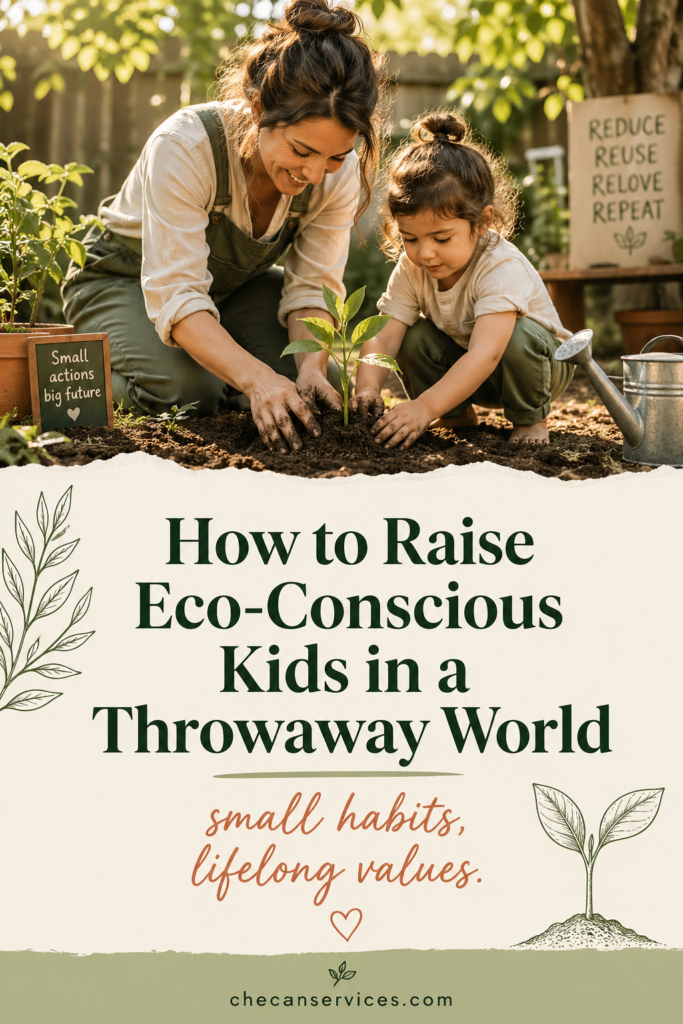
Somewhere between the third Amazon delivery of the week and the pile of plastic toys nobody plays with anymore, a lot of parents have the same quiet thought: we could be doing this better. Not in a guilt-spiral kind of way, but in a real, practical, where-do-we-even-start kind of way.
Raising kids who genuinely care about the planet doesn’t require a homestead, a compost empire, or a closet full of organic linen. It just takes a shift in how your family makes everyday decisions—and the willingness to let your kids be part of those decisions.
Here’s how to actually pull it off without burning out or turning your home into an eco-bootcamp.
Start With the Why, Not the Rules
Kids don’t connect with abstract concepts like “carbon footprint” or “climate change.” They connect with stories, animals, and the things they can see and touch.
Instead of leading with rules (“don’t waste water!”), lead with curiosity. Talk about why the bees matter when you’re in the garden. Watch a documentary about ocean life and let them ask questions. Notice the seasons changing on your morning walk.
When kids understand that they’re part of something bigger—a living, breathing world that responds to how we treat it—the eco-friendly habits start to feel meaningful instead of like chores.
Make Sustainability a Family Game, Not a Lecture
The fastest way to make kids resist anything is to turn it into a constant lesson. The fastest way to get them on board? Make it fun.
Try a “trash audit” where everyone guesses how much waste the family produces in a week, then works together to cut it in half. Turn off all the lights for an hour and have a candlelit dinner. Challenge each other to a “no single-use plastic” weekend.
Kids love feeling like they’re part of a mission. When sustainability becomes something the family does together, it stops being your project and starts being theirs.
Tackle the Big Three: Waste, Energy, and Water
You don’t need to overhaul your entire life. Focus on the three areas where families create the most environmental impact.
Waste: Switch to reusable lunch containers, water bottles, and shopping bags. Start a small compost bin (kids love watching food scraps turn into soil). Donate or repurpose toys and clothes instead of tossing them.
Energy: Make turning off lights, unplugging chargers, and lowering the thermostat a shared family habit. Let kids be the “energy inspectors” of the house.
Water: Shorter showers, turning the tap off while brushing teeth, and collecting rainwater for plants are all small wins kids can own.
These aren’t dramatic changes, but stacked together over years of childhood, they build the kind of instincts that stick into adulthood.
Celebrate Differently
Birthdays, holidays, and parties are where most families quietly drown in waste—plastic decorations, single-use plates, gift wrap that goes straight to the trash, and toys that break within a week.
You can absolutely throw a magical birthday party without all that. Think reusable bunting, secondhand decorations, experience-based gifts (zoo passes, art classes, a day trip), and homemade cake. Many kids actually love the creativity of an eco-themed party more than another generic balloon-and-plastic-favor situation.
For the deeper playbook on eco-friendly celebrations, mindful gifting, and turning everyday family routines into sustainable rituals, Green Parenting: Raising Kids for a Sustainable World walks you through it chapter by chapter with examples you can use immediately.
Get Outside More Than You Think You Should
Kids who love nature grow up to protect it. It’s that simple.
Hiking, gardening, beach cleanups, backyard bug-hunting, stargazing—these aren’t just activities. They’re how children build a personal relationship with the planet. A child who has watched a seed they planted become a tomato is a child who understands food differently. A child who has cleaned up a park is a child who notices litter for the rest of their life.
Screens are loud and constant. Nature is patient. Make space for both.
Let Them See You Care
Children are watching everything. They notice when you bring your own bag to the store, when you skip the bottled water, when you fix something instead of replacing it, when you choose secondhand without making a big deal of it.
You don’t have to be a perfect environmentalist. You just have to be a visible one. Talk about why you’re making the choices you’re making. Admit when you slip up. Let them see that being eco-conscious is a practice, not a performance.
The Long Game
Raising sustainable kids isn’t about creating perfect little environmentalists by age ten. It’s about planting values early enough that they grow naturally—so that by the time your child is making their own decisions about food, fashion, travel, and home, care for the planet is already part of who they are.
For the full roadmap—including practical guides on energy conservation, eco-birthdays, and building lifelong green values—grab your copy of Green Parenting: Raising Kids for a Sustainable World.
Small home. Big impact. That’s how it starts.