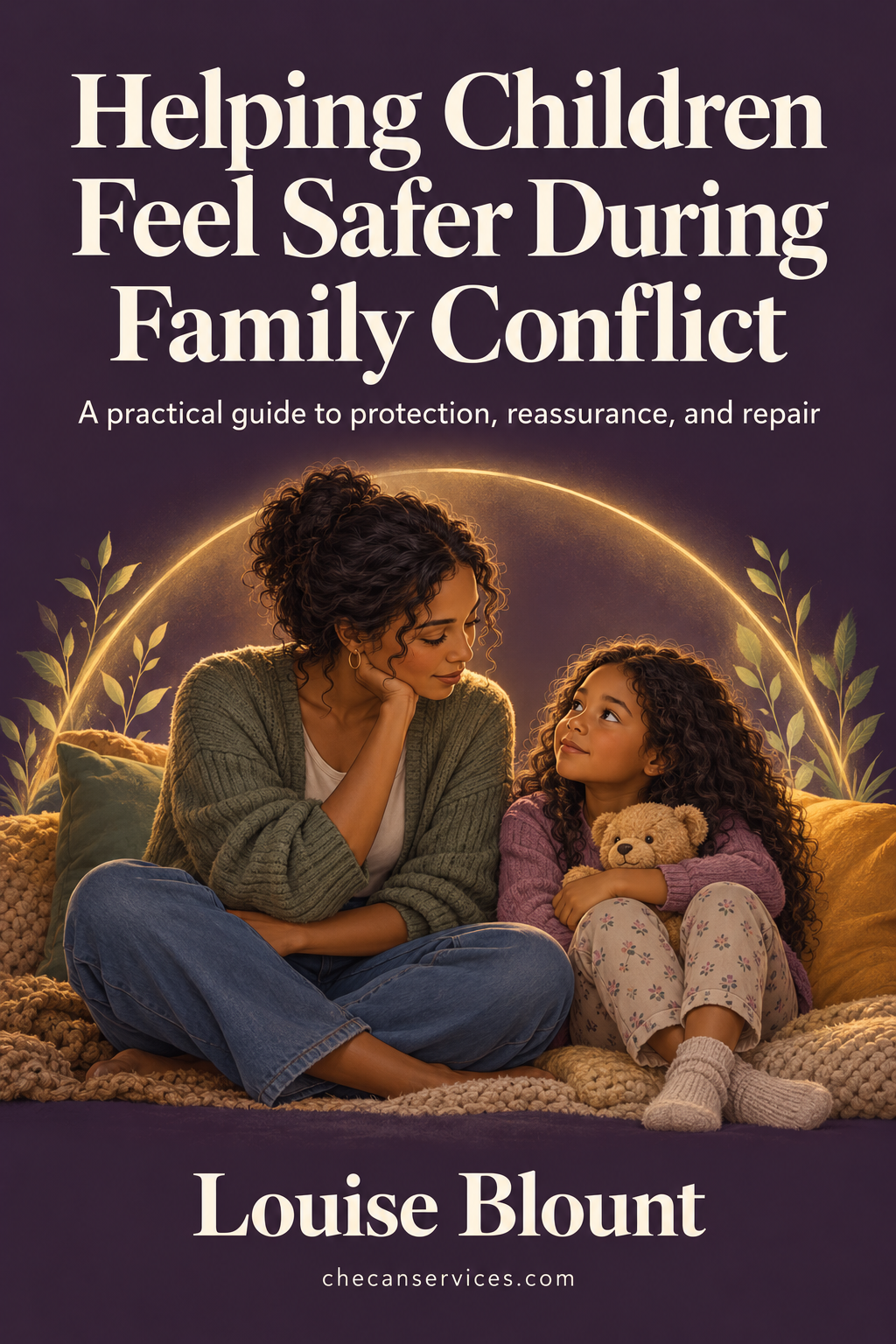
Help children feel supported when family life becomes difficult
Children can notice family tension long before they can explain how it affects them. Raised voices, uncomfortable silence, unpredictable routines, and pressure to take sides can leave them feeling frightened or responsible for adult problems.
Helping Children Feel Safer During Family Conflict by Louise Blount offers practical, compassionate guidance for parents, grandparents, foster carers, relatives, and other protective caregivers. It explains how to reduce frightening experiences, offer honest reassurance, and build more dependable everyday care.
What you will learn
- Recognize the differences between ordinary disagreement, destructive conflict, and abuse.
- Notice changes in children’s behavior without jumping to conclusions or assigning labels.
- Prioritize protection when conflict escalates.
- Reassure children that they did not cause adult conflict and do not have to fix it.
- Adapt conversations and support to age, development, and communication needs.
- Offer comfort without demanding that children calm down or explain their feelings.
- Repair harm through accountability and observable changes in adult behavior.
- Restore predictable routines around school, meals, bedtime, and transitions.
- Keep children out of messenger, mediator, and emotional caretaker roles.
- Build a trusted support circle and recognize when professional help is needed.
Practical tools you can use
The ebook includes conversation examples, three clearly labeled fictional case studies, caregiver to-do lists, and a flexible seven-day action plan. These tools help you choose realistic next steps that fit your child’s needs and your circumstances.
Research-informed guidance
This approximately 6,000-word, 32-page PDF draws on selected research published in 2025 and 2026, alongside established specialist guidance. Ten linked references support further reading, and research summaries explain important limitations.
The book keeps children’s safety at the center. It distinguishes respectful problem solving from intimidation and abuse, where specialist safety planning takes priority over communication exercises.
Begin with one protective action, one dependable routine, and one message your child needs to hear: adult conflict is not your fault, and you deserve care.
This ebook provides educational information and does not replace individualized professional advice. The case studies are fictional teaching examples.


Reviews
There are no reviews yet.