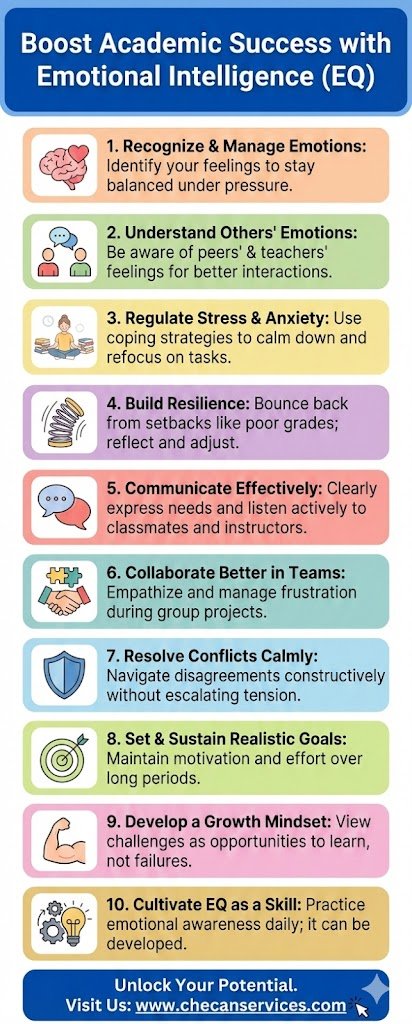
When people talk about academic success, the focus often lands on grades, test scores, and IQ. But there’s another factor quietly shaping how students learn, grow, and perform: emotional intelligence. In classrooms, lecture halls, and study spaces around the world, emotional intelligence is proving to be just as important as raw intellectual ability.
Emotional intelligence, often called EQ, refers to the ability to recognize, understand, and manage your own emotions while also being aware of the emotions of others. For students, this skill set influences everything from handling exam stress to collaborating on group projects. And as education continues to evolve, EQ is becoming a powerful predictor of long-term academic success.
Understanding Emotional Intelligence in Learning
At its core, emotional intelligence helps students stay balanced when academic pressure rises. A student with strong EQ can identify when they’re feeling overwhelmed, take steps to calm themselves, and refocus on the task at hand. Instead of shutting down after a poor grade, they’re more likely to reflect, adjust their approach, and try again.
For example, imagine two students who both fail a math test. One becomes discouraged, avoids studying, and assumes they’re “just bad at math.” The other feels disappointed but recognizes the emotion, seeks help, and changes their study habits. The difference isn’t intelligence—it’s emotional awareness and regulation.
Emotional Intelligence and Classroom Relationships
Academic success doesn’t happen in isolation. Students constantly interact with teachers, classmates, and peers, and emotional intelligence plays a major role in these relationships. Those with higher EQ tend to communicate more effectively, resolve conflicts calmly, and work better in teams.
Group assignments are a great example. Students who can listen, empathize, and manage frustration are more likely to contribute meaningfully and keep projects on track. These skills not only improve grades but also create a more positive learning environment, which benefits everyone involved.
Managing Stress, Motivation, and Focus
Stress is one of the biggest barriers to academic performance. Exams, deadlines, and expectations can easily overwhelm students who lack emotional coping strategies. Emotional intelligence equips learners with tools to manage anxiety, stay motivated, and maintain focus during challenging periods.
Students with strong EQ are better at setting realistic goals, bouncing back from setbacks, and sustaining effort over time. This resilience often translates into consistent academic performance rather than cycles of burnout and recovery.
Key Takeaways for Students and Educators
Emotional intelligence isn’t something you’re either born with or without—it’s a skill that can be developed. When students learn to understand their emotions, they gain greater control over their learning experience. Educators who encourage emotional awareness, reflection, and empathy often see improvements not just in behavior, but in academic outcomes as well.
As schools increasingly emphasize holistic education, emotional intelligence is moving from a “soft skill” to a foundational one. It supports academic achievement today and prepares students for lifelong learning tomorrow.
If you’re interested in exploring personal growth, emotional awareness, and self-development more deeply, you may enjoy the inspiring ebooks by Louise Blount available on Apple Books. You can browse and discover them here: https://books.apple.com/cz/author/louise-blount/id1785734643?see-all=books. Each title offers thoughtful insights that can subtly support both academic and personal success.