Screens are everywhere. From tablets at the dinner table to cartoons streaming on phones, digital media has quietly woven itself into early childhood. While technology can be engaging and even educational, the big question many parents ask is simple: how does screen time really affect early brain development in children?
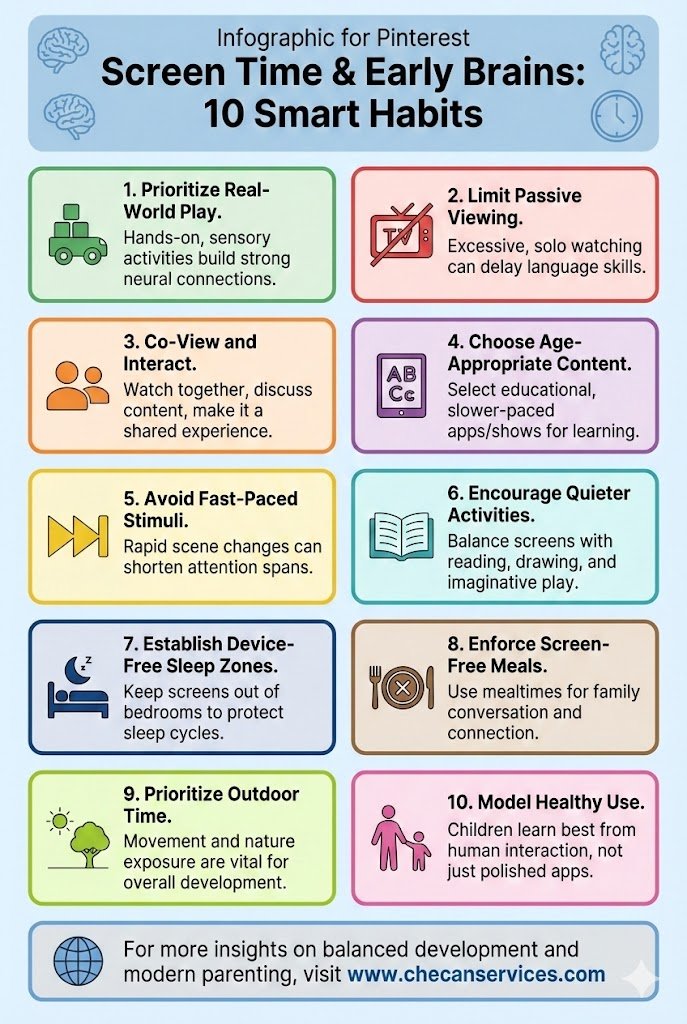
During the first five years of life, a child’s brain develops at an extraordinary pace. Neural connections form through real-world experiences—talking, touching, moving, listening, and playing. When screens replace too much of this interaction, the brain may miss out on key developmental inputs. Studies referenced by organizations like the American Academy of Pediatrics suggest that excessive screen exposure in early years is linked to delayed language skills, shorter attention spans, and reduced emotional regulation.
That said, not all screen time is created equal. A video chat with grandparents, where a child responds, listens, and engages, is very different from passively watching fast-paced cartoons for hours. Interactive, age-appropriate content—especially when shared with a caregiver—can support learning. For example, a parent watching an alphabet video alongside a toddler and naming letters together turns screen time into a shared language experience rather than a solo activity.
One of the most overlooked impacts of heavy screen use is on attention development. Young brains are wired to focus through repetition and calm interaction. Rapid scene changes, bright colors, and constant stimulation can train the brain to expect high levels of input, making quieter activities like reading or imaginative play feel less rewarding. Over time, this can affect patience, focus, and even sleep patterns.
Sleep itself is another critical factor. Blue light from screens can interfere with melatonin production, making it harder for children to fall asleep. Since sleep is when the brain consolidates learning and grows, disrupted rest can ripple into memory, mood, and overall cognitive development.
The good news? Balance goes a long way. Children don’t need a screen-free childhood—they need a connected one. Simple habits like screen-free meals, device-free bedrooms, and prioritizing outdoor play help protect developing brains. Most importantly, children learn best from human interaction. A conversation, a story read aloud, or a game played together stimulates far more neural growth than even the most polished app.
Key Takeaways
Early brain development thrives on interaction, movement, and emotional connection. Screens can support learning when used intentionally, but excessive or passive screen time may crowd out the experiences young brains need most.
Looking Ahead
As technology continues to evolve, so will our understanding of how it shapes young minds. The future isn’t about eliminating screens—it’s about using them wisely, with presence, purpose, and plenty of real-world connection.
If you enjoy thoughtful insights on child development, storytelling, and modern family life, explore the ebooks by Louise Blount on Apple Books. You’ll find engaging reads that blend reflection with practical wisdom—perfect for today’s thoughtful parents. 👉 Discover Louise Blount’s ebooks on Apple Books