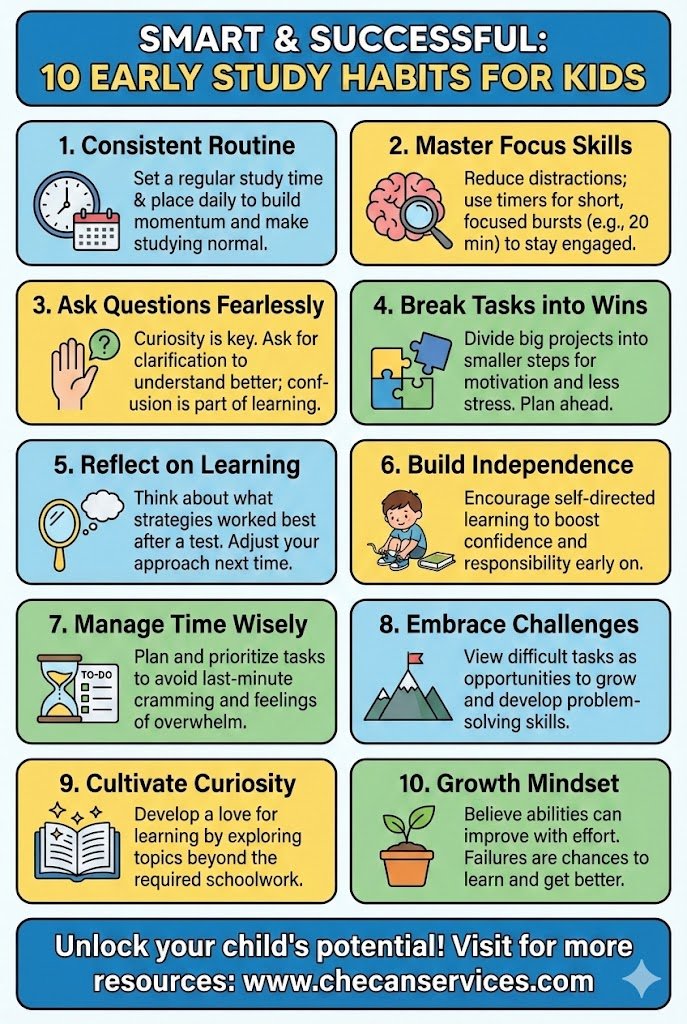
Ever notice how some kids seem to breeze through school with confidence, curiosity, and calm? It’s easy to assume they’re just “naturally smart,” but more often than not, they’ve learned strong study habits early in life. These habits don’t just help with grades—they shape how kids think, solve problems, and approach challenges well into adulthood.
The good news? These habits aren’t reserved for a select few. They’re learnable, teachable, and surprisingly simple to start.
Creating a Consistent Study Routine
Smart kids don’t wait until the last minute. They learn early that consistency beats cramming. A regular study routine—same time, same place—trains the brain to focus more easily. For example, a child who studies for 30 minutes after school every day builds momentum without feeling overwhelmed. Over time, studying becomes a normal part of the day, not a dreaded event.
Parents often notice that kids with routines argue less about homework because expectations are clear and predictable.
Learning How to Focus (Even When It’s Hard)
Successful kids understand that focus is a skill, not a personality trait. They learn to reduce distractions—putting away toys, silencing devices, or using timers to work in short bursts. Techniques like the “20-minute focus, 5-minute break” approach help kids stay engaged without burning out.
This early ability to manage attention pays off later when schoolwork becomes more demanding and distractions multiply.
Asking Questions Without Fear
One powerful habit smart kids develop is curiosity. They ask questions when they don’t understand something instead of pretending they do. Whether it’s raising a hand in class or asking a parent for clarification, they learn that confusion is part of learning—not something to be embarrassed about.
This mindset builds confidence and resilience, two traits strongly linked to long-term success.
Breaking Big Tasks Into Smaller Wins
A big project can feel scary to any child. Successful kids learn to break assignments into smaller, manageable steps: research today, outline tomorrow, write a draft later. Each small win builds motivation and reduces stress.
This habit also teaches planning and time management—skills that matter far beyond school.
Reflecting on What Worked (and What Didn’t)
Smart learners don’t just study; they reflect. After a test or assignment, they think about what strategies helped and what they’d change next time. Did flashcards work better than rereading notes? Was studying earlier less stressful?
This simple reflection turns every experience into a learning opportunity.
Key Takeaways for Parents and Kids
Early study habits shape more than academic success—they build independence, confidence, and a love of learning. When kids learn how to manage their time, focus their attention, and stay curious, they’re better prepared for school and life.
Looking Ahead
The habits kids form today influence how they handle challenges tomorrow. By encouraging these skills early, we help children grow into capable, self-directed learners who believe in their ability to improve.
If you’re looking for engaging stories and ideas that gently inspire growth, confidence, and positive habits, explore the ebooks by Louise Blount on Apple Books. You can discover them here. They’re a wonderful addition to any child’s learning journey.