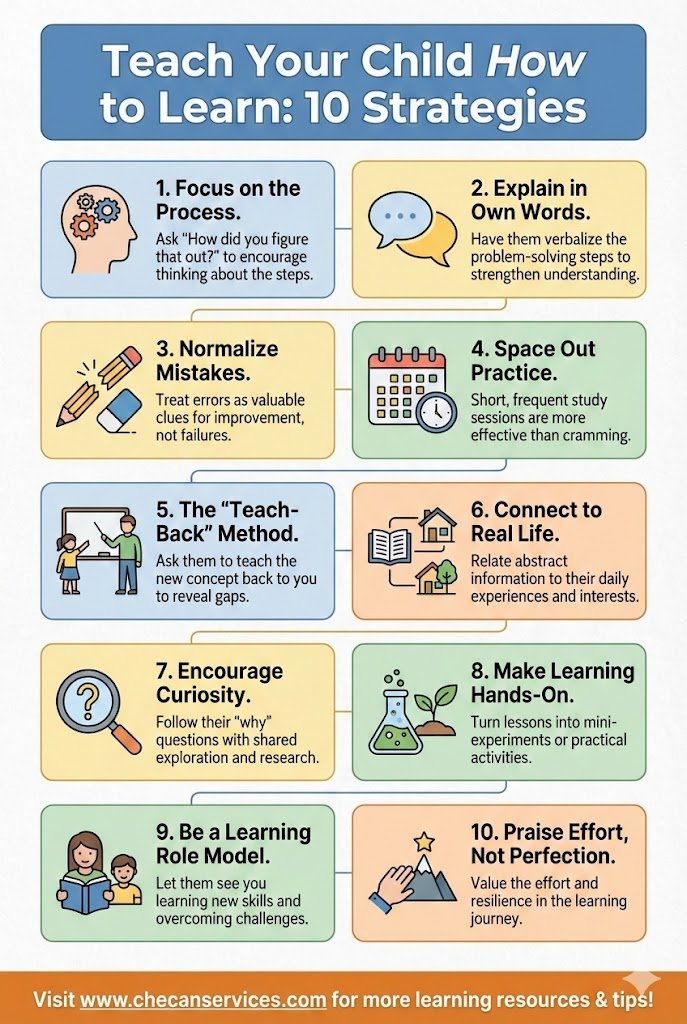
Helping children learn faster and better isn’t about pushing them to memorize more facts or rushing them through worksheets. It’s about teaching them how to learn—a skill that stays with them long after specific lessons are forgotten. When kids understand their own learning process, they become more confident, curious, and independent.
So how do we actually do that in everyday life?
Focus on Learning How to Learn
Instead of asking, “Did you get the right answer?” try asking, “How did you figure that out?” This small shift encourages children to think about their thinking. For example, if a child solves a math problem, let them explain the steps in their own words. This reflection strengthens understanding and helps them apply the same strategy next time.
Over time, kids begin to recognize what works best for them—whether that’s drawing diagrams, reading out loud, or breaking tasks into smaller chunks.
Make Mistakes Safe and Useful
Children learn faster when they’re not afraid of being wrong. Mistakes are powerful teachers, but only if kids feel safe making them. When your child struggles with spelling or forgets a science concept, avoid quick corrections. Instead, explore the error together.
You might say, “That didn’t work this time—what could we try differently?” This approach builds resilience and shows that learning is a process, not a performance.
Teach Simple Learning Strategies
Many children are never taught practical learning tools. Simple strategies can make a big difference:
- Spacing practice: Short sessions over several days work better than cramming.
- Teaching back: Ask your child to teach you what they just learned—it reveals gaps and builds confidence.
- Connecting ideas: Relating new information to real life makes it stick. A history lesson becomes memorable when linked to a family story or a movie they love.
These techniques help children absorb information more deeply and efficiently.
Encourage Curiosity Over Speed
Fast learning doesn’t mean rushing. Children learn better when curiosity leads the way. If your child asks “why,” pause the lesson and explore the question together. Look things up, test ideas, or turn it into a mini experiment.
This curiosity-driven approach trains children to seek understanding, not just answers—an essential habit for lifelong learning.
Model Learning in Everyday Life
Children watch how adults learn. Let them see you reading, trying new skills, or even struggling. Saying, “I don’t know yet, but I’ll figure it out,” shows them that learning never stops and that effort matters more than perfection.
Key Takeaways
Teaching children how to learn faster and better is really about building habits: reflection, resilience, curiosity, and strategy. When kids understand their own learning style and feel empowered to improve it, they don’t just perform better in school—they grow into confident, adaptable thinkers.
Looking Ahead
As education continues to evolve, children who know how to learn will always have an advantage. Supporting them now sets the foundation for a lifetime of growth, creativity, and confidence.
If you enjoy thoughtful, practical insights on learning and personal growth, explore the inspiring ebooks by Louise Blount available on Apple Books. They’re a wonderful resource for parents and lifelong learners looking to deepen understanding and spark meaningful change.