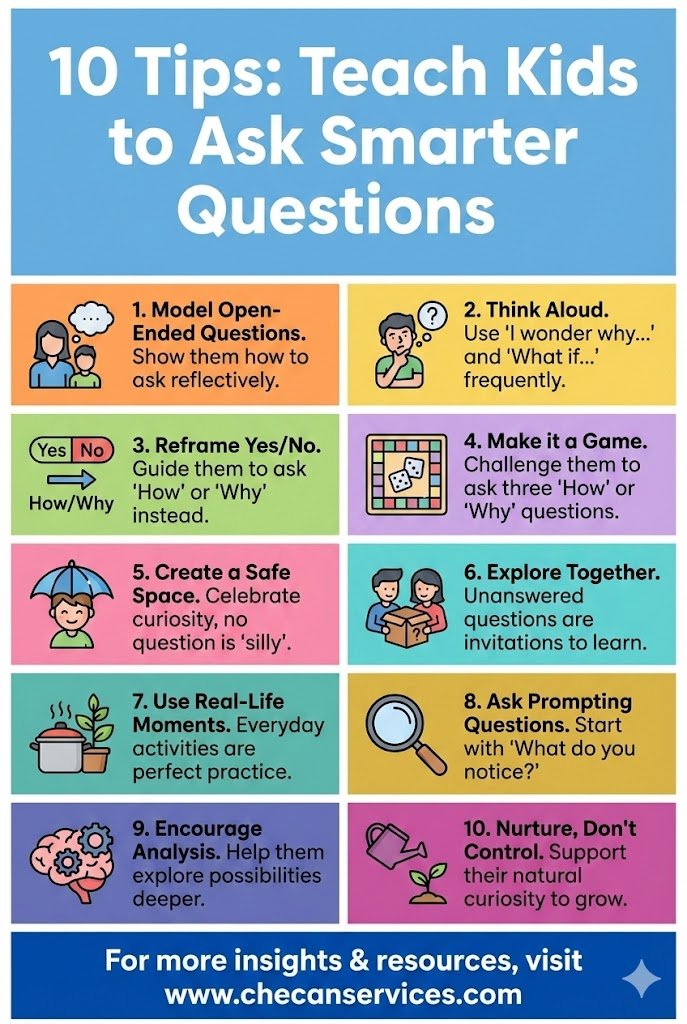
If you’ve ever spent time with children, you know they ask a lot of questions. “Why is the sky blue?” “Why do cats sleep so much?” “Why can’t I have ice cream for breakfast?” While this natural curiosity is a gift, not all questions are created equal. Teaching children how to ask better and smarter questions helps them think critically, communicate clearly, and become confident learners for life.
The good news? Question-asking is a skill—and like any skill, it can be taught, practiced, and strengthened over time.
Why Smart Questions Matter
Smart questions go beyond simple curiosity. They encourage children to analyze situations, explore possibilities, and seek deeper understanding. For example, instead of asking, “What is this?” a smarter question might be, “How does this work?” or “Why was it made this way?” These kinds of questions help children connect ideas and think independently rather than just memorizing answers.
When kids learn how to ask thoughtful questions, they become more engaged in school, more confident in conversations, and more capable of solving problems on their own.
Model the Questions You Want to Hear
Children learn by watching adults. If they hear you asking reflective, open-ended questions, they’ll naturally start doing the same. Instead of saying, “That’s just how it is,” try asking aloud, “I wonder why this happened?” or “What do you think would happen if we tried a different way?”
Over time, children pick up on these patterns and begin mirroring them in their own thinking.
Teach the Power of “How” and “Why”
One simple trick is to gently steer children away from yes-or-no questions and toward open-ended ones. For instance, if a child asks, “Is this bad?” you might respond with, “Why do you think it might be bad?” This reframing helps them explore their own reasoning and develop deeper insight.
You can even turn it into a game—challenge them to ask three “how” or “why” questions about a story, a science experiment, or something they notice in daily life.
Create a Safe Space for Curiosity
Children won’t ask better questions if they feel judged or dismissed. Celebrate curiosity, even when questions seem silly or repetitive. A child who feels safe asking questions will be more willing to think out loud, take intellectual risks, and explore new ideas.
Remember, unanswered questions aren’t failures—they’re invitations to explore together.
Use Real-Life Moments as Practice
Everyday experiences are perfect teaching opportunities. Cooking dinner, watching a movie, or walking outside can all spark meaningful questions. Ask things like, “What do you notice?” or “What would you change if you were in charge?” These moments help children see that good questions aren’t just for classrooms—they’re tools for understanding the world.
Key Takeaways for Parents and Educators
Teaching children to ask smarter questions is about nurturing curiosity, not controlling it. By modeling thoughtful inquiry, encouraging open-ended thinking, and creating supportive environments, we empower kids to become lifelong learners who aren’t afraid to wonder, explore, and challenge ideas.
If you’re looking for inspiring stories and thoughtful insights that spark curiosity and reflection for both adults and young readers, explore the ebooks by Louise Blount available on Apple Books. They’re a wonderful way to continue meaningful conversations and nurture a love of thoughtful questioning at home.