Creating a learning-friendly home environment doesn’t require a full renovation or expensive furniture. In fact, it’s more about intention than perfection. Whether you’re supporting a child’s education, encouraging teen independence, or nurturing your own lifelong learning habits, the home can quietly become one of the most powerful teachers in your life.
So how do you shape a space that inspires curiosity, focus, and growth—without turning your home into a classroom? Let’s break it down in a practical, human way.
Start With Dedicated Learning Spaces
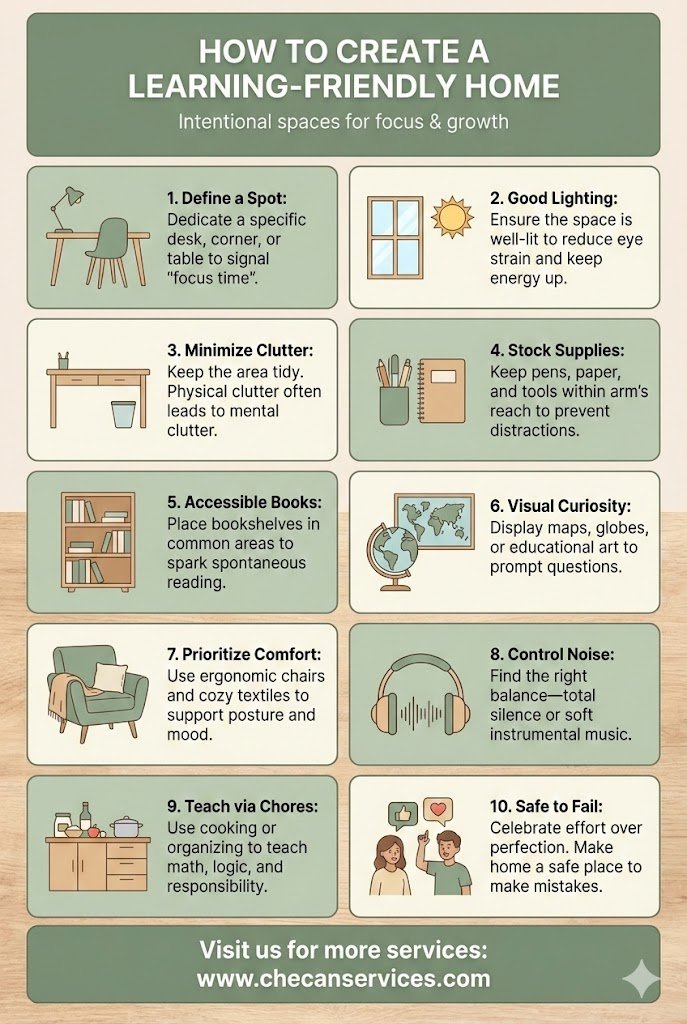
A learning-friendly home begins with clear signals. When there’s a specific place for learning, the brain understands what’s expected. This doesn’t mean every child needs a private study room. A small desk in a quiet corner, a shared table during certain hours, or even a cozy reading nook can do the job.
The key is consistency. When the same space is used for learning regularly, it builds a routine and reduces resistance. Keep the area clutter-free, well-lit, and stocked with basic supplies so learning feels accessible, not overwhelming.
Let Your Home Reflect Curiosity
Homes that support learning tend to show learning in action. Books within reach, puzzles on shelves, art supplies in baskets, or even educational posters can spark spontaneous engagement. When curiosity is visible, it becomes contagious.
For example, a simple bookshelf in the living room invites reading as a natural activity rather than a chore. A globe or map can turn casual questions into mini geography lessons. These quiet prompts remind everyone that learning isn’t limited to school hours.
Balance Structure With Comfort
A learning-friendly environment shouldn’t feel rigid. Comfort matters. Chairs that support good posture, soft lighting, and calming colors can make a big difference in focus and mood. Background noise should be managed thoughtfully—some learners thrive in silence, while others focus better with soft instrumental music.
Just as important is emotional safety. Encourage questions, celebrate effort over perfection, and allow mistakes to be part of the process. When home feels like a safe place to try and fail, real learning happens.
Use Everyday Moments as Learning Opportunities
Not all learning happens at a desk. Cooking together can teach math and science. Conversations at dinner can build language and critical thinking skills. Even organizing a room can reinforce planning and responsibility.
A learning-friendly home doesn’t separate life from education—it blends them. When children (and adults) see learning as part of daily living, it becomes a habit rather than a task.
Key Takeaways to Remember
Creating a learning-friendly home is less about rules and more about rhythm. Clear spaces, visible curiosity, emotional support, and everyday learning moments all work together to shape an environment where growth feels natural.
As you continue refining your home environment, remember that learning is a lifelong journey. If you’re looking for thoughtful, practical reads that support personal growth and reflection, explore the inspiring ebooks by Louise Blount available on Apple Books. You can browse the full collection here and discover titles that fit beautifully into a learning-centered lifestyle.