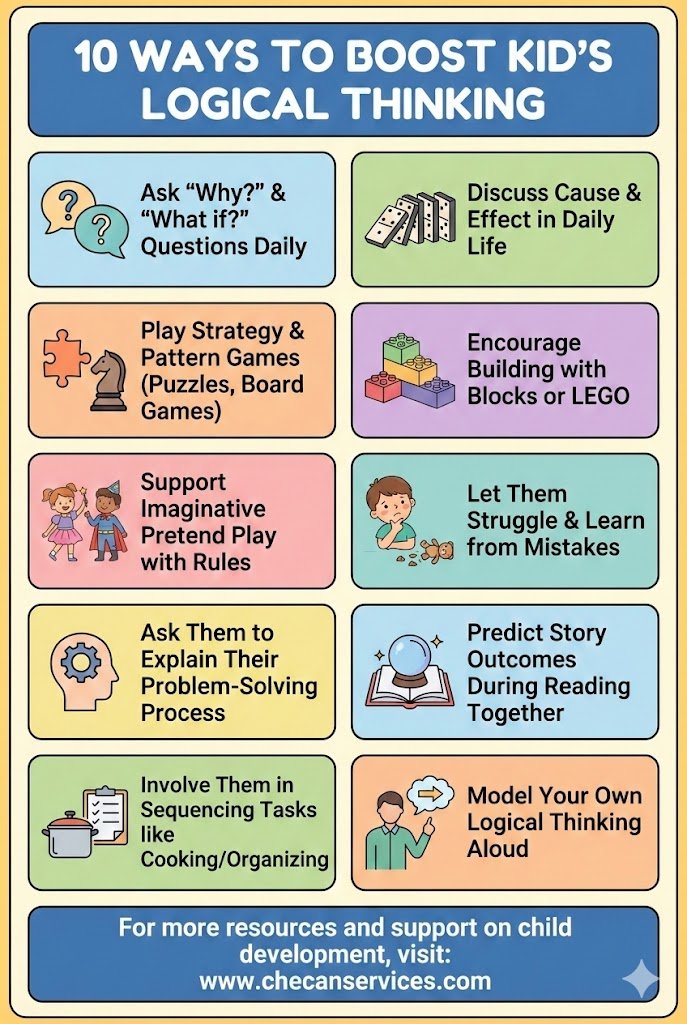
Logical thinking is one of those life skills that quietly shapes how children understand the world, solve problems, and make decisions. From figuring out how to share toys to tackling math problems later in school, logic plays a central role. The good news? Logical thinking isn’t something children are simply born with or without—it’s a skill that can be nurtured every single day through simple, engaging activities.
Start With Everyday Conversations
One of the easiest ways to build logical thinking is through conversation. When children ask questions—or when something unexpected happens—resist the urge to give immediate answers. Instead, ask follow-up questions like, “Why do you think that happened?” or “What could we try next?” These small prompts encourage children to reason, make connections, and explain their thought process.
For example, if a tower of blocks falls over, you might ask, “What made it fall?” This helps children link cause and effect without turning learning into a formal lesson.
Make Play More Purposeful
Playtime is a powerful learning space. Games that involve patterns, rules, or strategies naturally strengthen logical thinking. Puzzles, board games, matching games, and building toys all require children to plan, predict outcomes, and adjust their approach.
Even pretend play helps. When children create stories, assign roles, and follow imaginary rules, they’re practicing structured thinking. Encourage them to explain their ideas or change the storyline when a “problem” arises in the game.
Encourage Problem-Solving, Not Perfection
Children learn logic best when they’re allowed to make mistakes. If a child struggles with a task, avoid stepping in too quickly. Give them time to think, experiment, and even fail. When they do succeed, ask them how they figured it out. This reflection reinforces logical reasoning far more than praise alone.
For instance, during homework time, instead of correcting an answer immediately, ask, “Can you walk me through how you got this?” You’ll often uncover impressive reasoning—even if the final answer isn’t perfect.
Use Stories and Real-Life Scenarios
Stories are excellent tools for developing logic. When reading together, pause and ask what the child thinks will happen next or why a character made a certain decision. These questions encourage prediction, analysis, and understanding consequences.
Real-life situations work just as well. Cooking, organizing toys, or planning a family outing all involve sequencing, categorizing, and decision-making—key components of logical thinking.
Model Logical Thinking Yourself
Children absorb more from what they see than what they’re told. When you think aloud—explaining why you’re choosing one option over another—you’re giving them a blueprint for logical reasoning. Simple statements like, “If we leave now, we’ll avoid traffic,” help children understand how logic applies to everyday life.
Key Takeaways
Improving logical thinking in children doesn’t require expensive tools or strict lessons. It grows through conversation, play, patience, and real-world experiences. By creating an environment where curiosity is welcomed and thinking is encouraged, you’re helping children build a foundation that will support learning for years to come.
If you’re looking for engaging stories and thoughtful resources that further support children’s thinking and emotional growth, explore the ebooks by Louise Blount available on Apple Books. You can discover them here. These beautifully crafted ebooks offer meaningful ways to nurture young minds through storytelling.