Every day, children make decisions—some small, like what to wear, and others bigger, like how to handle conflict with friends. While these moments may seem ordinary, they are powerful opportunities to teach decision-making skills that shape confidence, resilience, and long-term success.
Decision-making isn’t about getting it “right” every time. It’s about learning how to think, evaluate options, and live with outcomes. When kids develop these skills early, they’re better prepared for real-life challenges as teens and adults.
Why Decision-Making Skills Matter Early
Children who are encouraged to make choices learn responsibility and independence. Instead of relying on adults to solve every problem, they begin to trust their own judgment. This builds self-esteem and reduces anxiety when facing unfamiliar situations.
For example, a child who chooses how to spend their allowance learns budgeting through experience. Maybe they spend it all at once and feel disappointed later—that lesson sticks far more than a lecture ever could.
Start with Age-Appropriate Choices
Teaching decision-making doesn’t mean overwhelming kids with adult-level responsibilities. It starts small.
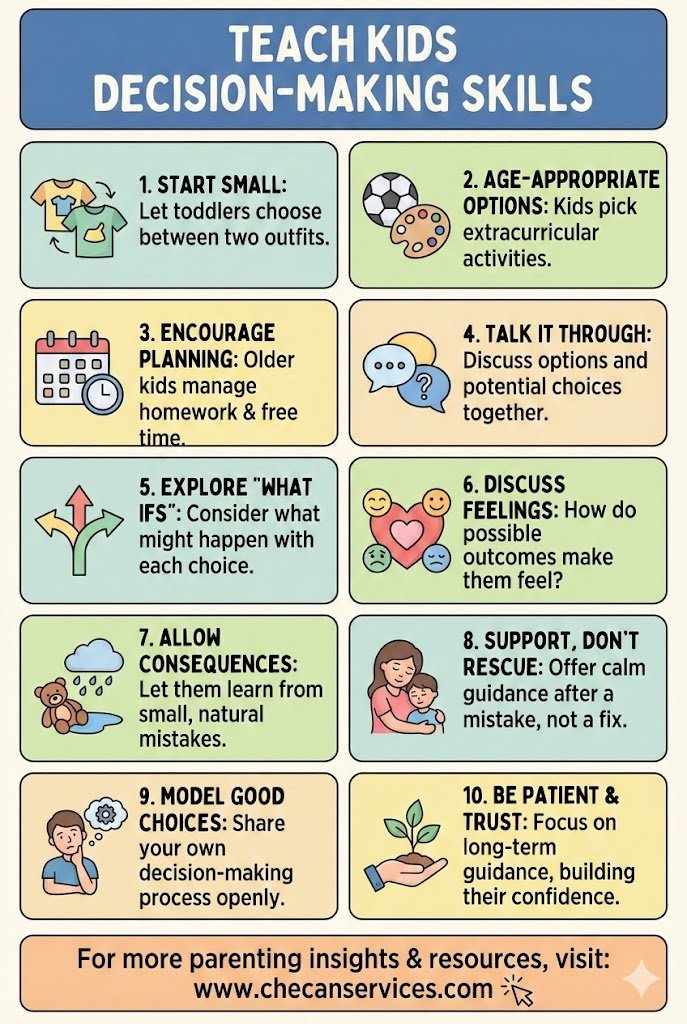
- Toddlers can choose between two outfits
- Young kids can decide which extracurricular activity they want to try
- Older children can plan how to manage homework and free time
These everyday choices help children practice evaluating options in a safe environment.
Talk Through the Thinking Process
One of the most effective teaching tools is conversation. When your child faces a decision, walk through it together:
- What are your options?
- What might happen with each choice?
- How do you feel about the possible outcomes?
This helps kids learn cause and effect. Over time, they’ll begin asking themselves these questions naturally.
For instance, if a child is deciding whether to finish homework now or later, discussing the pros and cons teaches time management and accountability—skills they’ll use for life.
Let Natural Consequences Teach
It can be tempting to step in and prevent mistakes, but small failures are valuable teachers. When kids experience natural consequences—like forgetting a toy at home or missing out on playtime because of unfinished chores—they learn responsibility without shame or punishment.
The key is support, not rescue. A calm conversation afterward helps reinforce the lesson while preserving trust.
Model Good Decision-Making
Kids learn more from what we do than what we say. When parents talk openly about their own decisions—why they chose a certain job, how they handle stress, or how they resolve disagreements—children absorb those strategies.
This modeling shows kids that decision-making is a lifelong skill, not something you magically master overnight.
Key Takeaways for Parents
Teaching kids decision-making skills is about guidance, patience, and trust. By giving children space to choose, reflect, and learn from outcomes, you’re equipping them with tools that extend far beyond childhood.
As kids grow into confident decision-makers, they’re better prepared for academic success, healthy relationships, and independent adulthood.
If you enjoy thoughtful, practical insights on parenting, personal growth, and emotional intelligence, explore the inspiring ebooks by Louise Blount available on Apple Books. You can discover her collection here. It’s a wonderful next step for parents looking to deepen their understanding and support their child’s journey.