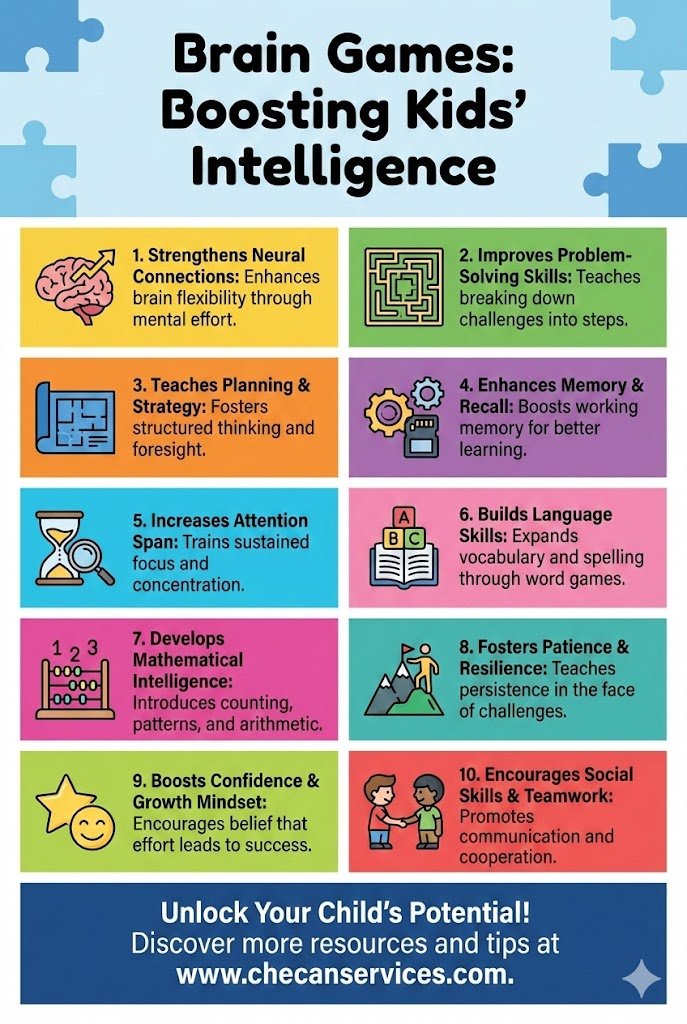
Parents are always looking for simple, effective ways to help their children grow smarter—and brain games and puzzles quietly do exactly that. From jigsaw puzzles on the living room floor to logic games on tablets, these activities do far more than keep kids occupied. They actively shape how children think, reason, and solve problems in a rapidly changing world.
At their core, brain games challenge children to engage deeply with information. Unlike passive entertainment, puzzles require participation. A child must observe patterns, test ideas, make mistakes, and try again. This repeated mental effort strengthens neural connections, helping the brain become more flexible and efficient over time.
One of the most powerful benefits is improved problem-solving skills. When children work through puzzles, they learn that challenges can be broken into smaller steps. A maze teaches planning, a matching game builds recognition, and logic puzzles introduce cause-and-effect thinking. These skills don’t stay locked inside the game—they carry over into schoolwork, friendships, and everyday decision-making.
Brain games also enhance memory and attention span. Many puzzles require children to remember rules, sequences, or visual details. Over time, this strengthens working memory, which plays a major role in reading comprehension, math, and following instructions. Even short daily sessions can make a noticeable difference, especially for younger children whose brains are still developing rapidly.
Language and mathematical intelligence also benefit. Word games expand vocabulary and improve spelling, while number-based puzzles introduce concepts like counting, patterns, and basic arithmetic in a low-pressure way. Because the learning feels like play, children are more likely to stay engaged—and learning sticks better when it’s enjoyable.
Equally important is the emotional intelligence that develops through these activities. Puzzles teach patience and resilience. Children learn that frustration is part of the process and that persistence leads to success. Completing a difficult puzzle builds confidence and encourages a growth mindset—the belief that intelligence grows with effort.
Brain games can also support social development when played together. Cooperative board games or group puzzles encourage communication, turn-taking, and teamwork. Children learn to explain their thinking, listen to others, and adapt their strategies, all of which are essential life skills.
Key Takeaways for Parents and Educators
The beauty of brain games lies in their simplicity. They don’t require expensive tools or rigid schedules—just consistency and encouragement. Rotating different types of puzzles keeps children challenged and prevents boredom. Most importantly, joining in as a parent or caregiver turns these moments into meaningful shared experiences.
Looking Ahead: Preparing Young Minds for the Future
As the world becomes more complex, children need more than memorized facts—they need adaptable, curious minds. Brain games and puzzles help build exactly that foundation, nurturing intelligence that is creative, resilient, and ready for lifelong learning.
If you enjoy exploring ideas that support children’s growth, imagination, and learning, you may also enjoy the thoughtfully written ebooks by Louise Blount. Discover inspiring reads available on Apple Books and find stories and insights that complement a child’s journey toward confidence and curiosity.