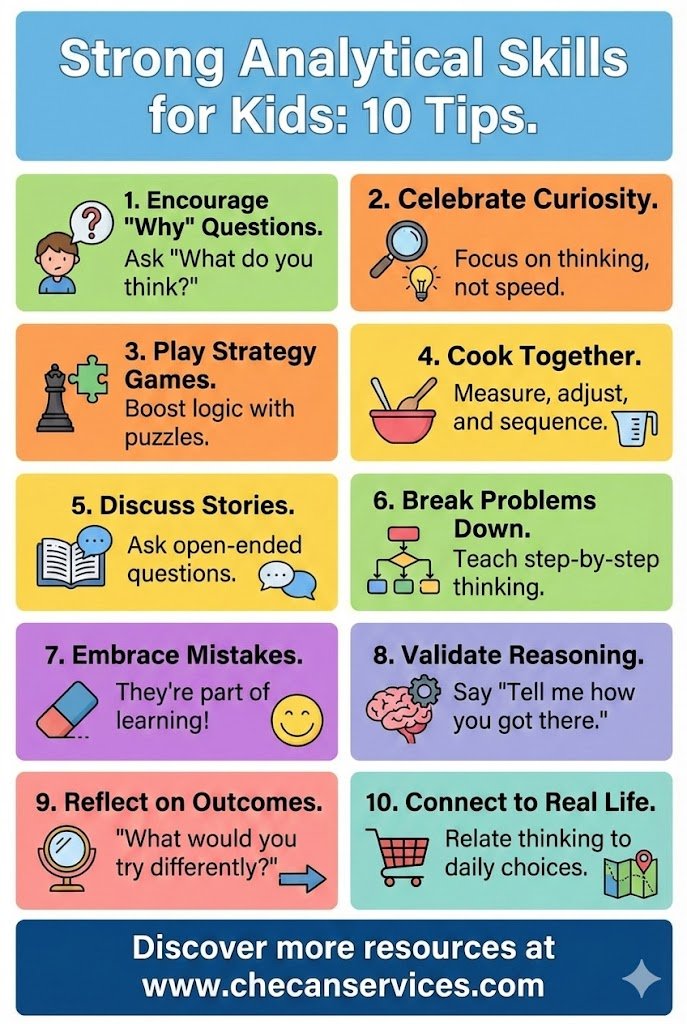
In a world where information is everywhere and answers are often just a click away, helping kids develop strong analytical thinking skills matters more than ever. Analytical thinking isn’t about memorizing facts or racing to the “right” answer—it’s about learning how to ask good questions, spot patterns, and think through problems with confidence. The good news? These skills can be nurtured naturally at home and in the classroom, starting at a young age.
What Analytical Thinking Looks Like in Everyday Life
Analytical thinking shows up in simple, everyday moments. When a child figures out why a tower of blocks keeps falling, compares two story endings, or decides which route to take on a bike ride, they’re analyzing information. It’s not reserved for math or science alone—it’s woven into reading, play, conversations, and decision-making.
For example, when reading a story together, you might ask, “Why do you think the character made that choice?” or “What do you think will happen next?” These open-ended questions gently encourage kids to evaluate information and form their own conclusions.
Encourage Curiosity Over Quick Answers
One of the most effective ways to build analytical skills is to make curiosity the goal, not speed. When kids ask “why,” resist the urge to immediately explain everything. Instead, try responding with, “What do you think?” or “How could we find out?” This shifts them from passive listeners to active thinkers.
Games and puzzles also play a big role here. Board games that involve strategy, logic puzzles, and even simple sorting activities help kids practice breaking problems into smaller steps. Cooking together is another great example—measuring ingredients, adjusting quantities, and following sequences all strengthen analytical muscles without feeling like a lesson.
Create a Safe Space for Mistakes
Analytical thinking thrives in environments where mistakes are seen as part of learning. If kids feel pressured to always be right, they may stop experimenting or thinking deeply. Encourage them to explain their reasoning, even when the answer isn’t correct. A response like, “That’s interesting—tell me how you got there,” validates their thinking process and builds confidence.
This approach also helps kids learn to reflect. Asking questions such as, “What worked?” or “What would you try differently next time?” teaches them to evaluate outcomes and improve their strategies.
Connecting Analytical Skills to the Future
As kids grow, analytical thinking becomes essential for navigating complex situations—evaluating online information, solving real-world problems, and making thoughtful choices. These skills prepare them not just for academic success, but for life beyond the classroom, where adaptability and reasoning matter most.
Key Takeaways
Helping kids develop analytical thinking doesn’t require fancy tools or rigid lessons. It’s about conversations, curiosity, play, and patience. By encouraging questions, embracing mistakes, and linking thinking to everyday experiences, we give children skills they’ll carry with them for years to come.
If you enjoy thoughtful, practical insights on personal growth, learning, and navigating life with clarity, you may also enjoy the ebooks by Louise Blount available on Apple Books. Explore them here.