If you’ve ever watched a child bounce from one activity to the next in a matter of minutes, you’re not alone. In a world filled with notifications, screens, and constant stimulation, helping kids build longer attention spans can feel like an uphill battle. The good news? Attention is a skill—and like any skill, it can be developed naturally with patience, the right environment, and everyday habits that truly stick.
Why Attention Spans Matter More Than Ever
Attention isn’t just about sitting still or finishing homework. It’s deeply tied to emotional regulation, learning, creativity, and confidence. When children can focus for longer periods, they’re better able to solve problems, enjoy reading, follow instructions, and feel proud of what they accomplish. Instead of forcing focus, the goal is to create conditions where focus grows on its own.
Start With Play That Encourages Focus
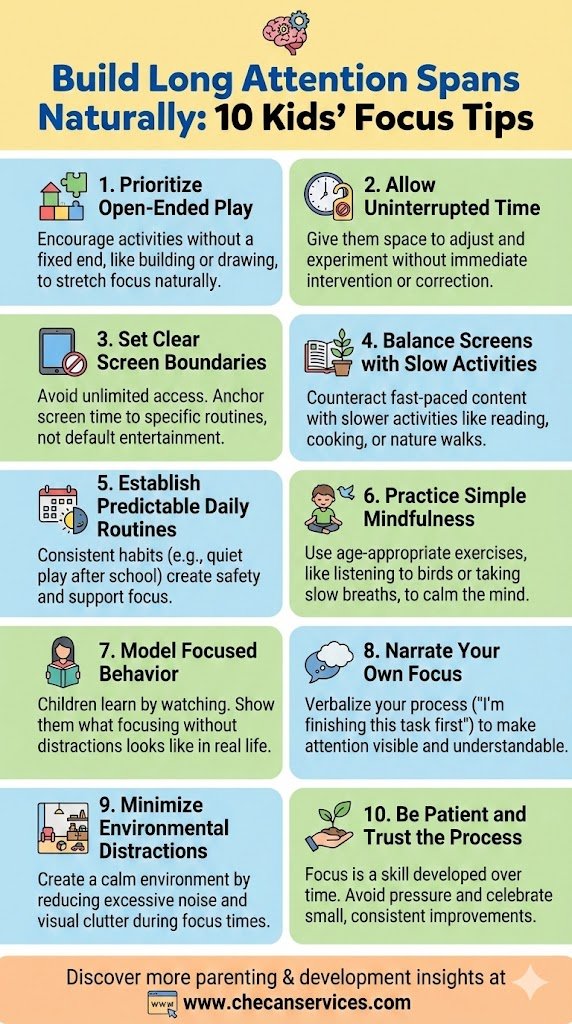
Not all play is created equal. Open-ended play—like building with blocks, drawing, doing puzzles, or role-playing—naturally stretches attention spans. These activities invite kids to stay engaged because they’re interesting, not because someone told them to “pay attention.”
For example, a child building a tower may spend 30 minutes adjusting pieces, experimenting, and starting over. That’s focus in action. The key is to give them uninterrupted time. Resist the urge to step in with suggestions or corrections unless they ask.
Create Screen Boundaries Without the Guilt
Screens aren’t the enemy, but unlimited access can make sustained attention harder. Fast-paced content trains the brain to expect constant novelty. Try balancing screen time with slower activities like reading together, cooking, or nature walks.
A practical approach is to anchor screens to routines—perhaps after homework or chores—rather than using them as default entertainment. Kids adapt surprisingly quickly when expectations are consistent.
Build Attention Through Daily Routines
Predictable routines help children feel safe, and that sense of safety supports focus. Simple habits like reading before bed, quiet play after school, or a regular homework window can work wonders over time.
Mindfulness-style activities also help, especially when kept age-appropriate. This could be as simple as asking your child to listen for birds outside for one minute or take five slow breaths before starting a task.
Model the Focus You Want to See
Children learn more from what we do than what we say. If they regularly see adults scrolling phones during conversations, it sends a powerful message. On the flip side, seeing you read, write, cook, or work on a project without distractions shows them what focus looks like in real life.
Even narrating your process—“I’m going to finish this before checking my phone”—helps make attention visible and understandable.
Key Takeaways for Parents and Caregivers
Building long attention spans in kids isn’t about pressure or perfection. It’s about creating space for curiosity, reducing unnecessary distractions, and trusting that focus develops over time. Small, consistent changes often lead to the biggest shifts.
Looking Ahead: Supporting Curious, Capable Minds
As children grow, their ability to focus becomes a foundation for learning, creativity, and resilience. By nurturing attention naturally now, you’re giving them a skill that supports every stage of life. If you enjoy thoughtful, practical insights on parenting, personal growth, and emotional wellbeing, you may also love exploring the ebooks by Louise Blount available on Apple Books. You can browse them here and discover ideas that gently support both you and your child on this journey.