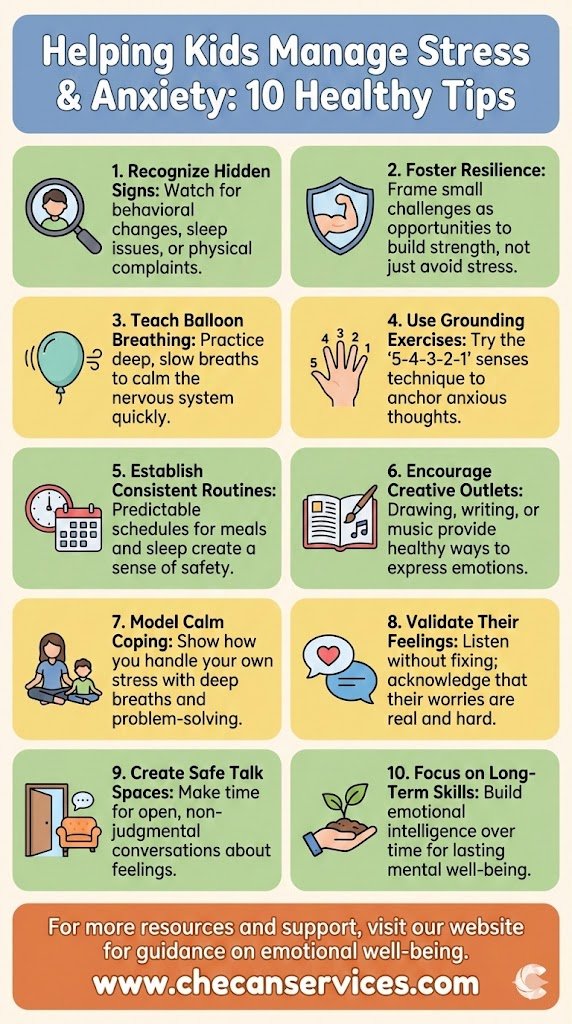
Stress and anxiety aren’t just adult problems anymore. From school pressures and social dynamics to screen overload and global uncertainty, kids today are navigating a world that can feel overwhelming. The good news? With the right tools and support, children can learn to manage stress in healthy, empowering ways that serve them for life.
Understanding Stress Through a Child’s Eyes
Children often lack the language to say, “I’m anxious” or “I feel overwhelmed.” Instead, stress may show up as irritability, stomach aches, trouble sleeping, or sudden changes in behavior. A six-year-old worried about school might cling more at drop-off. A teenager under social pressure may withdraw or snap more easily. Recognizing these signs is the first step toward helping.
It’s also important to remember that not all stress is bad. Small, manageable challenges help kids build resilience. The goal isn’t to eliminate stress entirely, but to help children respond to it in healthy, constructive ways.
Practical, Kid-Friendly Coping Strategies
One of the most effective ways to help kids manage anxiety is to give them simple tools they can actually use.
Breathing and mindfulness are powerful, even for young children. Techniques like “balloon breathing” (slowly breathing in as if inflating a balloon, then gently letting the air out) can calm the nervous system quickly. For older kids, short mindfulness moments—like noticing five things they can see or three things they can hear—help ground anxious thoughts.
Routine and predictability also play a huge role. Regular meal times, bedtime rituals, and clear expectations create a sense of safety. When kids know what to expect, their brains spend less energy worrying about the unknown.
Creative outlets are another healthy release. Drawing, journaling, music, or movement allow kids to express emotions they may not yet have words for. Even something as simple as a daily “feelings check-in” can open the door to meaningful conversations.
The Role of Parents and Caregivers
Kids learn how to handle stress by watching the adults around them. When parents model calm problem-solving, emotional honesty, and self-care, children absorb those behaviors naturally. Saying things like, “I’m feeling stressed, so I’m going to take a few deep breaths,” teaches by example.
Equally important is validation. Instead of dismissing worries with “You’ll be fine,” try “That sounds really hard. Do you want to talk about it?” Feeling heard reduces anxiety and builds trust.
Looking Ahead: Building Lifelong Emotional Skills
Helping kids manage stress isn’t about quick fixes—it’s about building emotional intelligence over time. Children who learn healthy coping strategies early are better equipped to handle future challenges, from academic pressure to adult responsibilities.
By creating safe spaces for conversation, teaching simple calming techniques, and modeling balance, we give kids something invaluable: confidence in their ability to navigate life’s ups and downs.
Key Takeaways
- Stress and anxiety are common in kids and often show up through behavior
- Simple tools like breathing, routines, and creative expression make a big difference
- Parental modeling and emotional validation are powerful teaching tools
- Early support builds resilience that lasts into adulthood
If you’re looking for thoughtful, practical guidance on emotional well-being and personal growth, explore the inspiring ebooks by Louise Blount available on Apple Books. You can discover them here—a gentle next step toward supporting both yourself and the children in your life.