If you’ve ever watched a young child melt down over the “wrong” color cup or burst into tears because playtime ended, you know that emotional regulation doesn’t come naturally—it’s learned. The good news is that early childhood is the perfect time to build these skills. With patience, modeling, and everyday practice, children can learn how to understand their feelings and respond to them in healthier ways.
Emotional regulation is not about stopping big emotions. It’s about helping children recognize what they’re feeling and giving them tools to cope when emotions feel overwhelming. Think of it as emotional coaching rather than emotional control.
Start With Naming Emotions
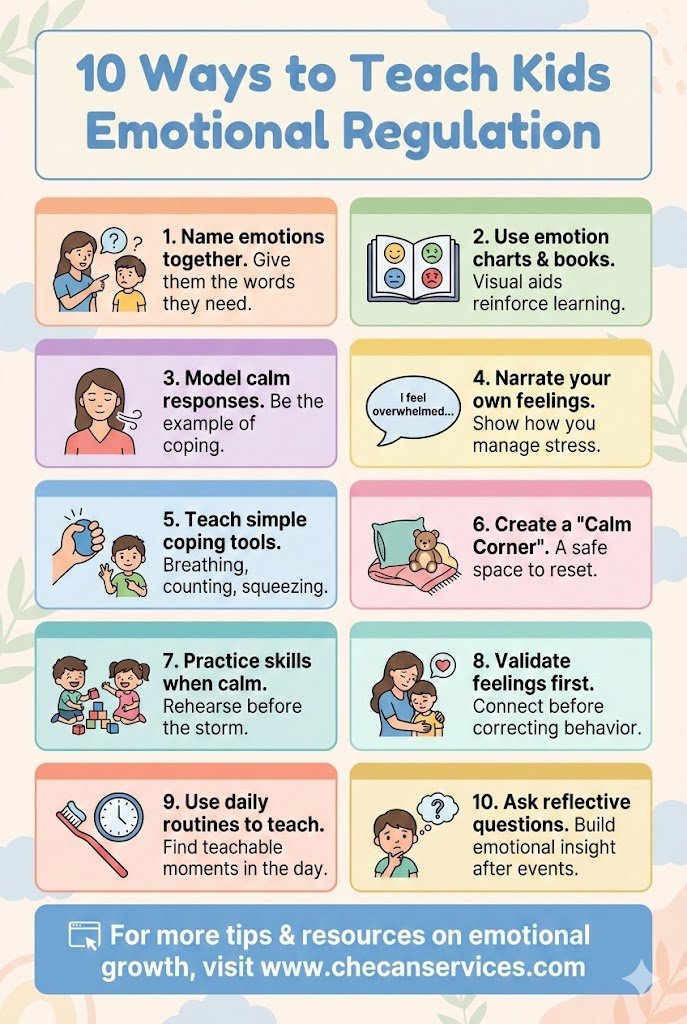
Young children often act out simply because they don’t have the words to describe what’s happening inside. Naming emotions gives them language—and language gives them power. When a child is upset, try saying, “You look frustrated,” or “It seems like you’re feeling sad because your tower fell.”
Over time, children begin to associate words with feelings and learn that emotions are normal and manageable. Picture books, emotion charts, and storytelling are excellent ways to reinforce this skill in a natural, low-pressure way.
Model Calm Behavior in Real Life
Children learn more from what we do than what we say. If adults respond to stress with yelling or avoidance, kids pick up on it quickly. On the other hand, when you model calm coping strategies—taking deep breaths, pausing before responding, or talking through a problem—children learn by example.
For instance, saying, “I’m feeling overwhelmed, so I’m going to take a deep breath,” shows children exactly what emotional regulation looks like in action. These small moments add up.
Create Simple, Repeatable Coping Tools
Young children benefit from concrete strategies they can use again and again. Deep breathing, counting to five, squeezing a stress ball, or going to a quiet “calm corner” are all age-appropriate tools.
The key is practicing these strategies when the child is calm—not just during emotional moments. That way, when big feelings arise, the tools feel familiar instead of forced.
Validate Feelings Before Redirecting Behavior
One common mistake adults make is jumping straight to correction. Emotional regulation starts with validation. Saying, “I understand you’re angry,” helps children feel seen and safe. Once emotions are acknowledged, children are far more open to guidance.
Validation doesn’t mean agreeing with the behavior—it means recognizing the feeling behind it. From there, you can guide them toward better choices.
Build Emotional Skills Into Everyday Routines
Daily routines are full of teachable moments. Transitions, playtime conflicts, and bedtime are all opportunities to practice emotional awareness. Ask reflective questions like, “How did that make you feel?” or “What could we try next time?”
Over time, these small conversations help children develop emotional insight and resilience.
Key Takeaways for Parents and Educators
Teaching emotional regulation is a long-term investment, not a quick fix. When adults stay consistent, compassionate, and proactive, children gradually learn to manage emotions with confidence. These skills don’t just reduce tantrums—they build empathy, self-control, and lifelong emotional health.
Looking to deepen your understanding of emotional growth and parenting tools? Explore insightful ebooks by Louise Blount on Apple Books that support mindful parenting and emotional development. 👉 Browse Louise Blount’s ebooks on Apple Books