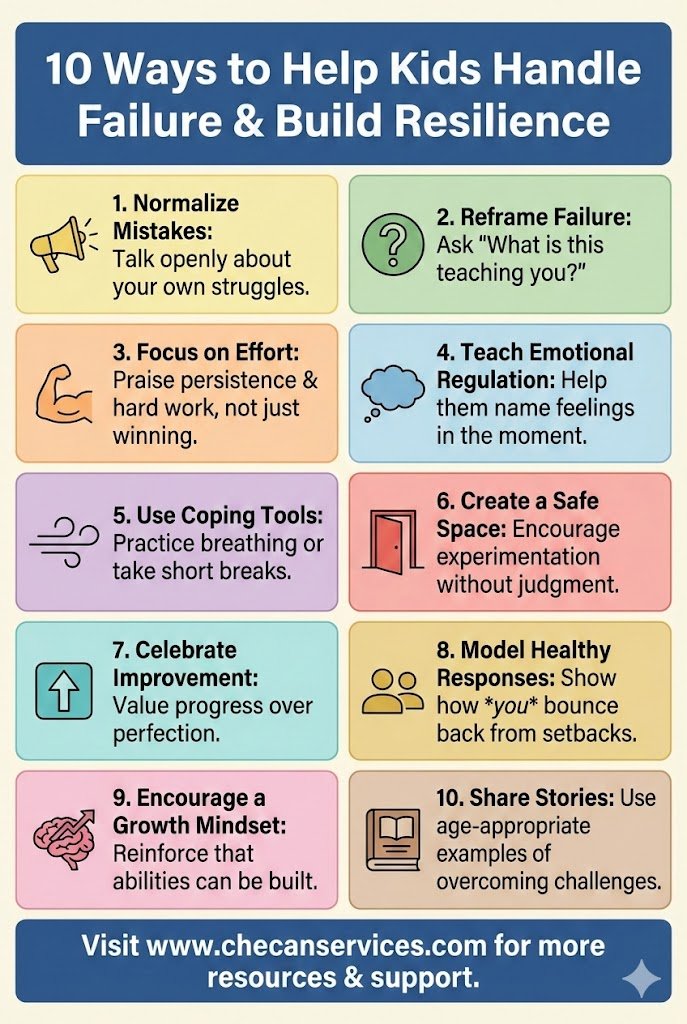
Failure is one of those words adults understand intellectually but kids feel emotionally. For a child, failing a test, losing a game, or not being picked for a team can feel overwhelming—sometimes even defining. As parents, caregivers, and educators, our role isn’t to remove failure from their lives, but to help them learn how to move through it with confidence and self-belief.
The good news? Resilience is a skill, and like any skill, it can be nurtured with practice, patience, and the right mindset.
Why Failure Is Actually a Gift
It may not feel like it in the moment, but failure gives children something success never can: perspective. When kids struggle, they learn how to cope with disappointment, problem-solve, and adapt. These moments quietly shape emotional strength.
Think about a child learning to ride a bike. Falling is part of the process. If we rushed in to prevent every scrape, they’d never learn balance. Emotional “falls” work the same way. When kids experience setbacks and are supported through them, they build confidence that says, I can handle hard things.
Normalize Mistakes Early and Often
One of the simplest ways to help kids handle failure is to normalize it. Talk openly about your own mistakes. Share age-appropriate stories about times you struggled, changed direction, or learned something the hard way.
When a child fails, avoid labeling the moment as bad or embarrassing. Instead of saying, “It’s okay, you’ll do better next time,” try, “What do you think this experience is teaching you?” This reframes failure as information, not a verdict on their ability.
Focus on Effort, Not Outcomes
Kids are incredibly perceptive. When praise only comes after success, they learn to equate worth with winning. Shift the focus to effort, persistence, and strategy.
For example:
- “I’m proud of how hard you studied.”
- “You didn’t give up, even when it was tough.”
- “Trying something new takes courage.”
This approach encourages a growth mindset—helping kids see abilities as something they build, not something they either have or don’t.
Teach Emotional Regulation in the Moment
Resilience isn’t about suppressing emotions. It’s about managing them. When kids feel disappointed or frustrated, help them name what they’re feeling. Simple breathing techniques, short breaks, or even drawing emotions out can help kids process setbacks without feeling overwhelmed.
The goal isn’t to rush them out of discomfort, but to show them that uncomfortable feelings pass—and that they’re capable of handling them.
Create a Safe Space to Try Again
Kids are more willing to take risks when they feel emotionally safe. Encourage experimentation, curiosity, and second attempts. Celebrate improvement, not perfection.
When children know they won’t be judged for trying and failing, they’re more likely to develop resilience that carries into school, friendships, and eventually adulthood.
Key Takeaways for Building Resilient Kids
Helping kids handle failure isn’t about toughening them up—it’s about teaching them how to bounce back with self-compassion and courage. When we model healthy responses to setbacks, focus on effort, and allow space for emotions, we give kids tools they’ll use for life.
If you’re looking for thoughtful, story-driven resources that explore emotional growth, resilience, and inner strength, you might enjoy the ebooks by Louise Blount available on Apple Books. You can explore them here. These reads offer gentle insights that both adults and young readers can grow with.