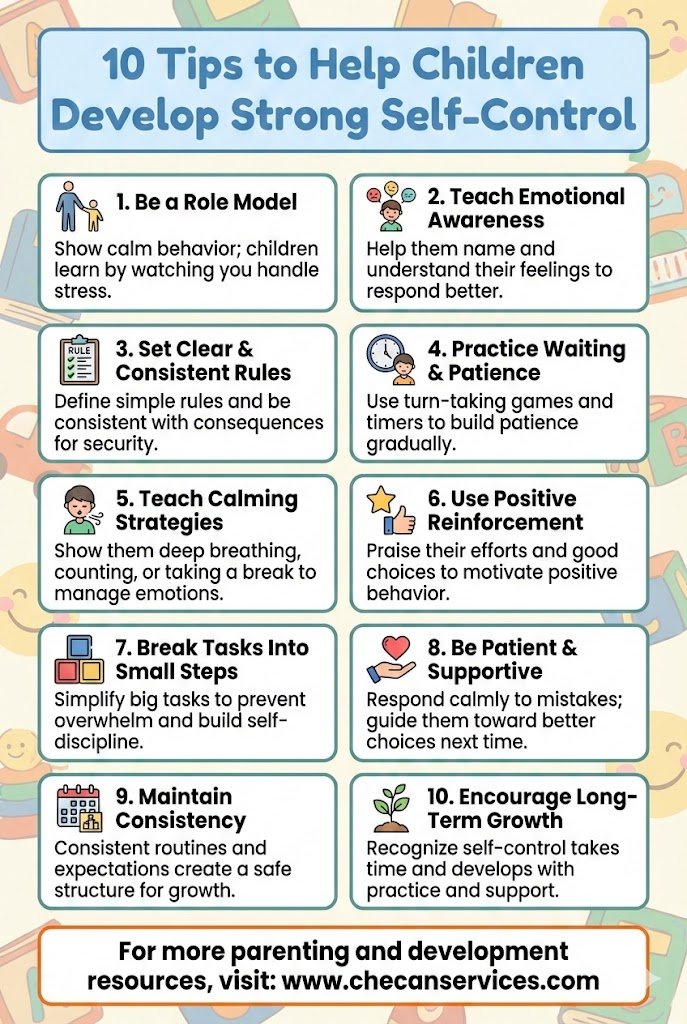
Self-control is one of the most important life skills a child can learn. It helps children manage their emotions, control impulses, and make better decisions as they grow. From waiting their turn to handling frustration, self-control plays a big role in success at school, relationships, and later in adult life.
The good news is that self-control is not something children are born with fully developed. It is a skill that can be taught, practiced, and strengthened over time. In this article, we’ll explore simple, practical ways parents, teachers, and caregivers can help children build strong self-control in everyday life.
What Is Self-Control in Children?
Self-control means the ability to pause, think, and choose how to act instead of reacting immediately. For children, this can look like:
- Waiting patiently instead of interrupting
- Managing anger without hitting or yelling
- Following rules even when it’s hard
- Staying focused on a task
Young children naturally struggle with self-control because their brains are still developing. This is completely normal. With guidance and practice, they slowly learn how to manage their behavior and emotions.
Why Self-Control Is So Important
Helping children develop self-control early has long-term benefits. Children with strong self-control often:
- Do better in school
- Have healthier friendships
- Handle stress more effectively
- Make safer and smarter choices
Self-control also builds confidence. When children learn they can manage their emotions, they feel more capable and secure.
1. Be a Role Model
Children learn a lot by watching adults. If they see you handling frustration calmly, they are more likely to copy that behavior.
Here’s how you can model self-control:
- Speak calmly during stressful moments
- Take deep breaths when you’re upset
- Apologize if you lose your temper
- Talk out loud about how you’re managing emotions
Example:
Instead of yelling when you’re late, say, “I feel stressed right now, so I’m going to take a deep breath and focus.”
2. Teach Emotional Awareness
Children need to understand their feelings before they can control them. Help them name and recognize emotions.
You can do this by:
- Talking about feelings during the day
- Using emotion words like happy, angry, frustrated, excited
- Reading books that discuss emotions
- Asking, “How did that make you feel?”
When children can identify their emotions, they are better able to pause and choose how to respond.
3. Set Clear and Consistent Rules
Clear rules help children understand expectations. When rules are consistent, children feel more secure and know what behavior is acceptable.
Tips for setting rules:
- Keep rules simple and age-appropriate
- Explain the reason behind rules
- Be consistent with consequences
- Follow through every time
Example:
Instead of saying, “Behave yourself,” say, “Please use a quiet voice indoors.”
4. Practice Waiting and Patience
Self-control grows when children practice waiting. Start with small, manageable situations.
Ideas to encourage patience:
- Ask children to wait a few minutes before getting a snack
- Play turn-taking games like board games
- Use timers to show waiting time
- Praise them when they wait calmly
Over time, gradually increase the waiting time as their skills improve.
5. Teach Simple Calming Strategies
Children need tools to calm themselves when emotions feel overwhelming. Teach them easy techniques they can use anywhere.
Helpful calming strategies include:
- Deep breathing (slow breaths in and out)
- Counting to ten
- Squeezing a stress ball
- Taking a short break in a quiet space
Practice these strategies when the child is calm, so they can use them more easily during emotional moments.
6. Use Positive Reinforcement
Praise and encouragement go a long way in building self-control. Notice and acknowledge when children make good choices.
Effective praise sounds like:
- “I’m proud of how you waited your turn.”
- “You stayed calm even though it was hard.”
- “Great job using your words instead of yelling.”
Positive reinforcement motivates children to repeat the behavior.
7. Break Tasks Into Small Steps
Big tasks can overwhelm children and lead to frustration. Breaking tasks into smaller steps helps them stay focused and in control.
For example:
- Instead of “Clean your room,” say:
- Put toys in the box
- Make the bed
- Put clothes in the basket
Completing small steps builds confidence and self-discipline.
8. Be Patient and Supportive
Developing self-control takes time. Children will make mistakes, and that’s okay. Respond with patience rather than punishment.
When children lose control:
- Stay calm
- Acknowledge their feelings
- Guide them toward better choices
- Talk about what they can do next time
Your calm response teaches them how to manage their own emotions.
Key Takeaways
- Self-control is a skill that develops over time
- Children learn best through modeling and practice
- Emotional awareness is the foundation of self-control
- Clear rules and consistency create a safe structure
- Praise and patience encourage long-term growth
Looking Ahead
Helping children develop strong self-control is one of the greatest gifts you can give them. These skills will support them in school, relationships, and everyday challenges throughout life. With simple strategies, consistency, and lots of encouragement, children can learn to pause, think, and make positive choices—even in difficult moments.