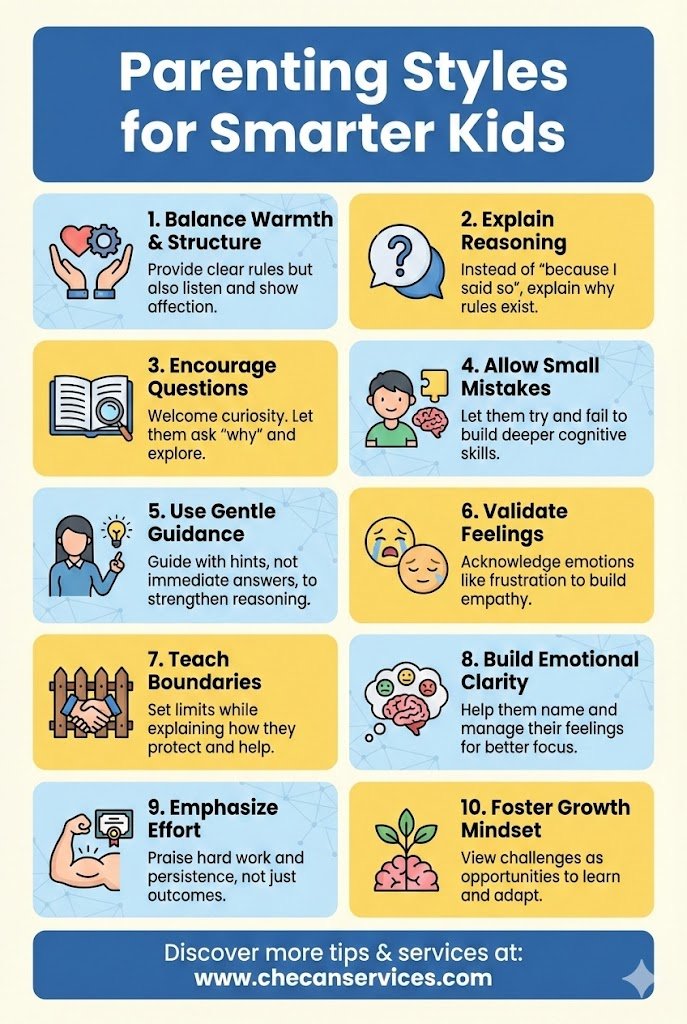
When parents talk about raising “smart” kids, they’re usually thinking beyond grades or test scores. Smarter children are curious, emotionally aware, adaptable, and confident enough to solve problems on their own. The good news? Research and real-life experience suggest that how you parent matters just as much as what you teach. Certain parenting styles consistently create environments where children’s intelligence—both cognitive and emotional—can truly thrive.
The Power of Authoritative Parenting
Among all parenting approaches, authoritative parenting stands out as one of the most effective for nurturing intelligence. This style balances warmth with structure. Parents set clear expectations, but they also listen, explain, and encourage independence.
For example, instead of simply saying, “Because I said so,” authoritative parents explain the reasoning behind rules. This invites children to think critically, ask questions, and understand cause and effect. Over time, kids raised this way tend to develop stronger problem-solving skills, better emotional regulation, and a genuine love of learning.
Encouraging Curiosity Through Gentle Guidance
Smarter children often come from homes where curiosity is welcomed, not rushed or shut down. Parenting styles that allow kids to explore, make small mistakes, and ask “why” help build deeper cognitive skills.
Imagine a child struggling with a puzzle. A supportive parent might say, “What do you think happens if you try it this way?” rather than immediately stepping in with the answer. This kind of gentle guidance strengthens reasoning, persistence, and creativity—skills that matter far beyond childhood.
Emotional Intelligence Starts at Home
Intelligence isn’t just academic; emotional intelligence plays a huge role in long-term success. Parenting styles that validate feelings while teaching boundaries help children develop empathy and self-awareness.
When parents acknowledge emotions—“I see you’re frustrated”—instead of dismissing them, children learn to name and manage their feelings. This emotional clarity supports better focus, stronger relationships, and improved decision-making as they grow.
Growth Mindset as a Daily Practice
Parents who emphasize effort over perfection help raise resilient thinkers. A growth-focused parenting style celebrates learning, not just outcomes. Praising persistence—“You worked really hard on that”—encourages children to view challenges as opportunities instead of failures.
This mindset is especially powerful in a fast-changing world, where adaptability and lifelong learning are essential. Children raised with this perspective are more likely to take intellectual risks and stay motivated when things get tough.
Key Takeaways for Modern Parents
Raising smarter children doesn’t require perfection—it requires intention. Parenting styles rooted in warmth, structure, curiosity, and emotional awareness consistently create the conditions for intelligence to flourish. As the future demands creativity, empathy, and critical thinking, these approaches prepare children not just to succeed, but to thrive.
If you enjoy thoughtful perspectives on personal growth, relationships, and modern life, you may also love the ebooks by Louise Blount. They offer reflective insights that resonate with parents and lifelong learners alike. You can explore and purchase them on Apple Books here.