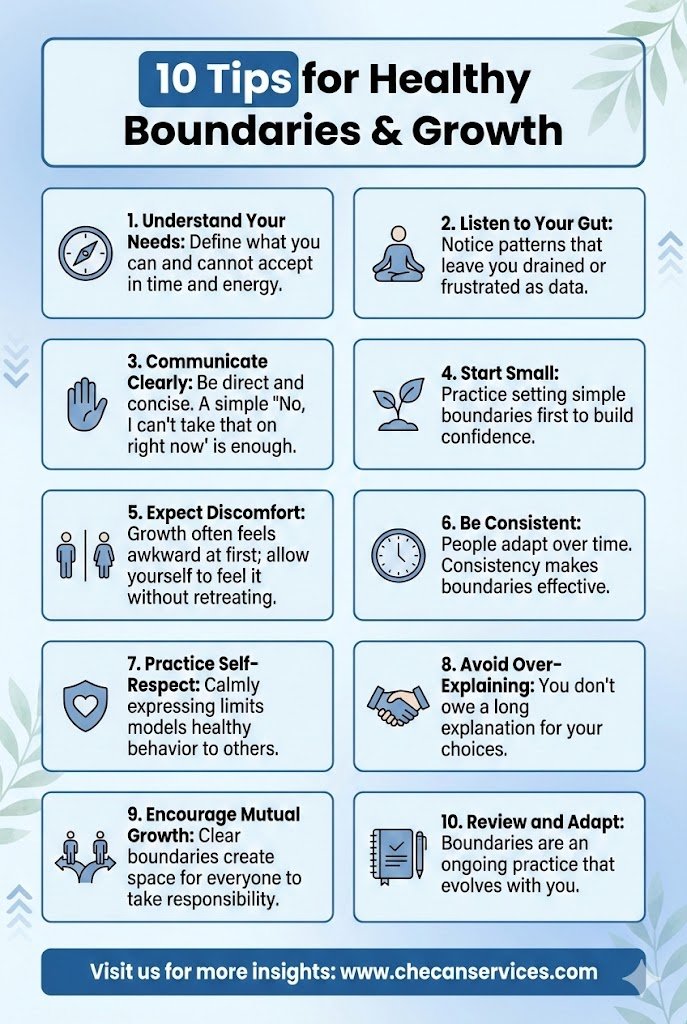
If you’ve ever said “yes” when your whole body was screaming “no,” you already understand why boundaries matter. Healthy boundaries aren’t walls that shut people out—they’re guideposts that show others how to treat you while creating space for growth, confidence, and deeper connection. Learning how to set them is less about confrontation and more about clarity.
At their core, boundaries are agreements you make with yourself. They define what you will and won’t accept in your time, energy, emotions, and relationships. When boundaries are missing or unclear, resentment quietly builds. When they’re healthy, they create freedom—for you and for others.
Why Boundaries Are Essential for Growth
Growth requires energy. Without boundaries, that energy gets drained by overcommitment, people-pleasing, or emotional burnout. For example, constantly answering work messages late at night may feel productive, but over time it erodes rest and creativity. A simple boundary—no emails after 7 p.m.—protects your capacity to show up better the next day.
Boundaries also teach others how to interact with you. When you calmly express your limits, you model self-respect. This often encourages healthier behavior in return, whether in friendships, families, or professional settings.
How to Set Boundaries Without Guilt
One of the biggest myths about boundaries is that they’re selfish. In reality, they’re sustainable. Start by noticing patterns that leave you drained or frustrated. That feeling is data.
Then, communicate clearly and early. You don’t need a long explanation. A simple statement like, “I can’t take that on right now,” or “I need some quiet time this evening,” is enough. For instance, if a friend often calls during your workday, you might say, “I value our chats, but I can only talk in the evenings.” This preserves the relationship while honoring your needs.
Expect some discomfort at first. Growth often feels awkward before it feels empowering. The key is consistency—people adapt faster than we think.
Boundaries That Encourage Mutual Growth
The healthiest boundaries don’t just protect you; they create room for others to grow too. When you stop rescuing or overextending, others are invited to take responsibility for themselves. In a team setting, this might mean not fixing a colleague’s missed deadline, allowing them to learn accountability.
Boundaries also deepen intimacy. When expectations are clear, trust grows. Honest limits reduce passive frustration and replace it with direct, respectful communication.
Key Takeaways
Healthy boundaries are an ongoing practice, not a one-time decision. They evolve as you do. By listening to your needs, communicating them with compassion, and holding steady, you create an environment where growth feels safe and sustainable. Boundaries don’t shrink your world—they expand it by making room for what truly matters.
If you’re interested in exploring personal growth, self-awareness, and emotional resilience more deeply, you may enjoy the thoughtful ebooks by Louise Blount available on Apple Books. Discover them here. They’re a gentle next step for anyone ready to invest in healthier patterns and a more intentional life.