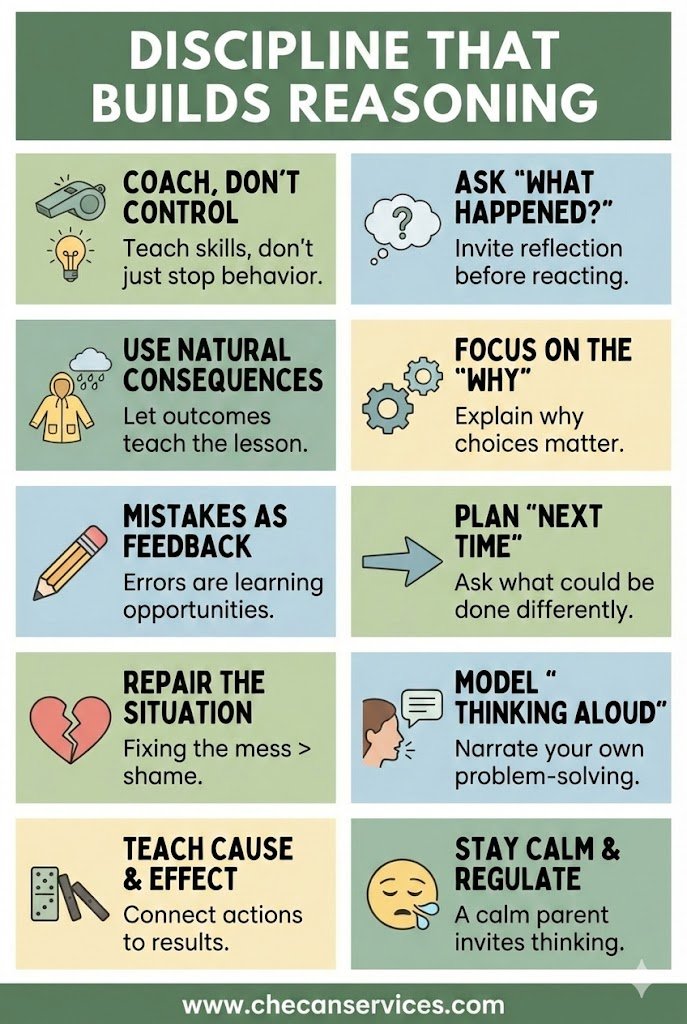
Discipline often gets a bad reputation. For many parents and educators, the word brings to mind consequences, corrections, and moments of tension. But discipline, when used intentionally, can be one of the most powerful tools for building a child’s thinking and reasoning skills. Instead of focusing only on stopping unwanted behavior, thoughtful discipline helps children understand why choices matter and how to make better ones next time.
At its best, discipline is less about control and more about coaching.
Discipline as a Thinking Tool
Children aren’t born knowing how to evaluate situations, predict outcomes, or reflect on their actions. These are learned skills, and discipline moments offer real-life opportunities to practice them. When a child forgets homework, argues with a sibling, or ignores instructions, the goal doesn’t have to be immediate compliance. It can be understanding.
For example, instead of saying, “You’re grounded because you didn’t listen,” try asking, “What do you think happened here?” or “What could you do differently next time?” These questions invite children to pause, reflect, and reason through their actions. Over time, they learn that behavior is connected to consequences—not just imposed rules.
Encouraging Cause-and-Effect Thinking
One of the strongest reasoning skills children can develop is understanding cause and effect. Natural and logical consequences help make this connection clear. If a child refuses to wear a coat, feeling cold later reinforces the lesson more effectively than a lecture ever could. The key is allowing the consequence to teach, not shaming the child for the mistake.
This approach builds internal decision-making. Children start to think ahead: If I do this, what might happen? That kind of forward thinking is essential for problem-solving, academics, and emotional intelligence later in life.
Using Mistakes as Learning Moments
Mistakes are inevitable—and incredibly valuable. Discipline strategies that emphasize learning over punishment teach children that errors aren’t failures, but feedback. When a child breaks a rule, involve them in repairing the situation. If they make a mess, they help clean it up. If they hurt someone’s feelings, they practice apologizing and making amends.
These moments strengthen reasoning skills by helping children analyze situations, consider others’ perspectives, and plan corrective actions. They also build confidence, because children feel capable of fixing problems rather than fearing them.
Modeling Thoughtful Behavior
Children learn reasoning not just from what we say, but from what we do. When adults stay calm, explain decisions, and think aloud—“I’m frustrated, so I’m going to take a breath before I respond”—children absorb those strategies. Discipline becomes a shared process of thinking through challenges together, rather than a top-down command.
Key Takeaways
Discipline that builds thinking and reasoning skills is intentional, reflective, and respectful. It uses questions instead of threats, learning instead of punishment, and guidance instead of fear. Over time, these strategies help children become independent thinkers who can navigate choices with confidence and clarity.
If you’re looking to explore deeper insights into parenting, emotional growth, and thoughtful guidance, you may enjoy the ebooks by Louise Blount available on Apple Books. You can browse them here. They’re a helpful resource for parents who want to nurture both behavior and thinking skills—one mindful moment at a time.