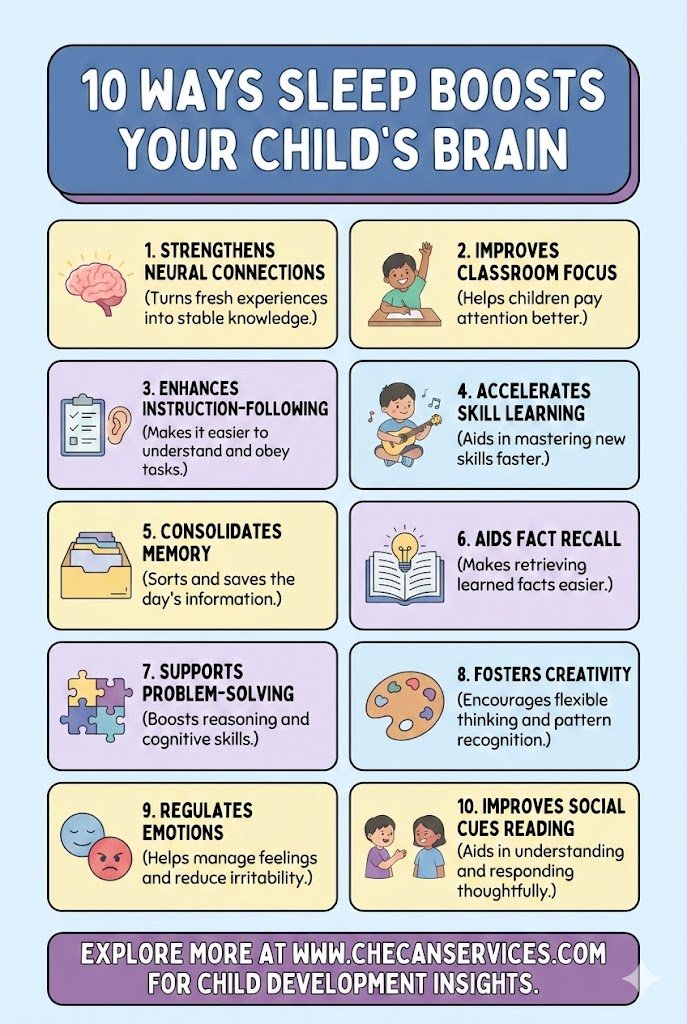
Sleep isn’t just a time for children to rest their bodies—it’s when their brains do some of the most important work of the day. From mastering new words to solving problems and regulating emotions, sleep plays a powerful role in shaping learning, memory, and overall intelligence in children. Yet in today’s busy, screen-filled world, sleep is often the first thing to be shortened.
Let’s explore why sleep matters so much for young minds and how it quietly influences a child’s ability to learn and grow.
Sleep and Learning: Building the Brain’s Foundation
When children learn something new—whether it’s a math concept, a piano melody, or a social skill—the brain doesn’t fully lock in that information right away. Sleep is what helps turn fresh experiences into stable knowledge. During deep sleep, the brain strengthens neural connections formed during the day, essentially “saving” what was learned.
Children who get enough quality sleep tend to:
- Focus better in class
- Follow instructions more easily
- Learn new skills faster
On the other hand, sleep-deprived children often struggle with attention, impulse control, and comprehension. It’s not a lack of ability—it’s a lack of rest.
Memory: How Sleep Turns Experience Into Knowledge
Memory consolidation is one of sleep’s most remarkable functions. During sleep, especially during deep and REM stages, the brain sorts through the day’s experiences, keeping what’s useful and discarding what’s not. This process helps children recall facts, apply concepts, and build on prior knowledge.
For example, a child practicing spelling words before bed is more likely to remember them the next day than a child who practices earlier but goes to sleep late. Sleep acts like a mental filing system, organizing information so it’s easier to retrieve later.
Intelligence and Problem-Solving: The Hidden Boost of Sleep
Intelligence isn’t just about what children know—it’s about how they think. Sleep supports higher-level cognitive skills such as reasoning, creativity, and problem-solving. Well-rested brains are more flexible and better at seeing patterns, making connections, and adapting to new challenges.
Chronic sleep deprivation, however, can dull these abilities over time. Studies consistently show that children who regularly miss sleep perform worse on tests measuring reasoning, memory, and processing speed—even when motivation is high.
Emotional Balance and Social Learning
Sleep also influences emotional intelligence. Tired children are more likely to be irritable, anxious, or emotionally reactive. When emotions are harder to manage, learning and social interaction become more difficult. Adequate sleep helps children regulate emotions, read social cues, and respond thoughtfully rather than impulsively.
Key Takeaways for Parents and Caregivers
- Sleep is essential for learning, not optional
- Memory and intelligence are strengthened during sleep
- Consistent bedtime routines matter more than occasional catch-up sleep
- Quality sleep supports emotional regulation and classroom success
Looking Ahead: Investing in Sleep Is Investing in Potential
As we look toward helping children thrive academically and emotionally, sleep deserves a central place in the conversation. Prioritizing bedtime isn’t about strict rules—it’s about giving growing brains the time they need to develop fully.
If you enjoy exploring topics like child development, learning, and emotional well-being, you’ll find thoughtful insights and practical reflections in the ebooks by Louise Blount. Discover them on Apple Books and continue your journey into understanding the minds that shape our future.