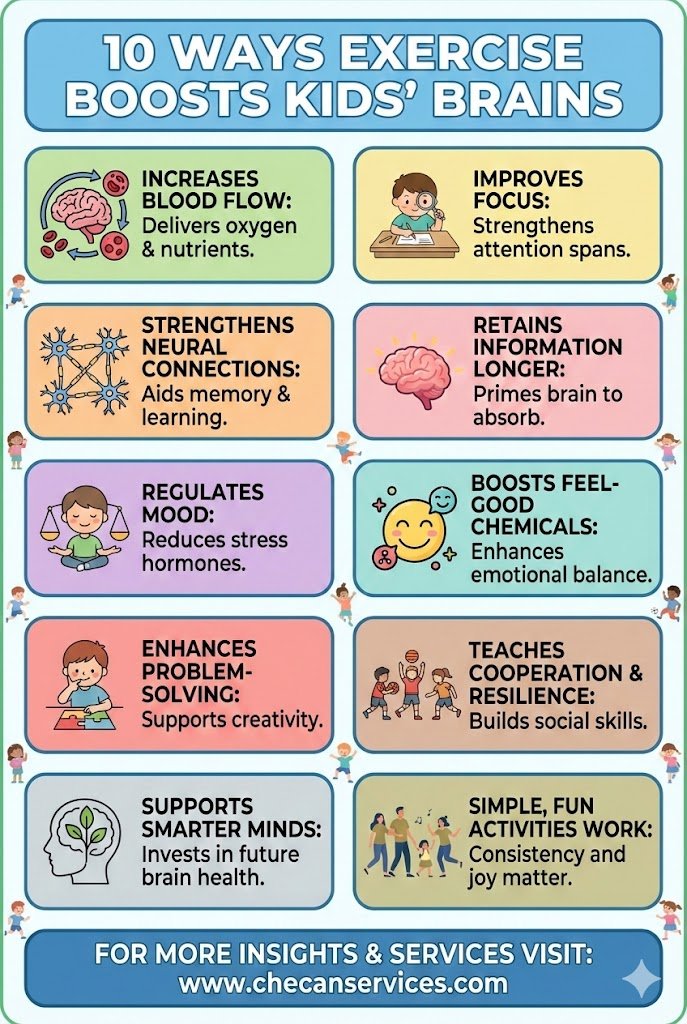
Have you ever noticed how kids seem sharper, happier, and more focused after running around outside? That’s not just leftover energy burning off—it’s their brains getting a serious upgrade. Physical exercise isn’t only about strong muscles or healthy hearts. For children, it plays a powerful role in shaping brain development, learning ability, and emotional balance.
When kids move their bodies, their brains light up in remarkable ways. Exercise increases blood flow, delivering oxygen and nutrients that help the brain grow and function better. Think of it like watering a plant: the more consistent the care, the stronger and more vibrant the growth. For growing minds, that “watering” comes from regular movement.
One of the biggest brain benefits of exercise is improved focus. Activities like running, swimming, dancing, or even structured playground games help strengthen attention spans. Teachers often notice that children who are physically active tend to concentrate better in class and transition more smoothly between tasks. A quick game of tag before homework can sometimes do more for focus than sitting still and trying harder.
Exercise also supports memory and learning. Movement stimulates the release of chemicals in the brain that help form and strengthen neural connections. This means kids are not only learning faster, but also retaining information longer. For example, a child who regularly plays sports or rides a bike may find it easier to remember spelling words or math steps because their brain is more primed to absorb information.
Let’s not forget emotional intelligence. Physical activity helps regulate mood by reducing stress hormones and boosting feel-good chemicals. This emotional balance is essential for problem-solving, creativity, and social interaction. Team sports, in particular, teach kids cooperation, resilience, and empathy—skills that are just as important as academic success.
What’s exciting is how forward-looking this connection really is. As schools and parents increasingly recognize the brain–body link, we’re seeing more movement-based learning, active classrooms, and outdoor education. The future of childhood learning isn’t about sitting still longer—it’s about moving smarter.
The best part? Exercise doesn’t have to be complicated or expensive. Free play, family walks, backyard games, or dance breaks in the living room all count. What matters most is consistency and joy. When movement is fun, kids are more likely to stick with it, and their brains reap the rewards over time.
Key Takeaways
- Physical exercise improves focus, memory, and learning in kids
- Movement boosts brain development by strengthening neural connections
- Active kids often manage emotions and stress more effectively
- Simple, enjoyable activities are just as effective as organized sports
- Encouraging movement today supports smarter, healthier minds tomorrow
If you enjoy exploring ideas that nurture growth, imagination, and lifelong learning, you’ll love discovering the insightful ebooks by Louise Blount available on Apple Books. They’re a wonderful next step for parents, educators, and curious readers looking to invest in brighter futures—one thoughtful page at a time.