We’ve all been there. You grab a sugary snack or some fast food thinking it will give you a quick energy boost—especially during a long study session or busy workday. For a short while, it feels like it works. But then the crash hits. Your mind feels foggy, concentration slips, and suddenly learning feels harder than it should. There’s a clear reason for this pattern, and it starts with how sugar and junk food interact with the brain.
The Blood Sugar Roller Coaster
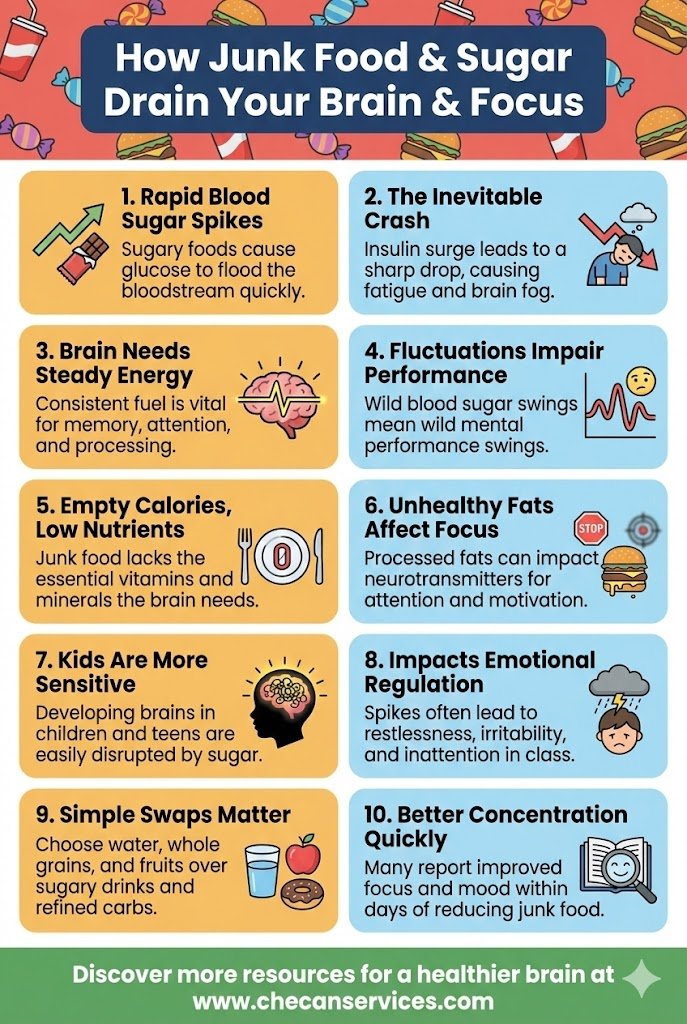
Sugary foods and refined carbs cause rapid spikes in blood glucose. When you eat a candy bar or drink a soda, glucose floods the bloodstream, and insulin rushes in to bring levels back down. That sharp rise and fall can leave you feeling tired, irritable, and unfocused within an hour.
For learning, this is a problem. The brain relies on a steady supply of energy to form memories, process information, and maintain attention. When blood sugar swings wildly, mental performance swings with it. Students may struggle to retain information, and adults can find it harder to stay on task or make decisions.
Junk Food and the Focus Drain
Junk food isn’t just high in sugar—it’s often loaded with unhealthy fats and low in nutrients. These foods lack the vitamins, minerals, and healthy fats the brain needs to function at its best. Over time, frequent consumption can affect neurotransmitters involved in attention and motivation.
Think of the brain like a high-performance engine. Feeding it processed food is like using low-grade fuel. It might run, but not smoothly. This can show up as slower reaction times, reduced attention span, and difficulty staying mentally sharp during learning-heavy tasks.
Why Kids and Teens Feel It More
Children and teenagers are especially sensitive to sugar-heavy diets. Their brains are still developing, and regular spikes in blood sugar can interfere with emotional regulation and focus. That’s why teachers often notice restlessness or inattentiveness after lunch or sugary snacks.
Replacing processed snacks with whole foods—like fruit paired with protein, nuts, or whole grains—can help stabilize energy levels and improve classroom focus. The same principle applies to adults juggling work, study, and family life.
Small Changes That Make a Big Difference
The good news is that you don’t need to cut sugar entirely to see improvements. Simple swaps matter. Choosing water over soda, whole grains over white bread, or yogurt instead of pastries can lead to steadier energy and clearer thinking.
Many people report better concentration within days of reducing junk food intake. Over time, these habits support stronger memory, improved mood, and more consistent learning performance.
Key Takeaways and Looking Ahead
What we eat today shapes how well we think tomorrow. As awareness grows around nutrition and brain health, more people are realizing that focus and learning aren’t just about willpower—they’re fueled by daily food choices. By reducing sugar and junk food and choosing more balanced meals, we give our brains the steady energy they need to thrive.
If you’re interested in exploring mindful habits, personal growth, and practical strategies for better living, you may enjoy the insightful ebooks available on Apple Books by Louise Blount. Discover them through this curated collection on Apple Books and take another step toward a healthier, more focused life.