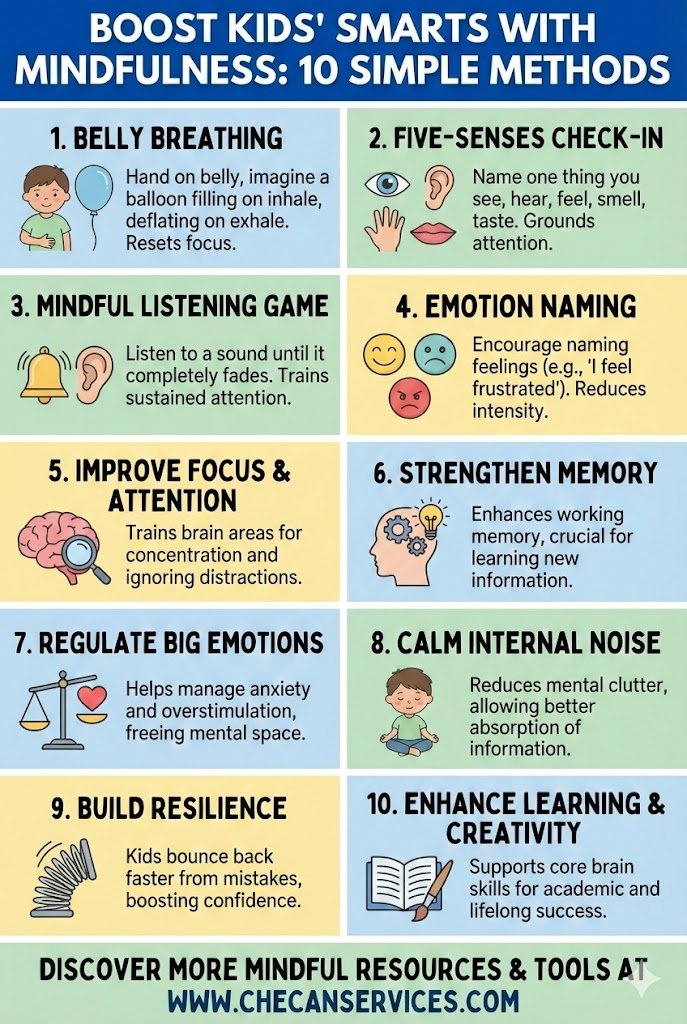
Parents and educators are always looking for gentle, effective ways to help kids learn better, focus longer, and manage big emotions. One surprisingly powerful approach doesn’t involve flashcards or extra homework at all. Mindfulness—when practiced simply and consistently—can actually help kids become smarter by strengthening attention, memory, and emotional regulation.
Let’s break down how this works and explore a few easy mindfulness practices that fit naturally into a child’s day.
Why Mindfulness Helps Kids Learn Better
Mindfulness teaches kids to pay attention to what’s happening right now—without judgment. For developing brains, that skill is gold. When children learn how to notice their breath, thoughts, or feelings, they also train the parts of the brain responsible for focus, self-control, and problem-solving.
Think about a child trying to read while feeling anxious or overstimulated. Their brain is busy managing emotions instead of absorbing information. Mindfulness helps calm that internal noise, freeing up mental space for learning, creativity, and curiosity.
Simple Practices Kids Actually Enjoy
The key with mindfulness and kids is keeping it playful and pressure-free. Here are a few practices that work especially well:
1. Belly Breathing (2 minutes)
Ask your child to place a hand on their belly and imagine it’s a balloon. As they breathe in, the balloon fills up; as they breathe out, it deflates. This simple exercise improves oxygen flow to the brain and helps kids reset before homework or tests.
2. Five-Senses Check-In
Have kids name one thing they can see, hear, feel, smell, and taste. This grounds their attention in the present moment and sharpens observation skills—an important foundation for reading comprehension and critical thinking.
3. Mindful Listening Games
Ring a bell or play a soft sound and ask children to raise their hand when they can no longer hear it. This trains sustained attention and listening skills, which directly support classroom learning.
4. Emotion Naming
Encourage kids to name their feelings: “I feel frustrated” or “I feel excited.” Research shows that labeling emotions reduces their intensity and helps children respond more thoughtfully instead of reacting impulsively.
Small Habits, Big Cognitive Gains
What’s powerful about mindfulness is that it doesn’t require long sessions. Just a few minutes a day can improve working memory, reading skills, and even math performance over time. Kids who practice mindfulness regularly also tend to bounce back faster from mistakes, which builds confidence and resilience—two traits closely tied to long-term academic success.
Key Takeaways
Mindfulness doesn’t replace traditional learning; it enhances it. By helping kids focus, regulate emotions, and stay curious, these simple practices support the brain skills that matter most for learning and life.
Looking Ahead
As schools and families increasingly recognize the connection between emotional well-being and intelligence, mindfulness is becoming a core life skill—not just a calming tool. Introducing it early gives kids an inner advantage they can carry into adolescence and adulthood.
If you’d like gentle, story-based tools that support mindful thinking and emotional growth in children, you may enjoy exploring the ebooks by Louise Blount available on Apple Books. They’re a thoughtful next step for parents who want learning to feel calm, meaningful, and empowering.