Social media is woven into daily life, and for today’s children, it often arrives before they can even read fluently. From short-form videos to endless scrolling, these platforms shape how kids learn, focus, and process information. The big question many parents and educators ask is simple: does social media help or hurt child intelligence and attention?
The answer, as with most things, is nuanced.
The Attention Economy and Growing Minds
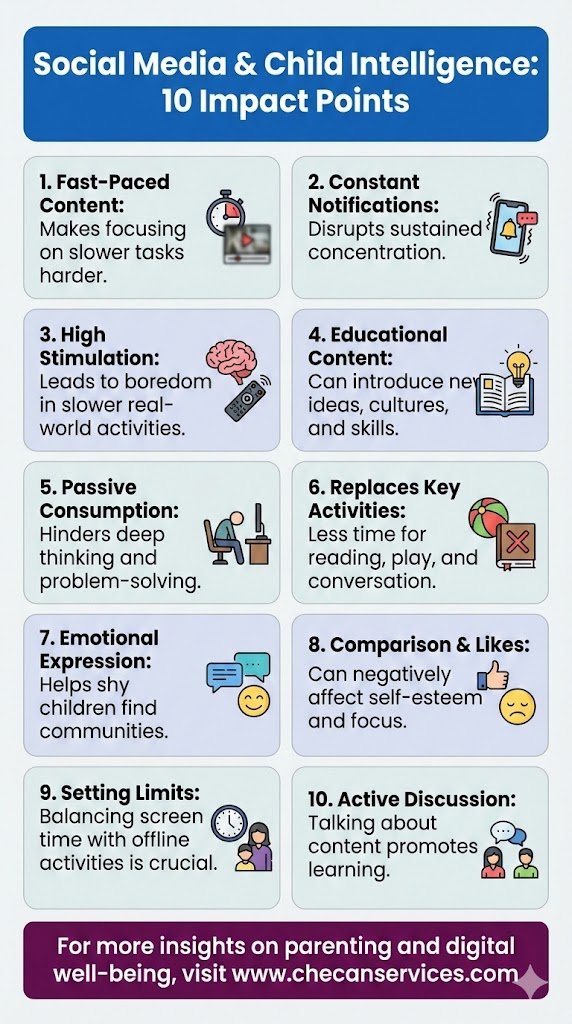
Social media platforms are built around speed. Bright visuals, rapid cuts, and constant notifications are designed to grab attention instantly. For a developing brain, this can be both stimulating and challenging. Children’s attention systems are still forming, and frequent exposure to fast-paced content may make it harder to sustain focus on slower tasks like reading, problem-solving, or listening in class.
That doesn’t mean social media automatically damages attention. It means kids can become accustomed to high stimulation. When the world doesn’t move at the same pace, boredom sets in quickly. Over time, this can look like reduced patience, difficulty concentrating, or the need for constant novelty.
Intelligence: What’s Gained and What’s Missed
Intelligence isn’t just about test scores. It includes creativity, emotional awareness, language, and critical thinking. Social media can support some of these areas. Educational clips, storytelling videos, and interactive content can introduce new ideas, cultures, and vocabulary. Some children learn skills—from art techniques to coding basics—through short, engaging videos.
However, passive consumption is the key risk. When children scroll without reflection, they’re less likely to practice deep thinking. Intelligence grows through effort: asking questions, solving problems, and making connections. If screen time replaces activities like reading, imaginative play, or face-to-face conversation, those cognitive muscles may get less exercise.
The Social Side of Social Media
One often overlooked factor is emotional intelligence. Online interaction can help shy children express themselves and find communities they relate to. At the same time, constant comparison, likes, and algorithm-driven popularity can affect self-esteem and focus. A child preoccupied with online validation may struggle to stay mentally present in the real world.
This mental distraction doesn’t mean children are becoming less intelligent—it means their attention is being pulled in many directions at once.
Finding Balance That Works
The future isn’t about banning social media; it’s about guiding its use. Setting time limits, encouraging content that teaches or inspires, and balancing screens with offline activities makes a measurable difference. Conversations matter too. When adults talk with children about what they’re watching, it turns passive scrolling into active learning.
Children who learn to pause, reflect, and question what they see online are better equipped to protect their attention and grow intellectually in a digital-first world.
Key Takeaways and Looking Ahead
Social media is a powerful tool that can either sharpen or scatter a child’s attention. Used intentionally, it can expand knowledge and creativity. Used without boundaries, it can fragment focus and reduce opportunities for deep thinking. The goal isn’t perfection—it’s awareness, balance, and thoughtful guidance.
If you’re interested in exploring deeper insights into modern parenting, personal growth, and navigating today’s digital challenges, you’ll find thoughtful reads in Louise Blount’s ebooks on Apple Books. Discover them through this Apple Books collection and find perspectives designed to support mindful living in a connected world.