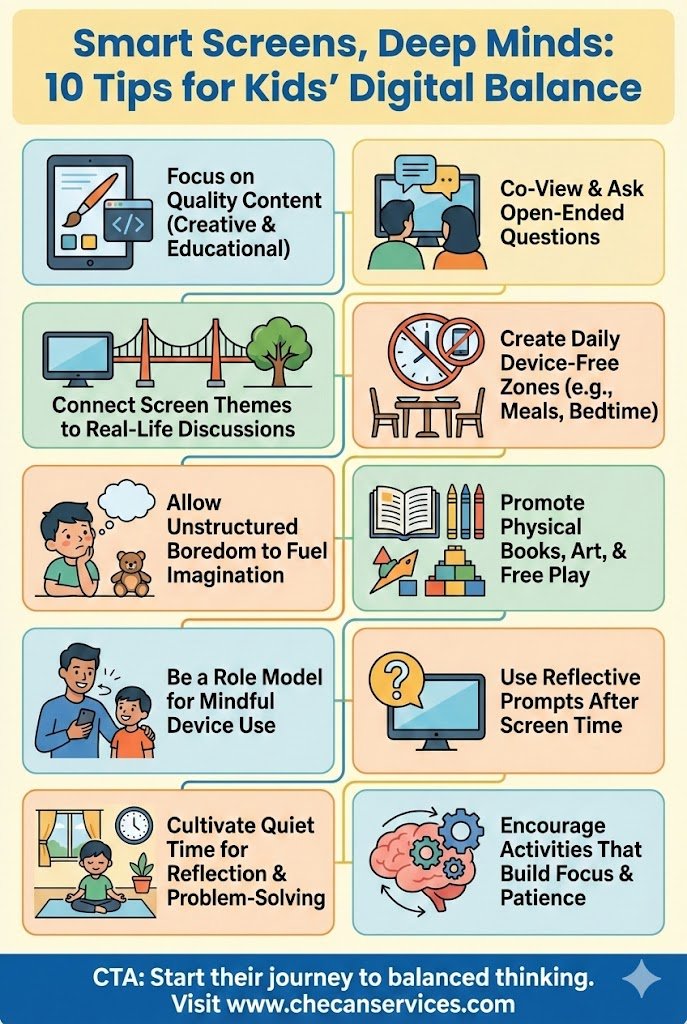
Screens are everywhere—tablets at school, phones at home, TVs in shared spaces. For today’s children, digital interaction isn’t optional; it’s woven into daily life. The real challenge for parents and caregivers isn’t eliminating screen time, but balancing it with opportunities for deep thinking, creativity, and reflection.
Deep thinking is what happens when children wrestle with ideas, imagine possibilities, solve problems, and sit with questions rather than instantly tapping for answers. It’s the foundation of critical thinking, emotional intelligence, and lifelong learning. The good news? Screens don’t have to be the enemy of deep thought—when used intentionally, they can coexist beautifully.
Why Deep Thinking Matters More Than Ever
Fast-paced digital content trains young brains to expect constant stimulation. Short videos, rapid scrolling, and instant feedback can make slower activities—like reading, drawing, or quiet problem-solving—feel less exciting. Yet these slower moments are exactly where deep thinking grows.
When a child builds a story in their head, puzzles through a tough math problem, or reflects on a book character’s choices, they’re strengthening focus, patience, and reasoning. These skills don’t just help academically; they shape how children make decisions and understand the world as they grow.
Making Screen Time More Intentional
Not all screen time is equal. A child passively watching videos for hours is very different from one using a tablet to create digital art, learn coding basics, or explore educational games together with a parent.
Try shifting from “How much screen time?” to “What kind of screen time?” Co-viewing content, asking questions, and connecting digital experiences to real-life conversations can turn screens into tools for deeper engagement rather than distractions.
For example, after a nature documentary, you might ask: What surprised you most? or What would you do if you were an explorer there? These simple prompts encourage reflection and imagination.
Creating Space for Offline Thinking
Balance comes from what happens away from screens. Set aside daily pockets of screen-free time where boredom is allowed. Boredom often sparks creativity—kids invent games, build worlds, and explore ideas when nothing is handed to them instantly.
Reading physical books, journaling, free play, and even quiet time alone help children learn how to think independently. Family routines—like device-free dinners or bedtime reading—send a powerful message that thinking and conversation matter.
Key Takeaways for Parents and Caregivers
Balancing screen time and deep thinking isn’t about strict rules; it’s about rhythm. Screens can inspire learning, but deep thinking needs space, silence, and patience. By modeling mindful tech use, asking thoughtful questions, and protecting time for reflection, you help children develop minds that don’t just consume information—but truly understand it.
Looking Ahead
As technology continues to evolve, the children who thrive will be those who can pause, question, and think deeply in a fast-moving world. Nurturing that balance today prepares them not just for school, but for life.
If you’re looking for thoughtful, reflective stories that encourage imagination and meaningful conversations with children, explore Louise Blount’s ebooks on Apple Books. Discover them here and turn reading time into moments of connection and deep thinking.