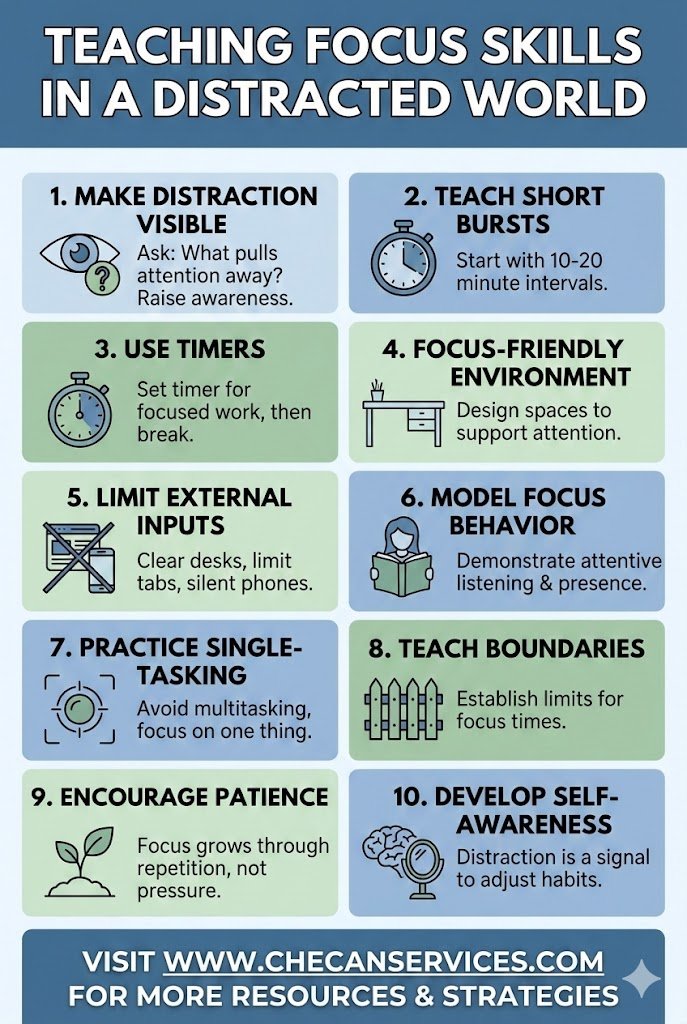
Focus has quietly become one of the most valuable skills of our time. Between constant notifications, endless scrolling, and a culture that celebrates multitasking, staying attentive is no longer automatic—it’s something that must be learned and practiced. Whether you’re teaching children, students, or even yourself, the challenge isn’t just what to focus on, but how to build the habit of focus in a world designed to break it.
The good news? Focus is a skill, not a personality trait. And like any skill, it can be taught intentionally.
Start by Making Distraction Visible
One of the most effective teaching strategies is helping learners see what distracts them. Ask simple questions:
What pulls your attention away? How often do you check your phone without thinking?
For example, a student who believes they “can’t concentrate” may discover they’re interrupted every three minutes by alerts. Awareness alone often reduces distraction. When people understand the mechanics behind lost focus, they feel empowered rather than ashamed.
Teach Focus in Short, Achievable Bursts
Long stretches of concentration can feel overwhelming, especially for beginners. Instead, teach focus in small, realistic intervals—10 to 20 minutes at first. This mirrors real-world productivity techniques and helps learners experience success quickly.
A practical example: set a timer for 15 minutes of uninterrupted reading, followed by a short break. Over time, those intervals naturally expand. Focus grows through repetition, not pressure.
Create Focus-Friendly Environments
Environment shapes behavior more than motivation ever will. Teaching focus means designing spaces that support it. Clear desks, limited tabs, and silent phones aren’t restrictions—they’re tools.
For younger learners, this might mean a quiet homework corner at home. For adults, it could be something as simple as closing email during deep work. The lesson here is subtle but powerful: focus isn’t just internal willpower; it’s also external design.
Model Focus, Don’t Just Talk About It
People learn focus best by watching it in action. If a teacher, parent, or leader constantly checks their phone while expecting others to concentrate, the message is lost.
Instead, model attentive listening, single-tasking, and presence. Saying “let’s focus together for the next 20 minutes” and actually doing it builds trust and reinforces the behavior far more than lectures ever could.
Key Takeaways for Teaching Focus
Teaching focus today is really about teaching boundaries, patience, and self-awareness. It’s about helping learners understand that distraction isn’t a failure—it’s a signal to adjust habits and environments. With consistent practice, focus becomes less of a struggle and more of a natural rhythm.
Looking Ahead
As technology continues to accelerate, focus will only become more valuable. Those who learn to manage their attention early gain a lifelong advantage—in learning, creativity, and emotional well-being. Teaching focus isn’t about resisting the modern world; it’s about learning how to thrive within it.
If you’re interested in deeper reflections on personal growth, mindfulness, and intentional living, explore the thoughtfully written ebooks by Louise Blount available on Apple Books. They’re a gentle, insightful companion for anyone looking to cultivate clarity and focus in everyday life.