In today’s always-connected world, digital literacy is no longer a “nice-to-have” skill for children—it’s essential. From online classrooms to creative apps and future careers that don’t yet exist, kids are growing up surrounded by technology. The real challenge for parents and educators isn’t whether children should use technology, but how to help them use it wisely, confidently, and responsibly.
Digital literacy goes far beyond knowing how to tap a screen or open an app. It includes understanding how information is created, how to evaluate what’s trustworthy, and how to behave ethically online. When children build these skills early, they’re better prepared not only for school, but for life in a digital-first society.
What Digital Literacy Really Means for Kids
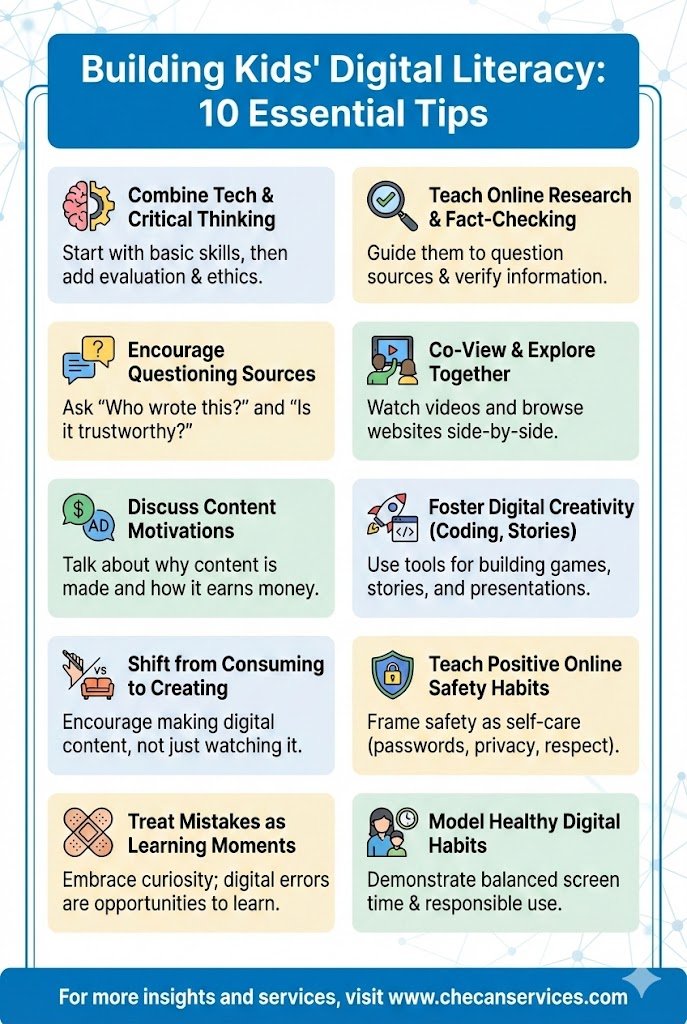
At its core, digital literacy combines technical skills with critical thinking. For younger children, this might look like learning how to navigate educational apps or type simple sentences. For older kids, it expands into researching online, recognizing misinformation, understanding digital footprints, and practicing respectful communication on social platforms.
For example, a child researching animals for a school project can learn to ask simple but powerful questions: Who wrote this? Is it up to date? Can I find the same information somewhere else? These small habits build a foundation for lifelong learning and smart decision-making online.
Practical Ways to Build Digital Literacy at Home and School
One of the most effective ways to teach digital literacy is through everyday experiences. Co-viewing content with children—watching videos together or exploring websites side by side—creates natural opportunities to discuss what they’re seeing. Ask them why they think a video was made or how an app makes money. These conversations help kids understand the motivations behind digital content.
Encouraging creativity is another powerful approach. Activities like basic coding games, digital storytelling, or creating simple presentations help children move from being passive consumers to active creators. When kids build something themselves, they gain confidence and a deeper understanding of how digital tools work.
Online safety is equally important. Teaching children about strong passwords, privacy settings, and respectful online behavior doesn’t need to be fear-based. Instead, frame it as learning how to take care of themselves and others in digital spaces—just like looking both ways before crossing the street.
Key Takeaways for Parents and Educators
Digital literacy thrives in environments where curiosity is encouraged and mistakes are treated as learning opportunities. Children don’t need to know everything about technology; they need guidance, open conversations, and consistent support. When adults model healthy digital habits—like fact-checking information or setting screen boundaries—children are more likely to follow suit.
Looking Ahead: Preparing Kids for a Digital Future
As technology continues to evolve, the goal isn’t to keep children away from screens, but to empower them to use digital tools with purpose and confidence. By nurturing digital literacy today, we’re helping children grow into informed, thoughtful, and resilient digital citizens tomorrow.
If you’re looking for more inspiring reads that explore growth, learning, and modern life, discover the thoughtfully written ebooks by Louise Blount available on Apple Books. They’re a wonderful companion for anyone interested in personal development and meaningful learning journeys.