If you’re a parent today, screens are everywhere. Tablets soothe toddlers in restaurants, smartphones fill quiet moments, and laptops are essential for schoolwork. While technology isn’t the enemy, excessive screen exposure can quietly chip away at a child’s ability to focus, stay patient, and engage deeply. The good news? Attention loss linked to screens is preventable—and often reversible—with a few mindful changes.
Why Screens Affect Attention
Screens are designed to be stimulating. Fast cuts, bright colors, and instant rewards train the brain to expect constant novelty. For kids, whose brains are still developing, this can make slower-paced activities—like reading, listening, or problem-solving—feel boring. Over time, attention spans shrink, and frustration grows when instant gratification isn’t available.
But preventing this doesn’t require banning screens altogether. It’s about balance, boundaries, and intention.
Practical Ways to Protect Your Child’s Focus
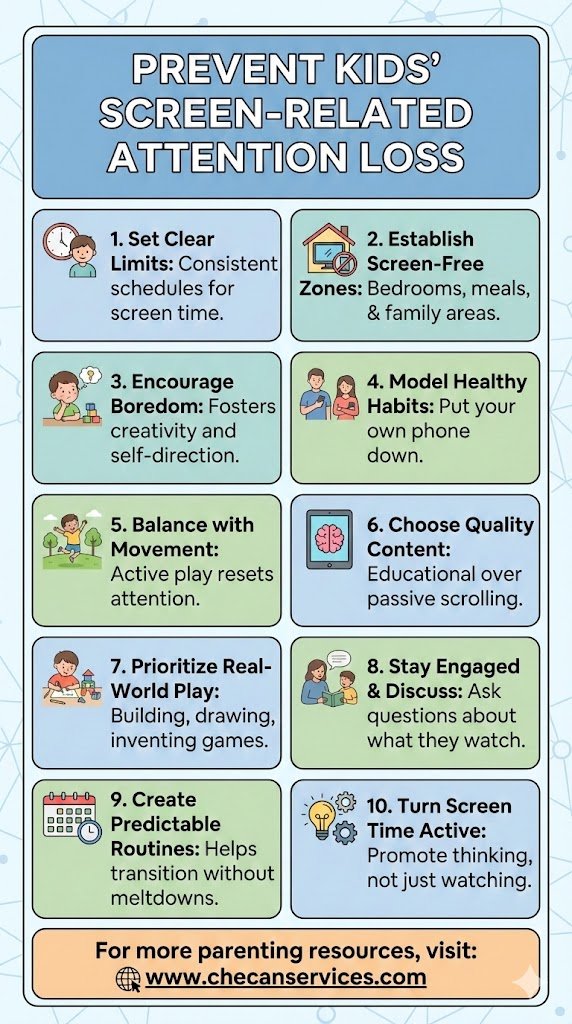
1. Set clear screen-time limits
Consistency matters more than strictness. Decide when screens are allowed—perhaps after homework or only on weekends—and stick to it. Predictable routines help kids transition away from screens without meltdowns.
2. Prioritize screen-free zones
Bedrooms, dining tables, and family gatherings should be screen-free. These spaces encourage conversation, imagination, and emotional connection, all of which strengthen attention and social skills.
3. Encourage boredom (yes, really)
Boredom is where creativity begins. When kids aren’t instantly entertained, they learn to self-direct—building with blocks, drawing, or inventing games. These moments train sustained focus far better than any app.
4. Model healthy screen habits
Kids notice everything. If parents are constantly scrolling, children learn that divided attention is normal. Putting your phone down during conversations sends a powerful message about presence and focus.
5. Balance screens with movement
Physical activity resets attention. Outdoor play, sports, or even a short walk can dramatically improve a child’s ability to concentrate afterward. Movement and focus go hand in hand.
6. Choose quality over quantity
Not all screen time is equal. Educational programs watched together, followed by discussion, are far less harmful than endless, passive scrolling. Ask questions about what they watched to turn screen time into active thinking.
Key Takeaways for Busy Parents
Preventing attention loss isn’t about perfection—it’s about awareness. Small daily choices compound over time. By creating boundaries, encouraging real-world play, and staying engaged with your child’s interests, you help their brain develop patience, resilience, and deep focus.
Looking Ahead
As screens continue to evolve, so will parenting strategies. Teaching kids how to coexist with technology—rather than be consumed by it—is one of the most valuable skills we can give them. When children learn to focus in a distracted world, they gain an advantage that lasts well beyond childhood.
If you’re looking for thoughtful, practical insights on parenting, personal growth, and mindful living, explore the inspiring ebooks by Louise Blount on Apple Books. They’re a gentle yet powerful resource for parents who want to raise focused, emotionally healthy children in a digital age.