Raising smart kids isn’t just about test scores or academic milestones. Real intelligence shows up in how children treat others, make decisions, and stand by what’s right—even when it’s hard. Values and ethics are the quiet compass guiding those choices, and the good news is they can be nurtured intentionally from an early age.
Intelligence Goes Beyond Academics
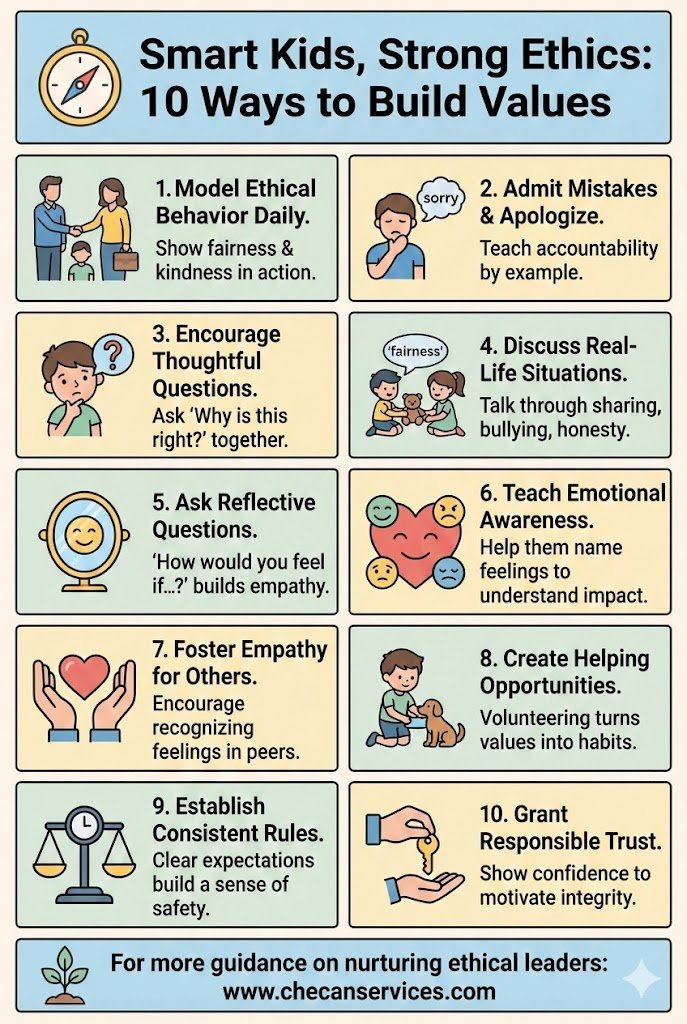
Smart kids are often curious, observant, and quick to absorb patterns—not just in math or language, but in behavior. They notice how adults handle conflict, honesty, kindness, and responsibility. When parents and caregivers model ethical behavior, children internalize those lessons naturally. A child who sees fairness practiced daily learns that integrity isn’t a rule—it’s a way of life.
For example, when a parent admits a mistake and apologizes, they teach accountability far more effectively than a lecture ever could. Over time, these moments shape a child’s moral reasoning and emotional intelligence.
Conversations That Shape Character
Smart kids ask thoughtful questions: Why is this right? Why is that wrong? These questions are golden opportunities. Open conversations about real-life situations—sharing, bullying, honesty, inclusion—help children understand not just what to think, but how to think ethically.
Instead of giving rigid answers, many parents find success in asking reflective questions: “How would you feel if that happened to you?” or “What do you think the fair choice would be?” This approach strengthens empathy and critical thinking, two cornerstones of ethical development.
The Role of Empathy and Emotional Awareness
Ethics are rooted in empathy. Smart kids often have strong emotional awareness, which makes it easier for them to understand the impact of their actions. Encouraging kids to name their feelings—and recognize them in others—builds compassion.
Simple practices like volunteering, helping siblings, or even caring for a pet reinforce the idea that actions matter. These experiences turn abstract values into lived habits.
Consistency Builds Trust
Children thrive on consistency. Clear expectations, fair consequences, and predictable routines create a sense of safety that allows values to stick. When rules align with actions, kids learn that ethics aren’t flexible based on convenience—they’re reliable guides.
Importantly, smart kids also learn from being trusted. Giving them age-appropriate responsibility signals confidence in their judgment, motivating them to live up to shared values.
Key Takeaways
Strong values don’t develop overnight. They grow through example, conversation, empathy, and trust. Smart kids absorb these lessons deeply, especially when adults guide rather than dictate. Ethics become part of who they are, not just something they follow.
Looking Ahead
As the world grows more complex, children with both intelligence and integrity will be the ones who navigate it with confidence and compassion. If you enjoy exploring thoughtful approaches to personal growth, storytelling, and character development, you may enjoy discovering inspiring reads by Louise Blount on Apple Books. Explore her collection and find stories that subtly encourage reflection and strong values by browsing her ebooks here.