Teaching time management skills to kids isn’t about turning them into tiny productivity experts. It’s about helping them feel confident, organized, and less overwhelmed as they grow. When children learn how to manage their time early, they’re better equipped to handle schoolwork, activities, and responsibilities with less stress—and more independence.
The good news? Time management can be taught in simple, age-appropriate ways that actually fit into everyday life.
Start With the Concept of Time
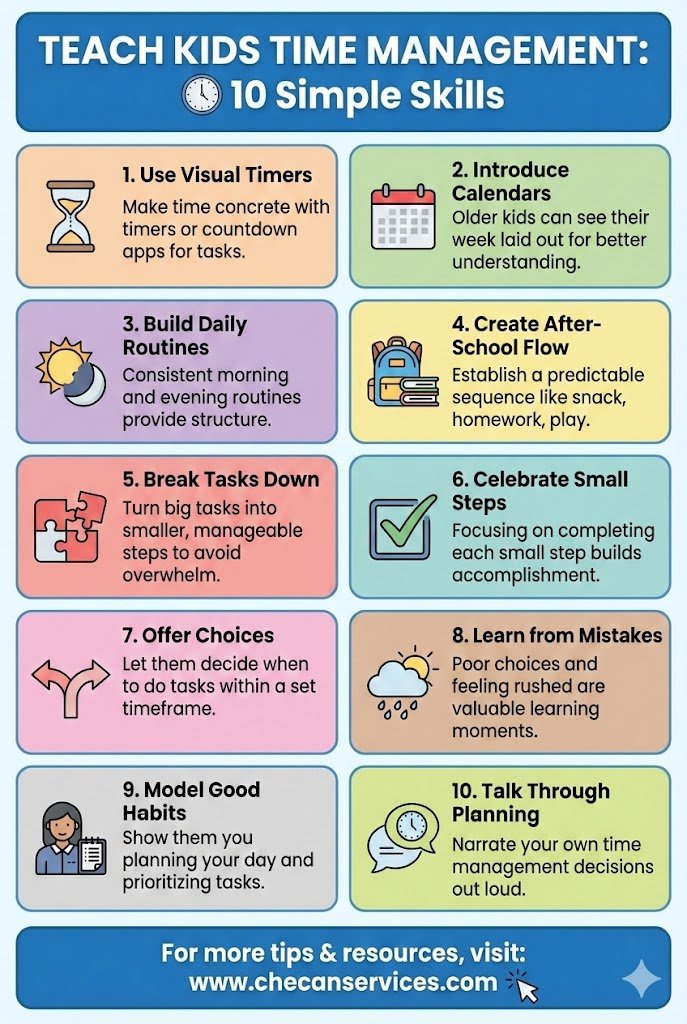
For younger kids, time is abstract. Saying “in 10 minutes” doesn’t always mean much. Visual tools can help make time more concrete. Timers, clocks with clear numbers, or even countdown apps can show them how time passes. For example, setting a 15-minute timer for homework or tidy-up time helps kids connect effort with duration.
As kids get older, you can introduce calendars or planners. Seeing their week laid out—school, sports, playtime—helps them understand how activities fit together.
Build Routines They Can Rely On
Routines are the foundation of time management. Morning and evening routines, in particular, give kids structure and predictability. When children know what comes next, they’re less likely to procrastinate or feel rushed.
For instance, a simple after-school routine might look like this: snack, homework, free play, dinner. Over time, kids begin to internalize these patterns and manage transitions on their own.
Break Tasks Into Smaller Steps
Big tasks can feel overwhelming, even for adults. Teaching kids to break tasks into smaller, manageable steps is a powerful skill. Instead of saying “clean your room,” try “put toys in the box, then make the bed, then put clothes away.”
This approach not only makes tasks easier to start but also gives kids a sense of accomplishment as they complete each step.
Let Kids Make Choices (and Mistakes)
Time management isn’t learned by being told what to do every minute. Give kids age-appropriate choices, like deciding when to do homework—as long as it’s done before dinner. If they choose poorly and feel rushed later, that’s a learning moment, not a failure.
These small experiences teach responsibility and help kids understand the natural consequences of how they use their time.
Model Good Time Management
Kids learn more from what we do than what we say. If they see you planning your day, using a calendar, or prioritizing tasks, they’re more likely to copy those habits. Even talking out loud—“I’m going to finish this now so I have time later”—can make a difference.
Key Takeaways
Teaching time management to kids is a gradual process, not a one-time lesson. With routines, visual tools, and real-life practice, kids can develop skills that support them well beyond childhood. These habits build confidence, independence, and a healthier relationship with time.
If you’re looking for more practical guidance and relatable insights on helping kids grow emotionally and mentally strong, explore the thoughtful ebooks by Louise Blount available on Apple Books. They’re designed to support parents and caregivers in raising capable, confident children—one skill at a time.