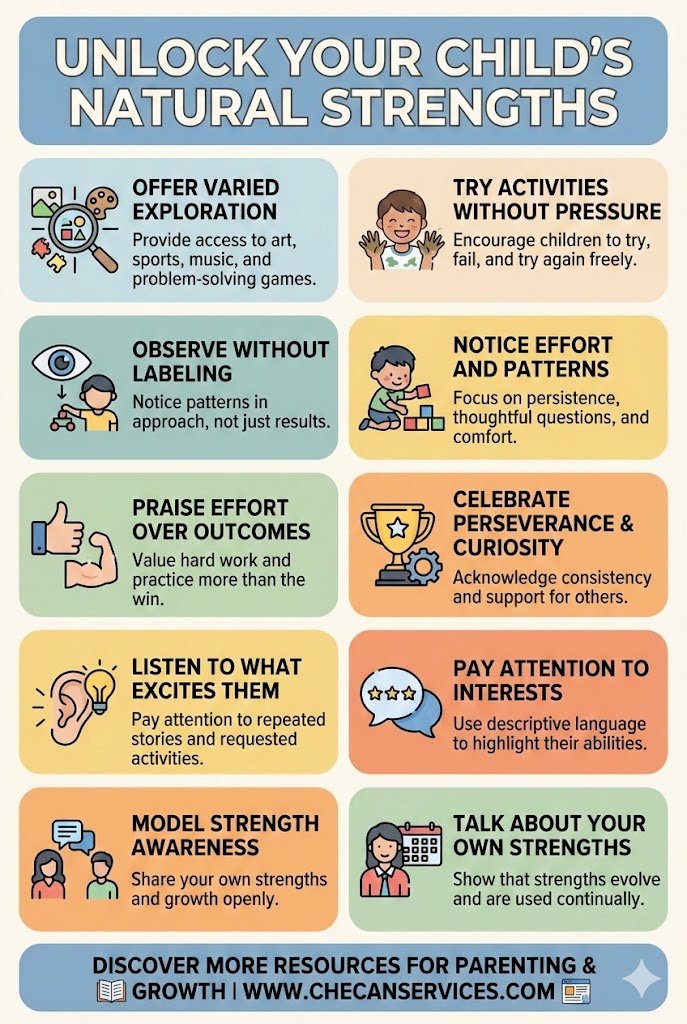
Helping children discover their natural strengths is one of the most meaningful gifts adults can offer. Strengths aren’t just about academic ability or athletic talent—they include curiosity, empathy, creativity, resilience, leadership, and so much more. When children understand what they’re naturally good at, they gain confidence, motivation, and a stronger sense of identity that carries into adulthood.
So how do we actually help children uncover these strengths in a world full of tests, schedules, and expectations?
Create Space for Exploration
Children discover strengths by doing, not by being told. Exposure to a wide range of activities—art, sports, storytelling, problem-solving games, music, building projects, or helping others—gives children the chance to notice what energizes them.
For example, a child who loses track of time while drawing may be tapping into creative strengths, while another who naturally organizes group games might be showing leadership skills. The key is variety without pressure. Exploration works best when children feel free to try, fail, and try again.
Observe Without Labels
Adults often rush to label children: “She’s the smart one,” or “He’s the shy one.” While well-intended, labels can limit growth. Instead, focus on observation. Notice patterns in how a child approaches challenges.
Do they persist when things get hard? Do they ask thoughtful questions? Are they quick to comfort others? These behaviors reveal strengths far more accurately than grades or trophies. Share what you notice in descriptive ways, such as, “I noticed you didn’t give up even when that was tricky,” rather than attaching a fixed identity.
Encourage Effort Over Outcomes
Children learn about their strengths when effort is valued more than results. Praise curiosity, problem-solving, kindness, and perseverance. This teaches children that strengths are something they use, not something they must prove.
For instance, instead of celebrating only a win, acknowledge how a child practiced consistently or supported a teammate. This builds internal motivation and helps children recognize strengths they can rely on in different situations.
Listen to What Lights Them Up
Sometimes children tell us their strengths without realizing it. Pay attention to what excites them in conversation. What stories do they repeat? What activities do they ask for again and again? These clues point directly to natural interests and abilities.
Giving children language for their strengths—such as “You’re great at explaining things” or “You notice details others miss”—helps them develop self-awareness and confidence.
Model Strength Awareness
Children learn by example. When adults talk openly about their own strengths, challenges, and growth, it normalizes self-discovery. Saying things like, “I’m good at planning, but I’m still learning patience,” teaches children that strengths evolve over time.
Key Takeaways
Helping children discover their natural strengths is an ongoing journey, not a one-time conversation. Through exploration, observation, encouragement, and open dialogue, children learn who they are and what they bring to the world. These insights shape how they learn, relate to others, and envision their future.
If you’d like to dive deeper into nurturing confidence, emotional intelligence, and self-awareness in children, explore the thoughtfully written ebooks by Louise Blount on Apple Books. You can browse the collection here and find resources designed to support children—and the adults guiding them—every step of the way.