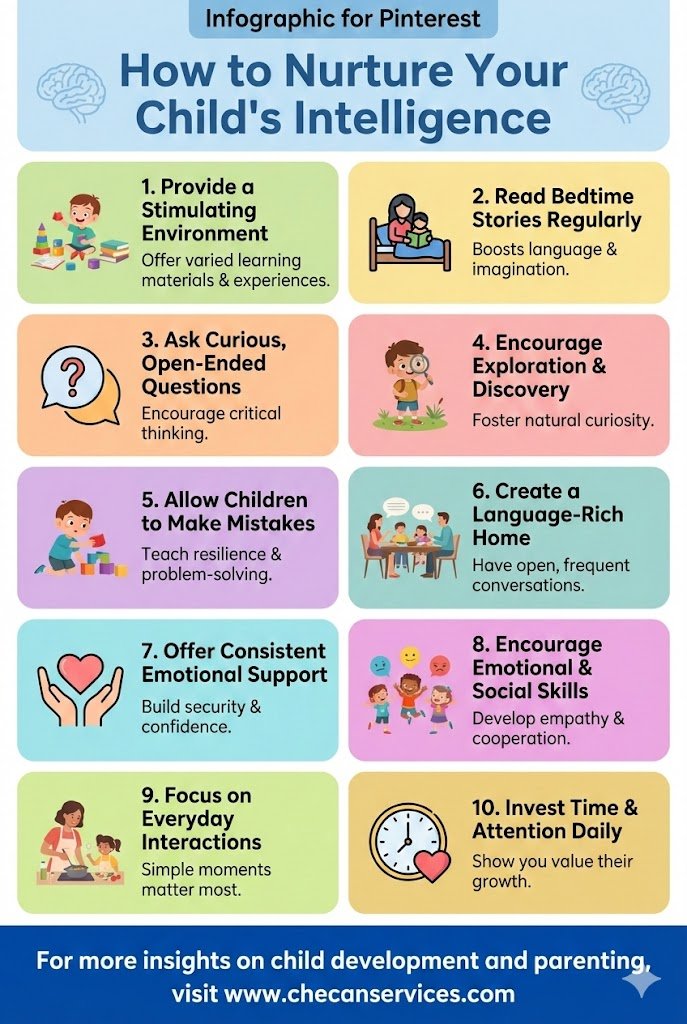
This educational parenting infographic shares 10 simple, science-backed ways to boost children’s cognitive, emotional, and social development—from reading bedtime stories to encouraging curiosity, resilience, and emotional intelligence. Perfect for parents, caregivers, and educators. 📌
When parents talk about intelligence, the conversation often drifts toward a familiar question: Is my child smart because of genetics, or because of how they’re being raised? The nature vs nurture debate has been around for decades, but modern research and real-life experience suggest the answer isn’t either-or. It’s both—and the interaction between the two is where things get interesting.
Understanding the “Nature” Side of Intelligence
Nature refers to the genetic blueprint children are born with. Some kids arrive wired with strong memory skills, quick problem-solving abilities, or heightened verbal aptitude. You might notice a child picking up language effortlessly or grasping numbers long before formal schooling begins. These traits often reflect inherited cognitive potential.
But genetics don’t function like a fixed script. Think of them as a range rather than a destination. A child may have the genetic capacity for high intelligence, but without stimulation, encouragement, or opportunity, that potential can remain underdeveloped.
How Nurture Shapes a Child’s Mind
Nurture is where the everyday magic happens. This includes parenting style, education, emotional support, nutrition, and exposure to learning experiences. Reading bedtime stories, asking curious questions, encouraging exploration, and even allowing children to make mistakes all contribute to cognitive growth.
For example, two children with similar genetic potential may develop very different intellectual skills depending on their environments. A child raised in a language-rich home with open conversations and books will likely develop stronger communication skills than one without those experiences.
Where Nature and Nurture Intersect
The most fascinating part of intelligence development lies in how nature and nurture work together. Genetics may influence how responsive a child is to learning, while environment determines how far that responsiveness can go. A naturally curious child thrives when curiosity is encouraged, but may withdraw if constantly discouraged or ignored.
Neuroscience shows that young brains are highly adaptable. Experiences literally shape neural connections. This means supportive environments can strengthen cognitive abilities, even compensating for certain genetic limitations.
Intelligence Is More Than IQ
Another important shift in modern thinking is recognizing that intelligence isn’t just about test scores. Emotional intelligence, creativity, social awareness, and problem-solving all matter. Nurture plays a particularly strong role here—children learn empathy, resilience, and adaptability by observing and interacting with the people around them.
Encouraging diverse skills rather than focusing solely on academic performance helps children grow into well-rounded thinkers who can apply intelligence in real-world situations.
Key Takeaways for Parents and Educators
- Genetics provide a starting point, not a finish line
- A stimulating, supportive environment can significantly boost intellectual growth
- Intelligence comes in many forms, not just academic ability
- Everyday interactions matter more than expensive programs
Looking Ahead
As research continues to evolve, one message remains clear: investing time, attention, and emotional support into a child’s life has lasting cognitive benefits. Intelligence is not something children simply have—it’s something that develops, expands, and adapts over time.
If you’re interested in deeper insights on child development, emotional growth, and mindful parenting, explore the inspiring ebooks by Louise Blount available on Apple Books. They offer practical wisdom for nurturing curious, confident, and capable young minds.