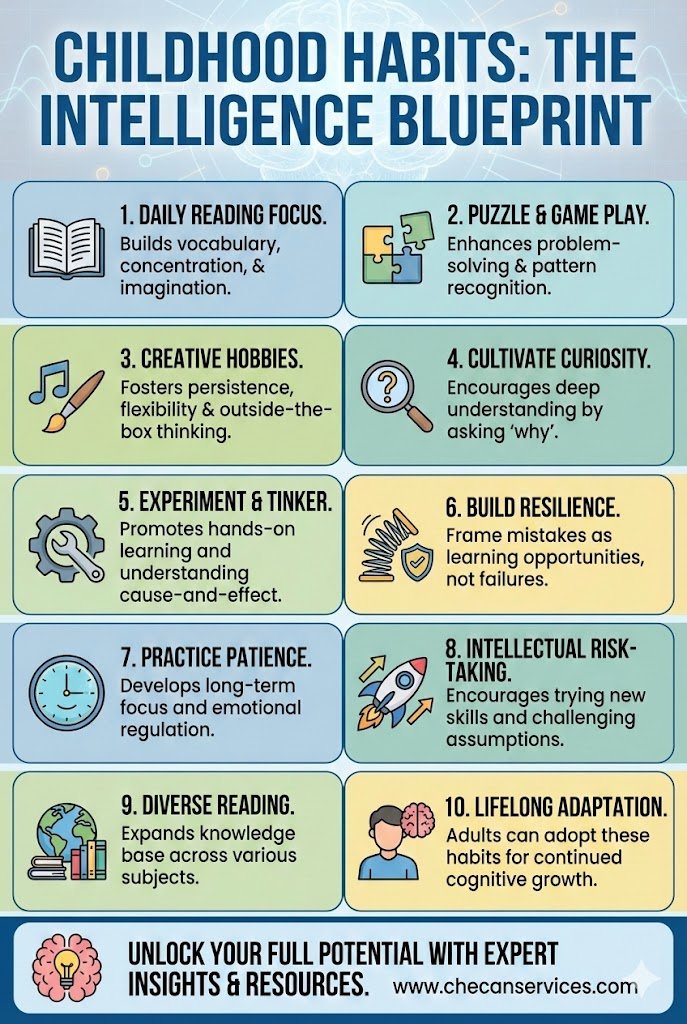
When we talk about intelligence, we often picture something fixed—an IQ score, a natural talent, or a label assigned early in life. But research and real-world experience tell a far more interesting story. Intelligence is deeply shaped by habits formed in childhood, many of which quietly follow us into adulthood, influencing how we think, learn, and solve problems years later.
From the books we read as children to how we handled boredom or curiosity, small daily patterns played an outsized role in shaping our adult minds.
The Power of Early Learning Habits
Childhood is when the brain is most adaptable. During these formative years, habits like reading for pleasure, asking questions, or experimenting through play help wire neural pathways that support reasoning, memory, and creativity later in life.
For example, a child who regularly reads doesn’t just build vocabulary. They learn how to focus, imagine alternatives, and understand cause-and-effect relationships. These skills translate directly into adult intelligence, especially in areas like critical thinking and communication.
Similarly, children encouraged to explore puzzles, games, or creative hobbies—like music or drawing—develop problem-solving skills that extend beyond academics. These habits teach persistence, pattern recognition, and flexible thinking, all core components of intelligence.
Curiosity as a Long-Term Advantage
One of the strongest predictors of adult intellectual growth is curiosity. Children who are allowed (and encouraged) to ask “why” tend to become adults who seek deeper understanding rather than surface-level answers.
Curiosity-driven habits—experimenting, tinkering, reading widely—create a mindset that values learning as an ongoing process. This is why some adults continue to grow intellectually long after formal education ends, while others plateau. The difference often lies in habits formed early on, not raw ability.
Emotional Habits Matter Too
Intelligence isn’t purely cognitive. Emotional habits learned in childhood—such as resilience, patience, and comfort with failure—play a huge role in how intelligence is expressed in adulthood.
A child who learns that mistakes are part of learning is more likely to take intellectual risks later in life. That might mean starting a business, learning a new skill, or challenging long-held assumptions. On the other hand, fear of failure can limit intellectual growth, no matter how capable someone is.
Can Adult Intelligence Still Change?
The encouraging news is that while childhood habits matter, they aren’t destiny. Adults can still reshape their intelligence by adopting similar habits later in life: reading regularly, embracing curiosity, practicing reflection, and staying open to new experiences.
However, understanding how early habits shaped us gives valuable insight. It helps explain why some ways of thinking feel natural—and why others require conscious effort.
Key Takeaways
Childhood habits quietly lay the foundation for adult intelligence. Reading, curiosity, emotional resilience, and playful learning all contribute to how we think decades later. While intelligence isn’t fixed, the habits we form early often determine how easily we continue to grow.
If you’re interested in exploring personal growth, mindset, and intellectual development more deeply, you may enjoy the insightful ebooks available from Louise Blount on Apple Books. Discover thoughtful reads that inspire reflection and lifelong learning by browsing her collection on Apple Books.