As parents and caregivers, we often rush to fill every quiet moment. If a child says, “I’m bored,” our instinct is to offer a screen, an activity, or a plan. But what if boredom isn’t a problem to solve? What if it’s actually a powerful spark for creativity?
Boredom, when handled well, can be one of the most valuable experiences for a child’s developing mind. In a world overflowing with constant stimulation, moments of “nothing to do” create space for imagination to stretch and grow.
Boredom Creates Room for Original Thinking
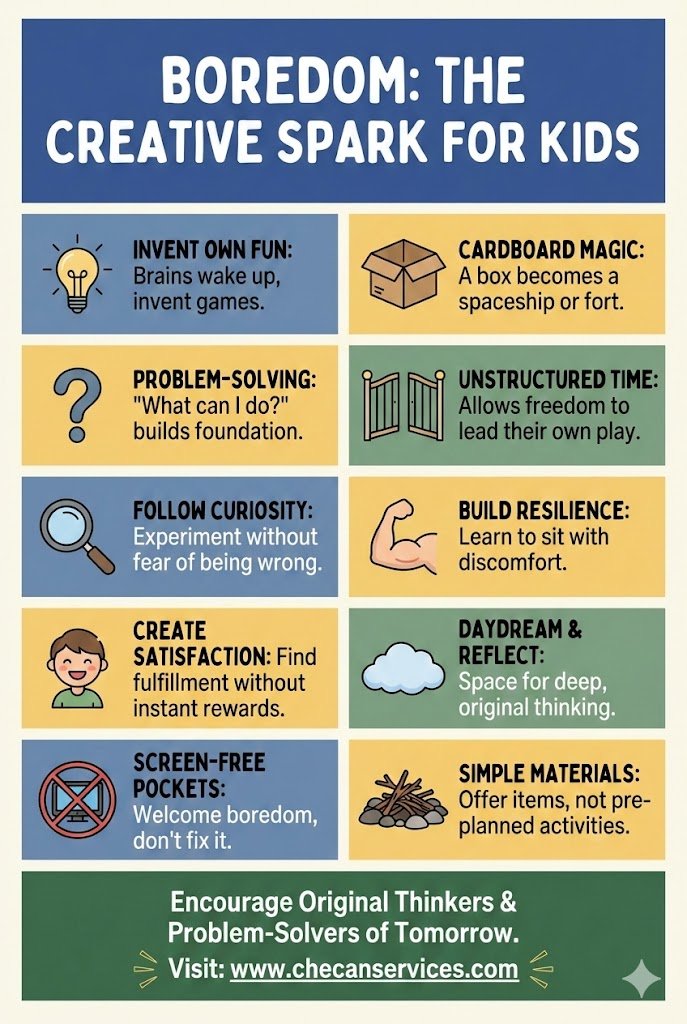
When kids are bored, their brains don’t shut down—they wake up. Without pre-packaged entertainment, children are nudged to invent their own fun. A cardboard box becomes a spaceship. A stick turns into a magic wand. A quiet afternoon becomes the start of a story, a game, or an idea that didn’t exist before.
Creativity thrives when kids are allowed to explore without instructions. Boredom encourages them to ask, “What can I do with what I have?” That question is the foundation of problem-solving and creative thinking.
Less Structure, More Imagination
Highly structured schedules and constant activities can unintentionally limit creativity. When every hour is planned, kids don’t get the chance to lead their own play. Boredom hands them the reins.
Unstructured time allows children to:
- Experiment without fear of being “wrong”
- Follow their curiosity instead of instructions
- Develop independence and confidence in their ideas
Some of the most imaginative play happens when adults step back and let kids figure things out on their own.
Emotional Growth Hides in Bored Moments
Boredom also teaches kids how to sit with discomfort. Learning to tolerate “nothing happening” helps build patience, emotional regulation, and resilience. Instead of needing instant gratification, children learn that they can create satisfaction themselves.
This skill becomes increasingly important as they grow. Creative adults are often those who learned early how to reflect, daydream, and think deeply without external noise.
Screens vs. Stillness
While technology has its place, constant screen use can crowd out creativity. Screens entertain, but they rarely invite kids to imagine beyond what’s presented. Boredom, on the other hand, invites participation.
That doesn’t mean eliminating screens entirely. It means allowing pockets of screen-free time where boredom is not only allowed but welcomed.
Key Takeaways for Parents
Boredom isn’t laziness or lack of stimulation—it’s an open door. By resisting the urge to immediately fix boredom, you give your child permission to explore their inner world.
Try this:
- Leave some afternoons unscheduled
- Offer simple materials instead of activities
- Respond to “I’m bored” with curiosity instead of solutions
You may be surprised by what your child creates when given the chance.
Looking Ahead
As the future demands more innovation and adaptability, creativity will be one of the most valuable skills our kids can have. Allowing boredom today helps nurture the thinkers, creators, and problem-solvers of tomorrow.
If you enjoy thoughtful reflections on childhood, imagination, and emotional growth, you may love exploring the beautifully written ebooks by Louise Blount available on Apple Books. Discover stories and insights that inspire creativity and reflection by browsing her collection here.