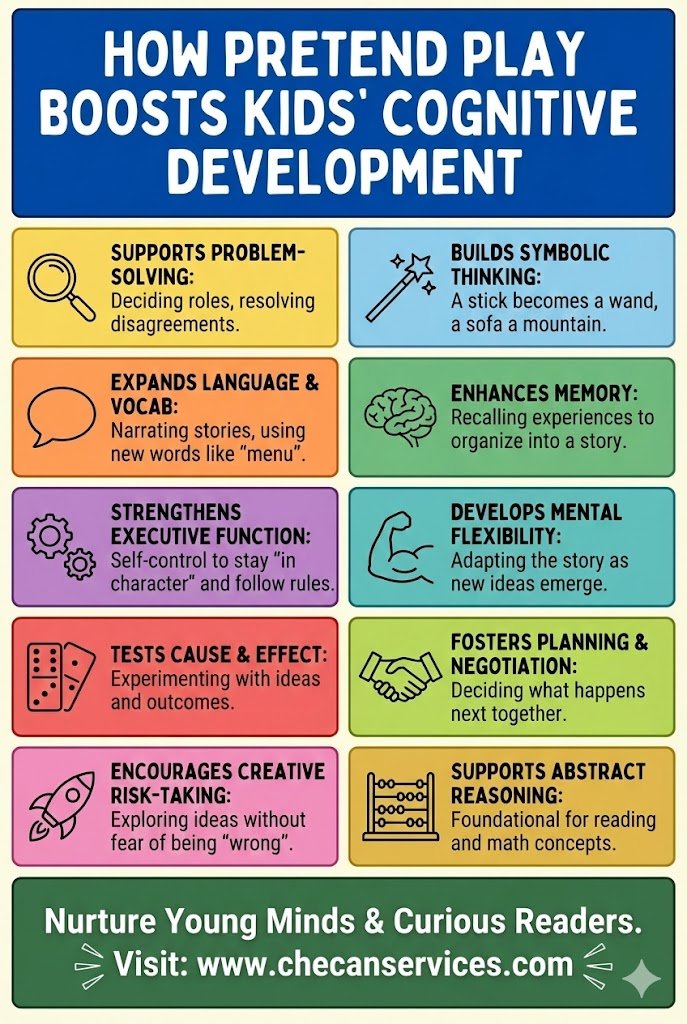
Pretend play may look like simple fun—kids wearing capes, hosting imaginary tea parties, or turning a cardboard box into a spaceship—but beneath the surface, something powerful is happening. This kind of imaginative play plays a crucial role in shaping how children think, reason, and understand the world around them. In fact, pretend play is one of the most effective, natural ways to support cognitive development in early childhood.
When children pretend, they’re not just copying what they see. They’re experimenting with ideas, testing cause and effect, and building mental flexibility. A child pretending to be a doctor isn’t only playing “hospital”—they’re recalling past experiences, organizing them into a story, and adapting that story as new ideas emerge. That mental juggling act is pure cognitive growth in action.
Building Thinking Skills Through Imagination
One of the biggest cognitive benefits of pretend play is problem-solving. Imagine two children playing “grocery store.” They have to decide who plays which role, what happens when the “store” runs out of food, and how to resolve disagreements along the way. Each of these moments requires planning, negotiation, and flexible thinking.
Pretend play also strengthens symbolic thinking—the ability to let one thing represent another. A stick becomes a magic wand. A sofa becomes a mountain. This skill is foundational for later learning, especially in reading, math, and abstract reasoning. When children understand that symbols carry meaning, they’re better prepared to grasp letters, numbers, and complex concepts in school.
Language, Memory, and Executive Function
Cognitive development isn’t just about logic—it’s also about language and memory. During pretend play, children often narrate what’s happening, adopt new vocabulary, and practice conversational turn-taking. A child pretending to run a restaurant might use words like “menu,” “order,” or “special,” expanding their language in a context that feels fun and meaningful.
There’s also a strong link between pretend play and executive function skills, such as self-control, working memory, and attention. Staying “in character” requires a child to remember rules they’ve created and follow them consistently. That kind of mental discipline is the same skill set needed for classroom learning later on.
Why Pretend Play Matters More Than Ever
In a world filled with screens and structured activities, pretend play offers something refreshingly open-ended. It allows children to slow down, explore ideas deeply, and take creative risks without fear of being “wrong.” Looking ahead, these skills—creativity, adaptability, and independent thinking—are exactly what children will need to thrive in an ever-changing world.
Encouraging pretend play doesn’t require fancy toys. Time, space, and a little encouragement go a long way. When adults value and protect imaginative play, they’re investing directly in children’s cognitive growth.
Key Takeaways for Parents and Educators
Pretend play supports problem-solving, language development, and abstract thinking—all core elements of cognitive development. By giving children opportunities to imagine, explore roles, and create stories, we’re helping them build strong mental foundations that last well beyond childhood.
If you enjoy thoughtful insights about child development, creativity, and learning, you may also enjoy the ebooks by Louise Blount. Explore her inspiring collection on Apple Books and discover stories and ideas designed to nurture young minds and curious readers alike.