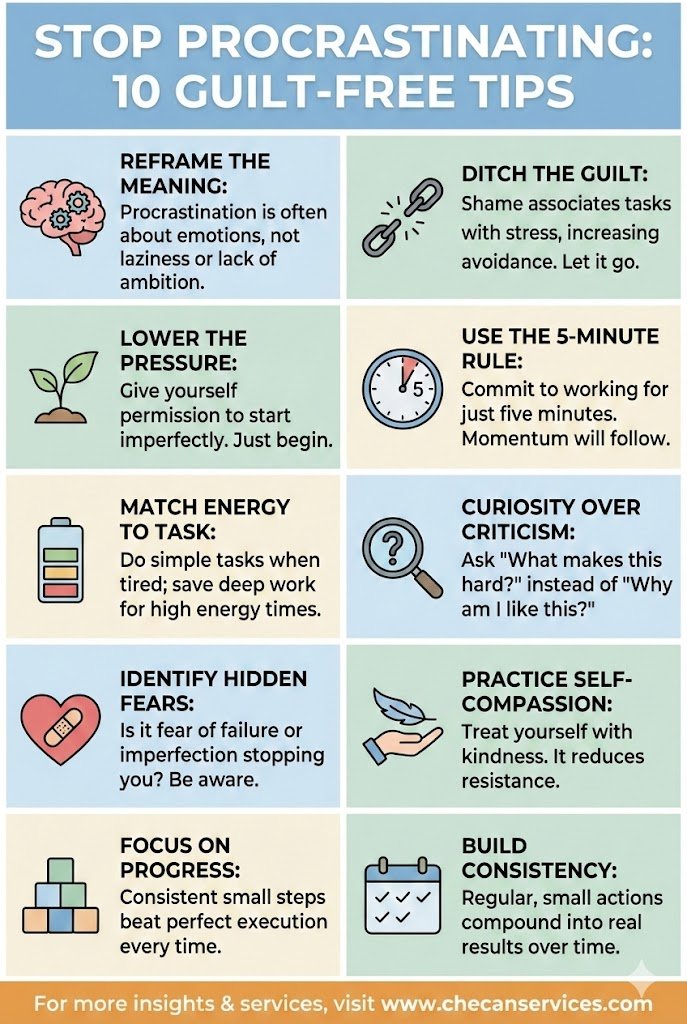
Procrastination gets a bad reputation. We’re told it’s a sign of laziness, poor discipline, or a lack of ambition. So when we put things off, guilt quickly follows—and that guilt often makes procrastination even worse. The truth is, procrastination is rarely about being lazy. It’s usually about emotions, energy, and expectations.
If you’ve ever delayed a task while feeling awful about it, this approach is for you. Let’s talk about how to stop procrastinating without piling on guilt—and actually get more done in the process.
Why Guilt Keeps You Stuck
Guilt feels productive, but it isn’t. When you shame yourself for procrastinating, your brain associates the task with stress and discomfort. Naturally, you avoid it even more.
For example, imagine you’ve been putting off writing a report. Each day you don’t start, the guilt grows. Now the report isn’t just work—it’s emotionally heavy. Avoidance becomes a form of self-protection.
The goal isn’t to “force” productivity. It’s to make starting feel safer.
Shift From Pressure to Permission
One of the most effective ways to reduce procrastination is to give yourself permission to start imperfectly. Tell yourself, “I’m just going to work on this for five minutes.”
Five minutes feels manageable. It lowers resistance. And once you begin, momentum often follows naturally.
This works because the brain resists overwhelming expectations, not effort itself. When the pressure disappears, action becomes easier.
Work With Your Energy, Not Against It
Procrastination often shows up when we’re tired, overstimulated, or emotionally drained. Instead of fighting that, adjust your tasks to match your energy level.
Low energy? Do something simple like outlining ideas, organizing notes, or replying to one email. High energy? That’s when you tackle deeper, more demanding work.
Productivity isn’t about doing everything at once—it’s about doing the right thing at the right time.
Replace Self-Criticism With Curiosity
Instead of asking, “Why am I like this?” try asking, “What’s making this task feel hard right now?”
Maybe you’re unclear about the next step. Maybe you’re afraid it won’t be good enough. Or maybe you genuinely need rest. Curiosity helps you solve the problem. Criticism just adds noise.
When you treat yourself with compassion, procrastination loses its grip.
Build Progress, Not Perfection
Consistent progress beats perfect execution every time. Small steps done regularly compound into real results. The less emotional weight you attach to productivity, the easier it becomes to show up.
Ironically, letting go of guilt often leads to getting more done—because you’re no longer fighting yourself.
Key Takeaways
Stopping procrastination doesn’t require more discipline—it requires more understanding. When you reduce guilt, lower pressure, and work with your energy, productivity becomes a natural outcome rather than a struggle.
If you’re drawn to thoughtful, practical insights on personal growth and self-awareness, you might enjoy exploring the ebooks by Louise Blount on Apple Books. They’re designed to meet you where you are and gently guide you forward. You can browse them here.