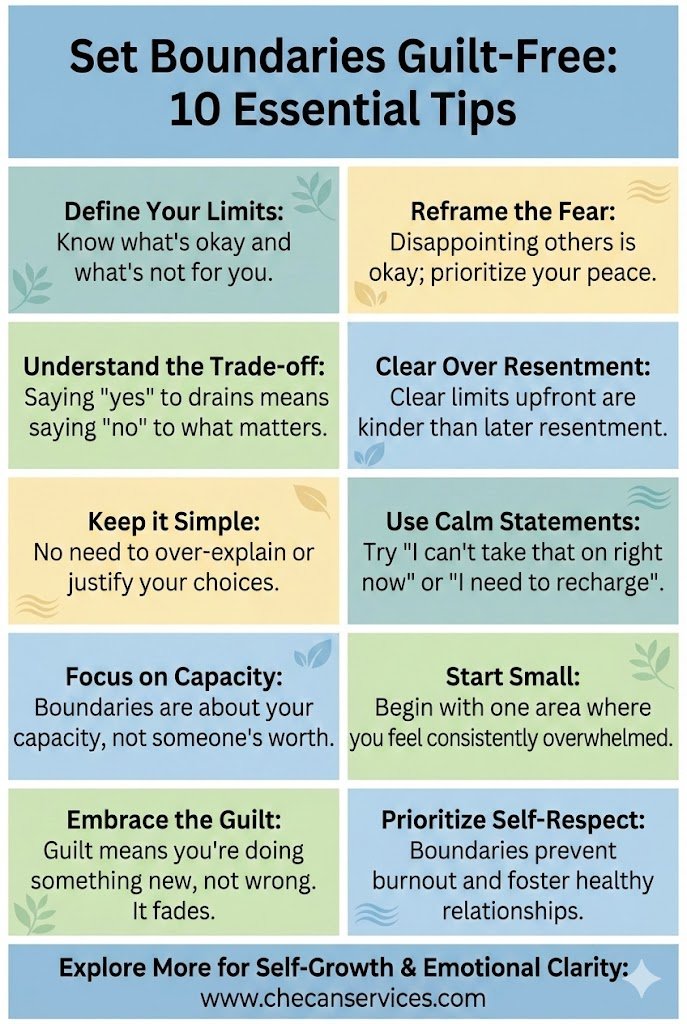
If the word boundaries makes you feel uncomfortable, you’re not alone. Many of us were raised to believe that being kind means being available, agreeable, and accommodating—sometimes at our own expense. So when we finally try to say “no” or protect our time and energy, guilt often sneaks in. The good news? Setting boundaries doesn’t make you selfish. It makes you sustainable.
Boundaries are simply guidelines that define what’s okay and what’s not okay for you. They help you show up as your best self, not a burnt-out version running on empty. And when done thoughtfully, they actually strengthen relationships rather than damage them.
Why Boundaries Feel So Hard at First
The discomfort usually comes from fear—fear of disappointing others, being judged, or being seen as difficult. But here’s a powerful reframe: every time you say yes to something that drains you, you’re saying no to something that matters. That might be your peace, your health, or your long-term goals.
Think about a friend who always overcommits and then cancels at the last minute. That’s often what happens without boundaries. Clear limits upfront are kinder than resentment later.
How to Set Boundaries Gently and Clearly
You don’t need to overexplain or justify your choices. Simple, calm statements are often the most effective. For example:
- “I can’t take that on right now, but thank you for thinking of me.”
- “I need some time to recharge this weekend.”
- “That doesn’t work for me, but I hope it goes well.”
Notice how these responses are respectful yet firm. You’re not attacking anyone—you’re just being honest. Boundaries are about your capacity, not someone else’s worth.
It also helps to start small. You don’t have to overhaul your entire life in one week. Begin with one area where you feel consistently overwhelmed—work hours, family expectations, or emotional labor—and practice there.
Letting Go of the Guilt
Guilt doesn’t mean you’re doing something wrong; it often means you’re doing something new. Over time, that guilt fades and is replaced by clarity and confidence. People who truly respect you will adapt. Those who push back may have benefited from your lack of boundaries—but that’s not a reason to keep hurting yourself.
Key Takeaways to Remember
- Boundaries are a form of self-respect, not selfishness
- Clear limits prevent burnout and resentment
- You don’t owe anyone constant access to your time or energy
- Practicing boundaries gets easier with repetition
Looking Ahead
As you become more comfortable setting boundaries, you’ll notice something surprising: more peace, deeper relationships, and a stronger sense of self. Life feels lighter when your choices align with your values, not just other people’s expectations.
If you’re ready to explore self-growth, emotional clarity, and healthier relationships even further, you’ll love the insightful ebooks available on Apple Books by Louise Blount. They’re thoughtful companions for anyone learning to prioritize themselves—without guilt—and they might be exactly what you need for your next chapter.