If you’ve ever started something new—writing, fitness, healing, learning a skill—you know this feeling well. You’re showing up, doing the work, and trying your best… but the results? They’re barely visible. That’s usually the moment when motivation fades and self-doubt gets loud.
Staying consistent when results are slow isn’t about superhuman discipline. It’s about understanding how progress actually works and learning how to stay grounded while the growth is still invisible.
Why Slow Results Are Normal (and Necessary)
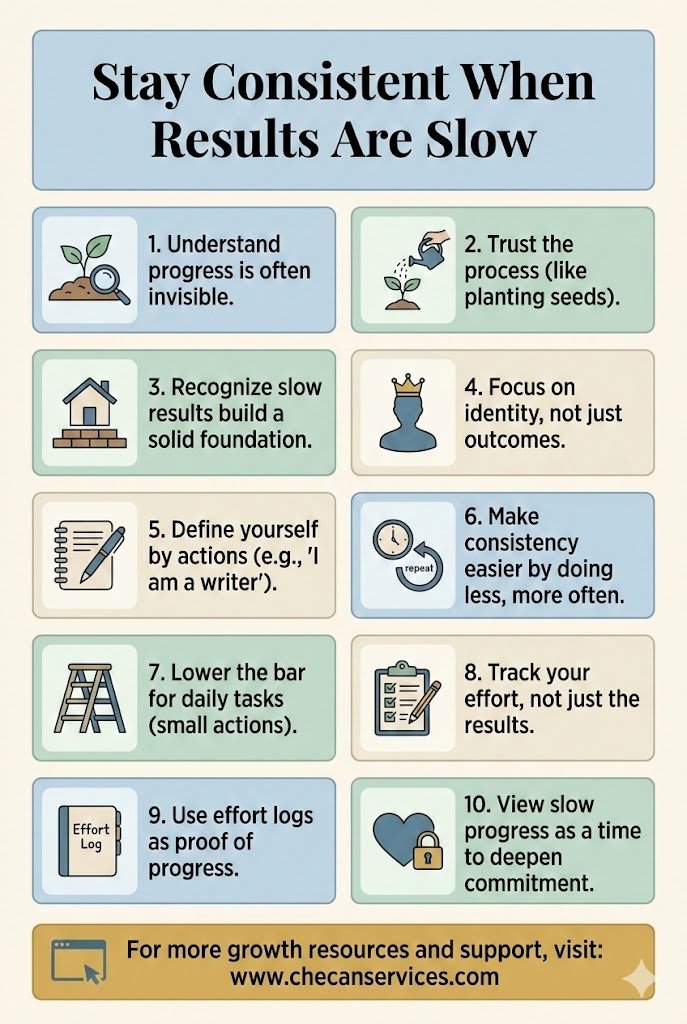
Most meaningful progress happens quietly at first. Think of consistency like planting seeds. You don’t dig them up every day to check if they’re growing—you trust the process and keep watering. The same applies to personal growth, creative work, or lifestyle changes.
Slow results often mean you’re building a solid foundation. Habits are forming. Skills are sharpening. Confidence is developing behind the scenes. The problem isn’t that nothing is happening—it’s that growth doesn’t announce itself right away.
Shift Your Focus from Outcomes to Identity
One of the best ways to stay consistent is to stop measuring success only by results. Instead, measure it by who you’re becoming.
Rather than saying, “I’ll stay consistent until I see progress,” try, “I’m the kind of person who shows up, even when progress is slow.” This identity-based mindset removes pressure and replaces it with purpose.
For example:
- You’re not “trying to write a book”—you’re a writer who writes regularly.
- You’re not “waiting to get fit”—you’re someone who moves their body consistently.
- You’re not “hoping to heal”—you’re actively choosing growth.
Make Consistency Easier, Not Harder
Consistency doesn’t require doing more. It requires doing less—but doing it more often.
Lower the bar:
- Write one paragraph instead of one chapter
- Walk for 10 minutes instead of skipping entirely
- Read two pages instead of none
Small actions compound. When results are slow, small wins keep momentum alive.
Track Effort, Not Just Results
When results lag, effort is your proof of progress. Keep a simple log of what you’ve done each day. Looking back and seeing consistency on paper can be incredibly motivating, especially when outcomes haven’t caught up yet.
This also helps quiet the inner voice that says, “This isn’t working.” It is working—you’re just early.
Key Takeaways to Remember
Consistency during slow seasons is what separates temporary effort from lasting change. Progress doesn’t always look like improvement—it often looks like patience, repetition, and trust.
When you keep showing up, even imperfectly, you’re building something that lasts longer than quick wins ever could.
Looking Ahead
Slow progress isn’t a signal to stop. It’s an invitation to deepen your commitment, refine your habits, and believe in the version of yourself you’re becoming. If you’re in a season where results feel delayed, you’re not behind—you’re building.
If you enjoy reflective, growth-focused reads that support consistency, mindset, and personal development, you may enjoy exploring the ebooks by Louise Blount available on Apple Books. They’re a gentle companion for anyone learning to trust the process and keep going—especially when progress feels slow.