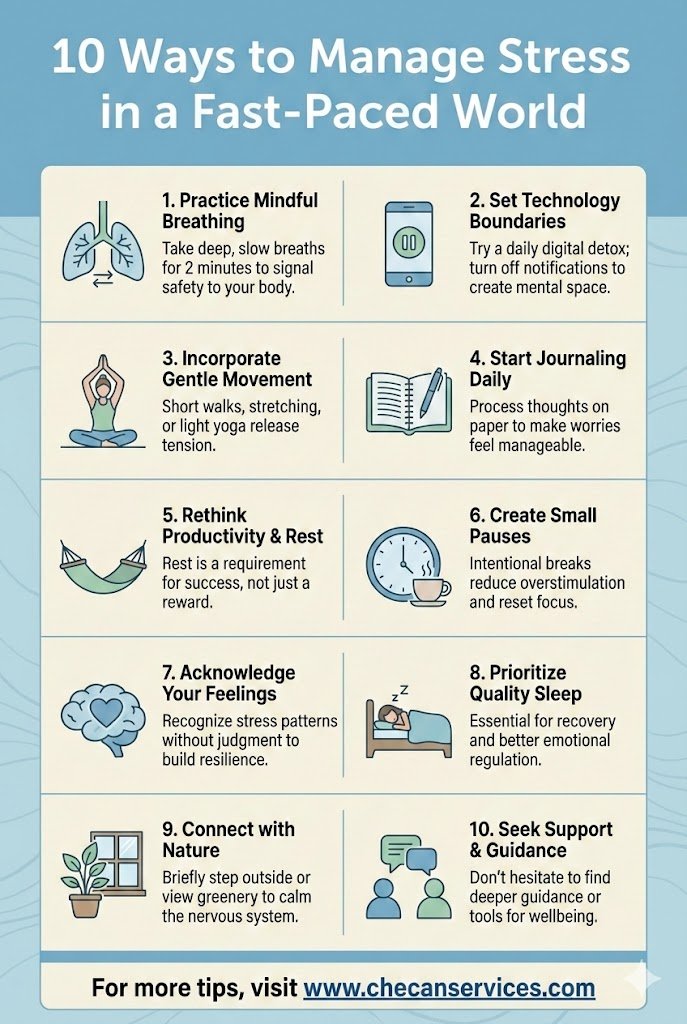
If it feels like life is constantly in fast-forward, you’re not imagining it. Notifications buzz, deadlines pile up, and the pressure to “keep up” can quietly turn everyday stress into a constant companion. Managing stress in a fast-paced world isn’t about escaping responsibilities—it’s about learning how to move through them with more balance, awareness, and self-compassion.
The good news? Stress management doesn’t require a complete lifestyle overhaul. Small, intentional shifts can make a powerful difference.
Why Modern Life Feels So Stressful
We’re more connected than ever, yet many people feel mentally overloaded and emotionally drained. Work often follows us home through emails and messages. Social media creates a subtle pressure to compare, perform, and stay visible. Even rest can feel unproductive when there’s always “more” we could be doing.
This constant stimulation keeps our nervous systems on high alert. Over time, that can lead to burnout, irritability, poor sleep, and difficulty focusing. Recognizing this pattern is the first step toward changing it.
Practical Ways to Reduce Everyday Stress
One of the most effective stress-management strategies is also one of the simplest: slowing down on purpose.
Start with your breath. Taking just two minutes to breathe deeply—slow inhale through the nose, long exhale through the mouth—can signal your body that it’s safe to relax. This is especially helpful before meetings, difficult conversations, or bedtime.
Another powerful habit is setting boundaries with technology. Try a short daily digital detox, even if it’s just leaving your phone in another room while you eat or turning off notifications for an hour in the evening. These small pauses create mental space and reduce overstimulation.
Movement also plays a key role. You don’t need intense workouts to see benefits. A short walk, gentle stretching, or light yoga can release built-up tension and reset your mood. Many people find that stress feels more manageable after moving their bodies, even briefly.
Building Emotional Resilience Over Time
Managing stress isn’t just about quick fixes—it’s about building resilience. Journaling, for example, helps you process thoughts instead of carrying them all day. Writing down worries often makes them feel more manageable and less overwhelming.
It’s also important to rethink productivity. Rest isn’t a reward you earn after exhaustion; it’s a requirement for sustainable success. Giving yourself permission to pause can feel uncomfortable at first, but it’s essential for long-term wellbeing.
Key Takeaways for a Calmer Life
Stress may be unavoidable, but being constantly overwhelmed doesn’t have to be. By practicing mindful breathing, setting healthy boundaries, moving regularly, and redefining rest, you can create calm even in a fast-paced world. These habits don’t slow you down—they help you show up more focused, grounded, and energized.
If you’re looking for deeper guidance, reflective tools, and gentle encouragement to support your wellbeing journey, explore the inspiring ebooks available on Apple Books by Louise Blount. They’re a wonderful companion for anyone seeking clarity, balance, and calm in everyday life.