Setbacks have a way of knocking the wind out of us. One moment you’re moving forward with confidence, and the next, a rejection email, a missed opportunity, or an unexpected life event throws everything off course. If you’ve ever wondered how to bounce back after setbacks without losing motivation or self-belief, you’re not alone—and the good news is, it’s absolutely possible.
The key isn’t avoiding setbacks altogether. It’s learning how to respond to them in a way that strengthens you rather than defines you.
Reframe the Setback Without Sugarcoating It
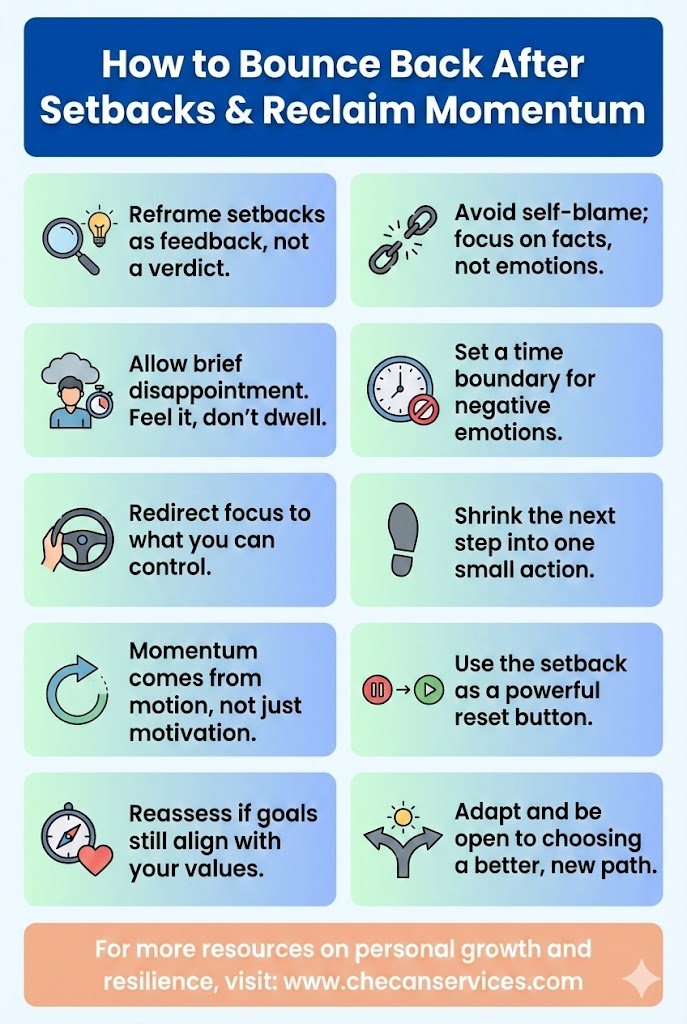
The first instinct after a setback is often self-blame. We replay what went wrong, imagining all the ways we “should have known better.” Instead, try reframing the situation honestly but constructively. A setback doesn’t mean you failed as a person—it means something didn’t work this time.
For example, if a business idea didn’t take off, that doesn’t erase your creativity or ambition. It simply gives you data. Many successful entrepreneurs will tell you their biggest breakthroughs came after projects that didn’t work. The difference is they treated the setback as feedback, not a verdict.
Allow the Emotional Dip—Briefly
Bouncing back doesn’t mean pretending everything is fine. Disappointment, frustration, and even grief are natural responses to loss or failure. Give yourself permission to feel them—but set a boundary. Lingering too long in that emotional dip can turn a temporary setback into a permanent mindset.
A helpful approach is to acknowledge the feeling (“I’m disappointed, and that’s valid”) and then gently redirect your focus to what’s still within your control. This balance helps you process emotions without letting them stall your progress.
Shrink the Next Step
After a setback, the future can feel overwhelming. Instead of trying to “fix everything,” focus on one small, achievable action. Momentum often returns through motion, not motivation.
If you didn’t get the job you wanted, the next step might simply be updating your CV or reaching out to one new contact. Small wins rebuild confidence, and confidence fuels resilience.
Use the Setback as a Reset Point
Setbacks can be powerful reset buttons. They force you to pause and reassess what you truly want. Are you chasing a goal because it aligns with your values—or because it’s what you thought you should want?
This moment of reflection can open the door to more aligned opportunities. Sometimes bouncing back doesn’t mean returning to the same path, but choosing a better one with more clarity and intention.
Key Takeaways for Building Resilience
Bouncing back after setbacks is less about toughness and more about adaptability. When you reframe challenges, take small steps forward, and stay open to growth, setbacks become part of your progress story—not the end of it.
If you’re looking for deeper insights on resilience, self-growth, and navigating life’s turning points with confidence, you might enjoy exploring the inspiring ebooks by Louise Blount, available on Apple Books. Discover stories and reflections that gently guide you forward by browsing her collection on Apple Books.