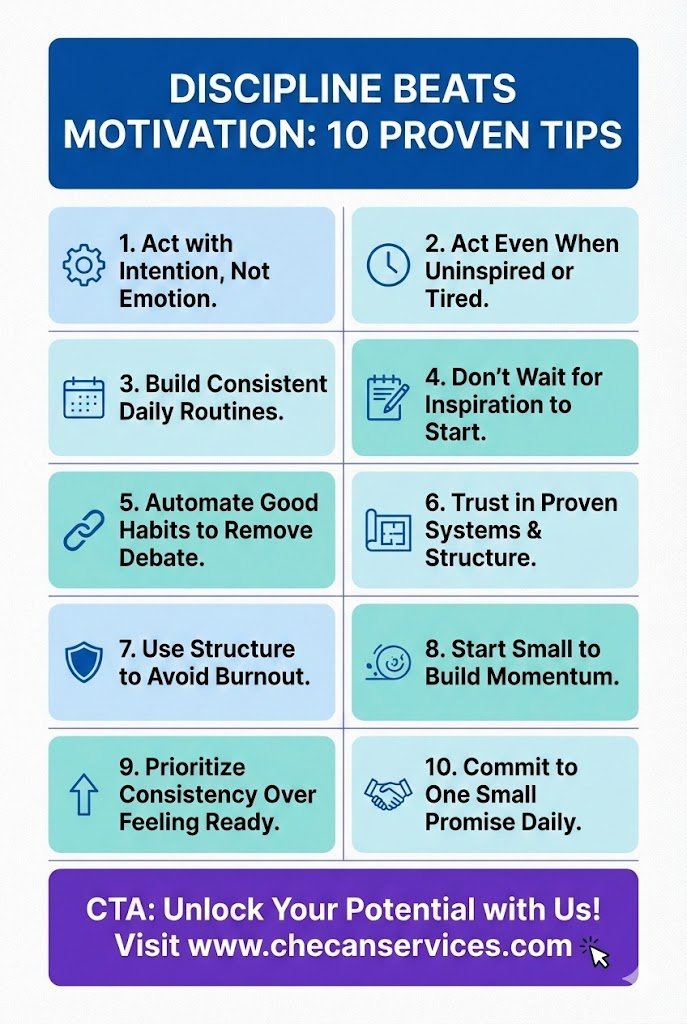
If you’ve ever waited to feel motivated before starting something important, you already know how unreliable motivation can be. Some days it shows up loud and proud. Other days, it’s completely missing. That’s exactly why discipline beats motivation—every single time.
Motivation is emotional. Discipline is intentional. And that difference changes everything.
Motivation Is a Spark, Discipline Is the Engine
Motivation feels amazing when it hits. You wake up energized, ready to tackle goals, convinced this time things will stick. But motivation depends on mood, energy, and circumstances—things we don’t fully control.
Discipline, on the other hand, is what keeps you going when the spark fades. It’s the quiet decision to act even when you’re tired, bored, or unsure. Think of motivation as the match and discipline as the steady flame that keeps the fire alive.
A simple example? Writing. Many people wait to “feel inspired” before writing. Disciplined writers sit down at the same time every day and write anyway. Inspiration often shows up after the work begins, not before.
Discipline Creates Freedom, Not Restriction
There’s a myth that discipline is rigid or joyless. In reality, discipline creates freedom. When you build consistent habits, you remove the daily mental debate of should I or shouldn’t I?
Athletes don’t rely on motivation to train. They rely on routines. Professionals don’t wait for motivation to show up at work. They follow systems. Over time, those systems compound into results that motivation alone can’t touch.
Discipline also protects you from burnout. When your actions are guided by structure instead of emotional highs, progress becomes sustainable.
Motivation Follows Action—Not the Other Way Around
One of the most overlooked truths is this: action often creates motivation. When you start—even imperfectly—you generate momentum. That momentum builds confidence. Confidence fuels motivation.
Discipline gets you to start. Motivation rewards you after.
This is especially important in long-term goals like personal growth, creative work, or career changes. Waiting to feel ready keeps you stuck. Acting consistently moves you forward.
Key Takeaways Worth Remembering
Discipline doesn’t mean being harsh with yourself. It means showing up with commitment, even when conditions aren’t perfect. It means trusting the process more than your feelings.
Motivation will come and go. Discipline stays.
And when discipline becomes part of who you are, progress stops feeling like a struggle and starts feeling like a natural rhythm of your life.
Looking Ahead: Build Discipline One Small Choice at a Time
You don’t need to overhaul your life overnight. Start small. One habit. One promise kept to yourself. Over time, discipline becomes identity—and that’s where real transformation happens.
If you enjoy reflective, growth-focused reading that encourages consistency and self-belief, explore the inspiring ebooks by Louise Blount available on Apple Books. They’re a great companion for anyone building a disciplined, purpose-driven life.